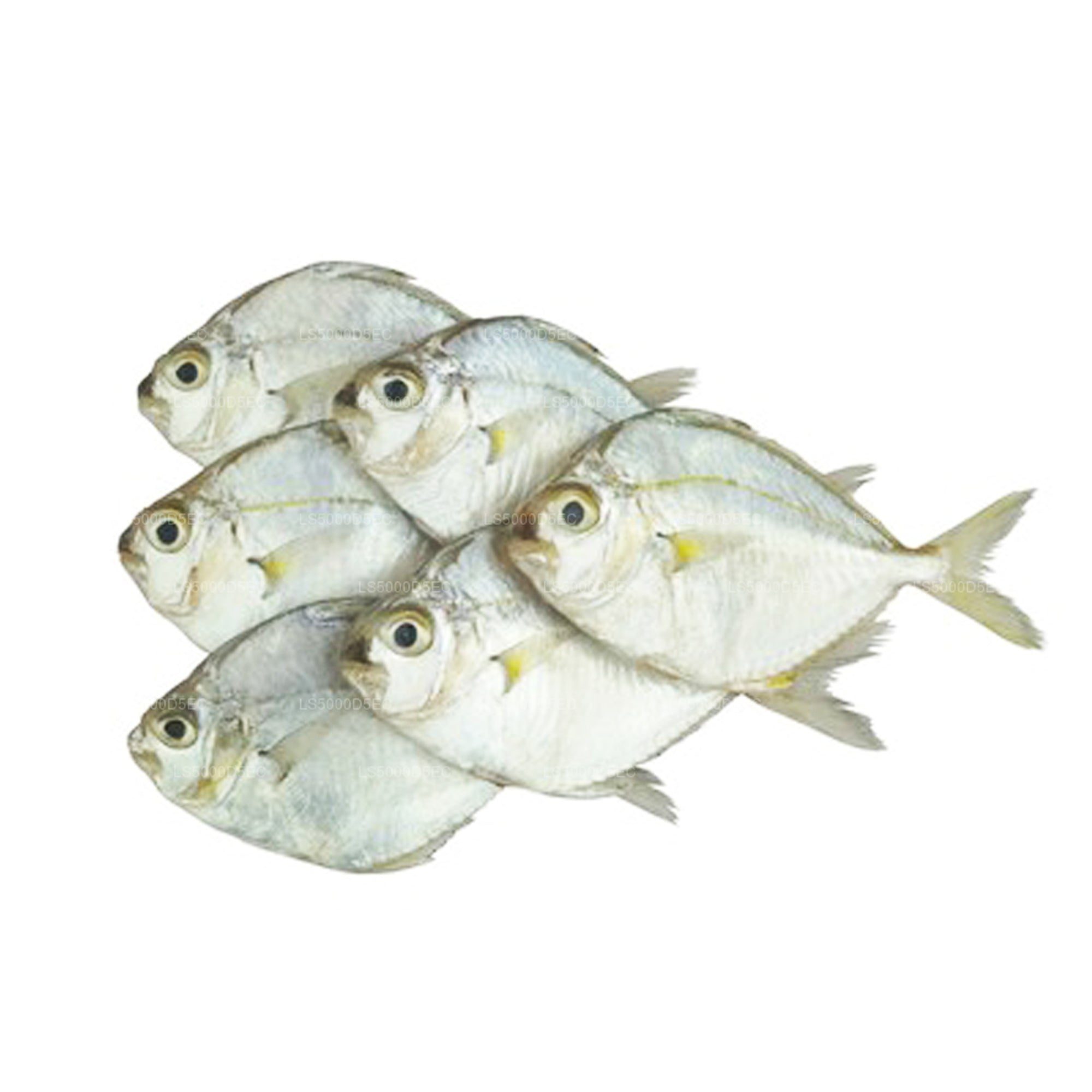
Waw Karawala is Sri Lanka's time-honoured tradition of sun-drying freshwater fish harvested from the island's network of ancient tanks, reservoirs, and rivers. While the term karawala broadly covers dried and salted fish in Sri Lankan cuisine, the waw prefix — meaning lake or reservoir in Sinhala — distinguishes this variety from its marine counterpart. The result is a product with a notably milder flavour and a softer aroma than saltwater dried fish, shaped entirely by the freshwater environments it comes from.
What is Waw Karawala and how is it different from other dried fish?
Marine karawala is the more widely exported variety, but Waw Karawala occupies a distinct culinary niche within Sri Lanka's domestic food culture. Freshwater fish tend to have a less intense brininess, and when dried, they carry a subtler umami depth rather than the sharp, pungent edge of sea-caught dried fish. Species commonly used include freshwater tilapia, catfish, and smaller reservoir fish found in abundance across the North Central and Eastern provinces.
The practical distinction matters in the kitchen too. Waw Karawala integrates more gently into spiced curries and sambols, complementing rather than overwhelming other aromatics such as Ceylon black pepper and fresh curry leaves.
How is Waw Karawala prepared?
The preparation follows a method passed down through generations of fishing communities, particularly those living near Sri Lanka's great ancient reservoirs. The process begins with cleaning and gutting the freshly caught fish. The fish are then dry-salted — rubbed thoroughly with coarse salt — and left to absorb the seasoning for several hours or overnight.
Sun-drying follows, typically over two to five days depending on the size of the fish and the intensity of the sun. The fish are laid on woven mats or raised bamboo frames to allow air circulation on all sides, which slows bacterial growth and ensures even drying. The resulting product can be stored at room temperature for weeks without refrigeration — a quality that historically made it an essential food source in rural communities far from coastal supply chains.
This preservation method requires no additives beyond salt, making Waw Karawala a remarkably clean processed food by modern standards. Small-scale producers near reservoirs such as the Randenigala and Parakrama Samudra still follow this traditional technique, though some commercial operations now supplement sun-drying with mechanical drying to meet demand.
Where does Waw Karawala come from in Sri Lanka?
The heartland of freshwater fish production in Sri Lanka is the Dry Zone — the broad arc of territory covering the North Central, Northern, and Eastern provinces, where ancient irrigation tanks dot the landscape. Communities around Polonnaruwa, historically the seat of Sri Lanka's hydraulic civilisation, have long sustained themselves through tank fisheries alongside paddy cultivation.
The Mahaweli River system and its associated reservoirs supply the bulk of the freshwater fish used for Waw Karawala today. Smaller quantities are also produced near wetland systems in the Southern and North Western provinces, though tank-reservoir fish from the Dry Zone are generally considered the most flavourful.
How is Waw Karawala used in Sri Lankan cooking?
Waw Karawala is a genuinely versatile ingredient that appears across several categories of Sri Lankan cooking:
- Fried karawala: The simplest preparation — pieces are deep-fried until crisp and served as a side dish alongside rice and curry. The frying concentrates the flavour and adds a satisfying crunch.
- Karawala curry: Dried fish pieces are simmered in a spiced coconut-milk gravy, softening as they rehydrate and absorbing the surrounding aromatics. This is a staple lunch dish in many rural households.
- Sambol: Waw Karawala is pounded or flaked and mixed with shallots, dried chilli, lime juice, and sometimes grated coconut to make a dry relish that accompanies rice and bread.
- Mallum: Shredded dried fish is occasionally stirred through cooked leafy greens as a protein-adding seasoning.
- Rice accompaniment: Even a small portion of fried karawala alongside a simple rice meal transforms it into a nutritionally complete and flavourful plate — a quality that explains its enduring presence in everyday Sri Lankan cooking.
What is the nutritional value of Waw Karawala?
Dried fish is a concentrated source of protein, typically providing more protein per gram than fresh fish simply because water has been removed. Waw Karawala also supplies calcium, phosphorus, and a range of B vitamins. Because it is produced from freshwater species, it generally has a lower omega-3 fatty acid content than oily marine fish such as tuna or mackerel, but it compensates with its accessibility and affordability as a protein source.
For rural communities in Sri Lanka's inland regions, Waw Karawala has historically served as a critical source of dietary protein during periods when fresh protein was scarce or expensive. That nutritional reliability, combined with its long shelf life, explains why it remains embedded in everyday Sri Lankan diets rather than becoming a niche or ceremonial food.
Is Waw Karawala environmentally sustainable?
The freshwater fisheries that supply Waw Karawala are, at their best, a low-impact food system. Sri Lanka's ancient tank fisheries operate as closed or semi-closed systems where fish populations are managed communally. The drying process itself requires only sunlight and salt — no industrial energy inputs. Packaging is typically minimal.
The sustainability picture is not without nuance. Overfishing of specific reservoir species and the introduction of invasive fish species have created pressure on some freshwater ecosystems. However, small-scale traditional Waw Karawala production, particularly when sourced from well-managed community tank fisheries, remains one of the more ecologically modest food products in Sri Lanka's pantry.
Where can you buy authentic Waw Karawala?
Waw Karawala is sold in local markets throughout the Dry Zone, particularly in Polonnaruwa, Anuradhapura, and Trincomalee districts. In Colombo, it is available in neighbourhood grocery shops and in the spice and dried-goods sections of larger covered markets. Visitors travelling through the Cultural Triangle will encounter it at roadside stalls near the major reservoirs.
For those who want to take some home, pre-packed Waw Karawala is also available from specialty Sri Lankan food producers, vacuum-sealed to reduce odour during travel. Look for products labelled with the fish species and origin, which are markers of a more transparent and typically higher-quality supply chain.
How does Waw Karawala fit into Sri Lanka's broader food culture?
Sri Lankan food culture places enormous value on the interplay of preserved, fermented, and fresh ingredients — a tradition shared with other South and Southeast Asian cuisines. Waw Karawala sits alongside other preserved staples such as lunu dehi (salted lime pickle) as an everyday condiment that adds complexity to simple meals without requiring elaborate preparation.
It also functions as a form of edible cultural memory. Families in the Dry Zone, whose ancestors built and farmed around the great tanks of the Anuradhapura and Polonnaruwa kingdoms, still prepare Waw Karawala using broadly the same techniques their grandparents used. In that sense, eating Waw Karawala is a small act of continuity with one of Asia's most sophisticated ancient agricultural civilisations.
Related reading
3 pages on closely related subjects.