A traditional Sri Lankan village lunch is one of the most grounding ways to understand how rural communities live, eat, and share. Served on banana leaves, prepared from ingredients grown or gathered nearby, and eaten in a setting where hospitality is the default, it offers something that a restaurant meal rarely can — a direct connection to the rhythms of everyday Sri Lankan life.
What does a Sri Lankan village lunch actually include?
The foundation is always rice — typically red or white, cooked the same morning. Around it, a host family arranges an array of small dishes: a dal curry enriched with fresh coconut milk, a drumstick or jackfruit curry, a green-leaf mallum (wilted greens tossed with scraped coconut and lime), and usually a fish or prawn preparation if the village is near water.
Alongside the main dishes, expect accompaniments that balance the meal's heat and richness. A coconut sambol made with red onion and chili sits next to a bright pol sambol. Pickled lime or mango acharu adds sourness, and a plate of papadams or kokis — deep-fried rice-flour fritters — provides crunch. The seasoning throughout relies on curry leaves, turmeric, Ceylon black pepper, and a dried-spice base that varies by district.
Portions are generous. Refusals are gently ignored. Accepting second helpings is considered a compliment to the cook.
How is a village lunch served and eaten?
Traditionally, food is arranged on a segment of banana leaf placed directly on a low table or mat. The leaf acts as a natural plate — it imparts a faint green fragrance to the food and requires no washing up. Guests are often seated together in the kitchen or a shaded outdoor area, close enough to watch the final dishes being brought off the hearth.
Eating with the right hand — using the fingers to mix rice and curry together into small mouthfuls — is the culturally standard approach. Hosts are unlikely to insist if a guest prefers a spoon, but trying the traditional method, however imperfect, is appreciated and adds to the experience. A water jug and a small bowl for rinsing hands are always provided.
Meals are communal in pace, not just in seating. Dishes are served family-style, and the host typically remains nearby to refill portions and explain what each dish is made from.
Where in Sri Lanka can you experience a village lunch?
Village lunch experiences are available across the country, but several regions stand out for the quality and authenticity of what is offered.
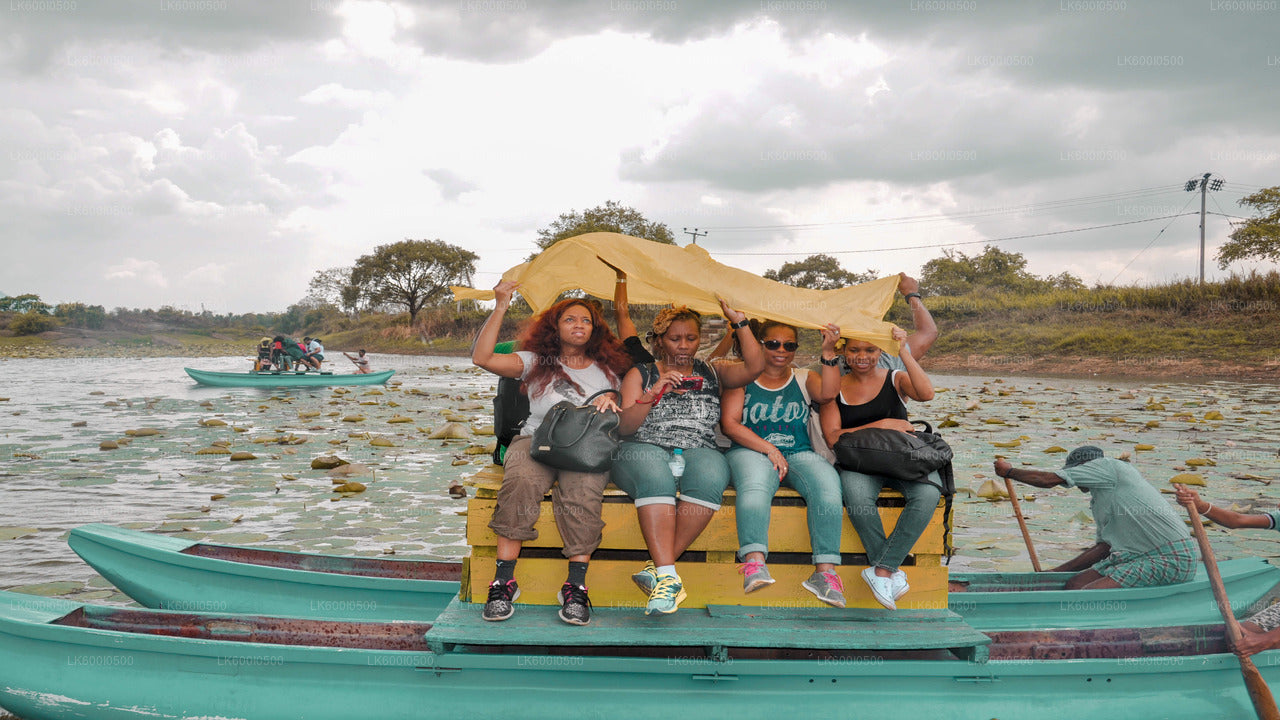
- Sigiriya and Dambulla area (North Central Province): The villages around Sigiriya and the Dambulla basin have developed a strong tradition of hosting cultural visitors. Families here typically include a bullock-cart or coracle-boat component before the meal, so the lunch becomes part of a wider rural immersion.
- Hiriwadunna Village: Set around a tank (ancient reservoir) near Dambulla, Hiriwadunna offers a guided village tour followed by a full banana-leaf lunch prepared by local families. The setting is quiet and genuinely rural.
- Southern Province villages: In coastal and inland villages near the Madu Ganga wetlands, lunch menus lean heavily on freshwater fish and crab prepared with coconut-milk bases — a distinct regional style.
- Hill Country villages near Ella: Up in the highlands around Ella, meals tend to incorporate more root vegetables, jak fruit, and brassica-family greens suited to the cooler climate. Ceylon green tea or a freshly brewed herbal drink is served alongside the meal.
What makes the food taste different from Sri Lankan restaurant food?
The single biggest difference is the sourcing. Village cooks typically use produce from their own garden or from a neighbour's plot harvested that morning. Coconut is scraped by hand rather than bought pre-desiccated. Spices may be ground on a stone rather than bought ready-mixed. Firewood cooking over a clay hearth imparts a subtle smokiness that LPG flames do not replicate.
The result is food that tastes fresher and more layered, even when the recipe is identical to something served in a city restaurant. The absence of added preservatives, flavour enhancers, or commercial curry powders is immediately apparent to anyone who has eaten Sri Lankan food regularly.
Village cooks also calibrate spice heat differently depending on who is sitting at the table. International visitors are usually served a version that is warming rather than intensely hot, with condiments offered on the side so each person can adjust.
What is the cultural significance of a village lunch?
In Sri Lanka, sharing food is an act of trust and welcome. The phrase "danne nehe" — roughly, "there is nothing" — is what a modest host says when presenting a table covered in dishes, a ritual self-deprecation that signals abundance rather than scarcity. Understanding this context transforms the meal from a tourist activity into a meaningful cultural exchange.
Many village families who host lunches have also maintained the same recipes across multiple generations, adapting them slightly as ingredients and circumstances change but preserving the core logic of balance: something starchy, something protein-rich, something sour, something bitter, something fiery, and something cooling. This approach to cooking reflects the influence of Ayurvedic dietary principles on everyday Sri Lankan food culture.
The paddy field is often visible from the lunch setting, a reminder that rice — which anchors every meal — begins a few hundred metres away and arrives at the table within a season's cycle.
How long does a village lunch experience typically take?
Most organised village lunch experiences run between two and four hours, including transport from a nearby hotel or town. The lunch itself takes around 45 to 60 minutes. Before eating, guests typically walk through the village, visit a working kitchen garden, or take a short boat or cart ride to understand the local landscape. After lunch, tea or fresh king coconut water is served, and there is usually time to speak with the host family through a guide interpreter before departure.
Standalone lunch visits are also possible for travellers who prefer a shorter commitment — a Singhagiri Village Tour near the Sigiriya area, for instance, can be arranged as a half-day activity that slots neatly between a morning rock-fortress visit and an afternoon drive.
What should visitors keep in mind before attending a village lunch?
- Dress modestly — covered shoulders and knees show respect for rural norms and are practical in outdoor settings.
- Inform your guide of any dietary restrictions (vegetarian, vegan, gluten-free, nut allergy) at least a day in advance. Most host families can accommodate, but last-minute requests are harder to manage.
- Photography is usually welcome but ask before photographing the kitchen or family members closely — a brief gesture of request goes a long way.
- Bring small notes for a voluntary tip to the cook and host; this is customary and directly supports the household rather than an intermediary.
- Bottled water is safe to carry; drinking water served in the home is usually boiled, but visitors with sensitive stomachs may prefer their own supply.
Related reading
6 pages on closely related subjects.