
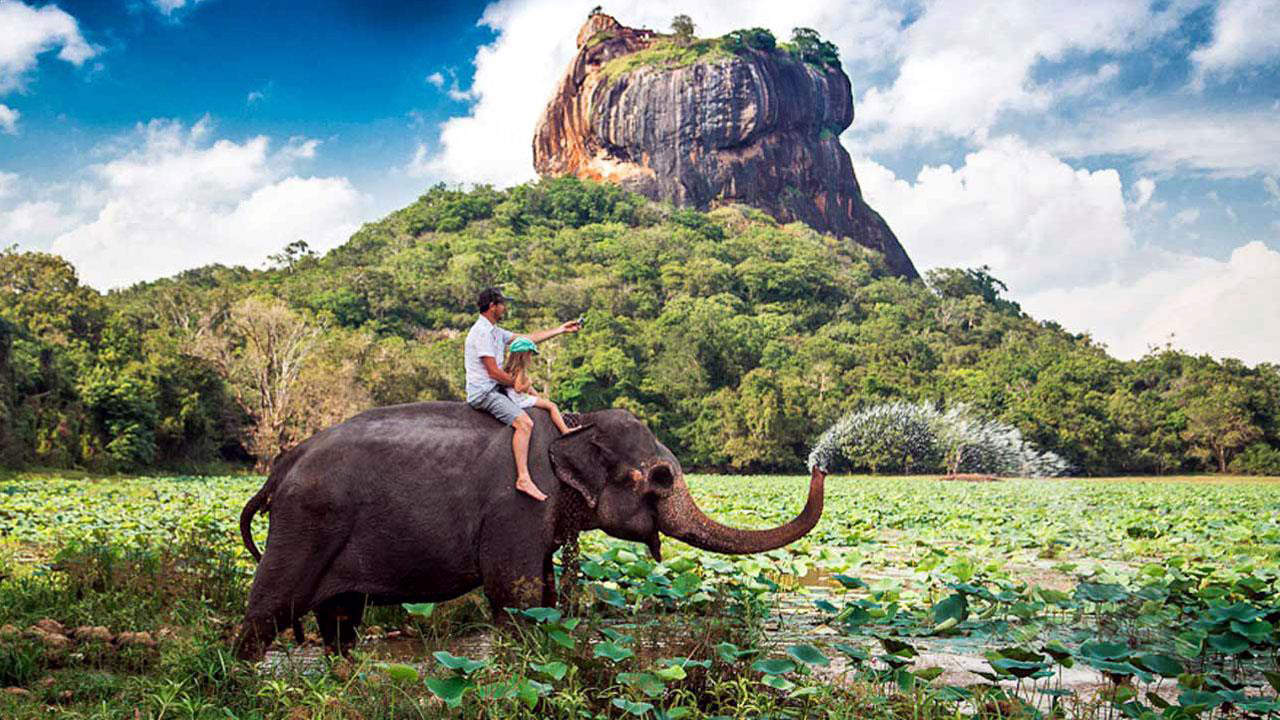


Sri Lanka rewards travellers who go beyond the obvious. In a single trip you can watch leopards in a dry-zone national park, walk through mist-covered tea plantations, explore ruins that predate Rome, and end the day on a quiet stretch of Indian Ocean coastline. For an island roughly the size of Scotland, the variety is extraordinary — and planning it well makes all the difference.
What makes Sri Lanka worth visiting?
The island sits just above the equator, off the southern tip of India, but it has a distinct identity all its own: a 2,500-year-old Buddhist civilisation, eight UNESCO World Heritage Sites, 26 national parks, and a cuisine that stands comfortably on its own merits. English is widely spoken, infrastructure for travellers is well-developed, and distances are short enough that you can cover a remarkable amount of ground in a two-week holiday without feeling rushed.
What surprises many first-time visitors is how different the island feels from one zone to the next. The south-west coast is lush and tropical; the Cultural Triangle in the north-central plains is dry and ancient; the hill country around Nuwara Eliya is cool, green, and smells of Ceylon Tea. Each region deserves its own pace.
Which regions should I include in my Sri Lanka itinerary?
A well-rounded vacation typically weaves together three or four of the island's main zones. Here is a practical overview:
- The Cultural Triangle — Centred on Sigiriya, Dambulla, and Polonnaruwa, this is where Sri Lanka's ancient civilisation is most legible. Rock fortresses, hydraulic reservoirs, and intricately carved temples are spread across a landscape of scrub jungle and paddy fields.
- Kandy and the Hill Country — Sri Lanka's last royal capital sits at around 500 m elevation, surrounded by forested hills. Above it, the terrain rises through tea estates to Horton Plains National Park at over 2,000 m, where the plateau edge — known as World's End — drops away dramatically. The hill-town of Ella has become a popular base for hikers.
- The South Coast — The stretch between Galle and Tangalle offers colonial history, surf breaks, whale-watching, and reef diving. The walled city of Galle is a UNESCO site; the beaches beyond it vary from busy resort strips to near-empty coves.
- The East Coast — Less visited than the south, the east coast has some of Sri Lanka's finest beaches at Arugam Bay, Pasikuda, and Trincomalee. The season here runs roughly May to October, the inverse of the west.
- The National Parks — Udawalawe National Park is the most reliable place on the island to see wild elephants. Wilpattu National Park in the north-west is quieter and known for its leopard population. Yala, in the south-east, combines leopard sightings with a striking coastal landscape.
When is the best time to visit Sri Lanka?
Sri Lanka does not have a single tourist season because the island's two coastlines face opposite monsoons. The south-west coast and hill country are driest from December to March; the east coast is driest from May to September. The Cultural Triangle and national parks in the dry zone are accessible year-round, though April and August–September see the lowest visitor numbers.
If you want to be on the right coast at the right time, the simplest rule is: December to March for the south and west; May to September for the east. The Esala Perahera Festival in Kandy, held in July or August, is one of the most impressive ceremonial processions in Asia and worth timing your visit around.
What wildlife can I see on a Sri Lanka vacation?
Sri Lanka has a higher density of leopards than almost anywhere else in the world, and the elephant population — both wild and at sanctuaries like the Elephant Transit Home near Udawalawe — is one of the island's signature draws. Blue whales pass through the waters off Mirissa and Trincomalee on seasonal migration routes. Sea turtles nest on multiple beaches along the south coast, with conservation projects at Hikkaduwa and Kosgoda allowing visitors to observe the process responsibly.
For birders, the Sinharaja Forest Reserve in the wet zone lowlands is a UNESCO-listed rainforest that shelters a high proportion of Sri Lanka's endemic bird species. Most serious bird lists also include a morning walk through the cloud forest above Horton Plains.
How do I get around Sri Lanka?
The most comfortable and flexible way to travel between regions is by private car with a driver. Distances that look short on a map can take longer than expected on mountain roads, so building in realistic travel times matters. The hill-country train between Kandy and Ella is one of the most scenic rail journeys in Asia and is worth booking in advance, especially for the observation carriages.
For shorter, more immersive experiences, a tuk-tuk safari through a local village or a boat excursion on the Madu River adds texture to an itinerary that might otherwise stay on the main highway.
What are the best experiences beyond beaches and temples?
Sri Lanka's depth shows in its smaller, less-publicised experiences. Walking through the rows of a working estate like Bluefield Tea Gardens in the hill country connects the cup you drink every morning to a real landscape and community. A hot-air balloon flight over the Cultural Triangle at sunrise offers a perspective on the ancient reservoir system that no ground-level photograph can replicate.
On the water, the options extend well beyond beach swimming. Deep-sea fishing charters operate from several coastal towns, and sailing holidays along the coast — particularly from Mirissa, Trincomalee, and Jaffna — have grown into a credible niche of their own. The north, centred on Jaffna, is culturally and culinarily distinct from the south and feels like a separate country within the same island.
How should I plan a tailor-made Sri Lanka vacation?
The most effective itineraries are built around a traveller's priorities rather than a fixed circuit. A family with young children needs different pacing than a couple who want to hike and dive. A two-week trip can reasonably cover two or three regions; a three-week trip allows you to include the east coast or the far north without feeling rushed.
Key decisions to make early: which season you are travelling in (this determines which coast works), how much time you want to spend on wildlife versus culture, and whether you prefer smaller boutique properties or larger resort hotels. Once those are clear, the routing tends to follow logically.
Lakpura designs each itinerary individually, drawing on direct relationships with properties, park guides, and local specialists built over years of operating on the island. Every element — transfers, accommodation, activity permits, and guide arrangements — is handled so that the trip runs smoothly from arrival at Bandaranaike International Airport to departure.
Related reading
2 pages on closely related subjects.

