
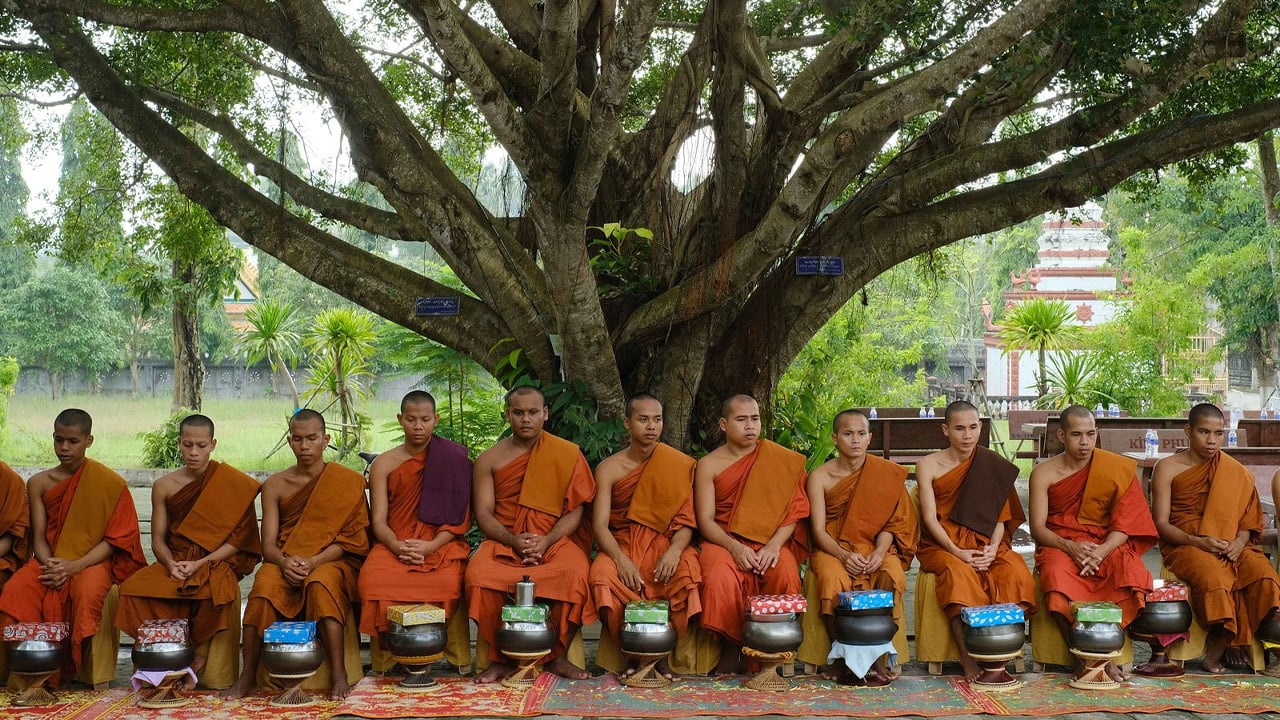


Uposatha (Sanskrit: Upavasatha) is a Buddhist day of observance with roots stretching back to the time of the Buddha, around 600 BCE. It continues to shape the rhythm of daily life across Theravada Buddhist countries, including Sri Lanka, where Uposatha days — known locally as Poya days — are public holidays observed with quiet reverence. The Buddha described their purpose plainly: the cleansing of the defiled mind, leading to inner calm and genuine joy.
What happens on an Uposatha day?
On Uposatha days, both laypeople and ordained members of the Buddhist community — the sangha — intensify their practice. Lay followers commit to keeping at minimum the Five Precepts: refraining from taking life, stealing, sexual misconduct, false speech, and intoxicants. More devout practitioners observe the Eight or Ten Precepts, which include fasting after midday and avoiding entertainment and personal adornment.
Monasteries across Sri Lanka fill with laypeople who come to offer alms, listen to Dhamma talks, and participate in collective meditation. This reciprocal relationship — laypeople providing material support, monks offering teaching and example — has sustained Buddhist communities for well over two millennia. Observing Sil (precept observance) on Poya day is considered among the most meritorious acts a lay Buddhist can undertake.
How are Uposatha days determined?
Uposatha days are tied to the lunar calendar. In Theravada countries, including Sri Lanka, they traditionally align with the four lunar phases each month: the new moon, the full moon, and the two quarter moons in between. In practice, Sri Lankan Buddhist communities primarily observe the new moon (Amavaka Poya) and the full moon (Punavaka Poya) as the principal days of observance, with the full moon day carrying greater ceremonial weight.
In Mahayana countries that follow the Chinese lunar calendar, Uposatha is observed more frequently — up to ten times a month — on designated dates including the 1st, 8th, 14th, 15th, 18th, 23rd, 24th, and the final three days of each lunar month. A shorter cycle of six observance days a month is also widely followed. In Japan, these six days are traditionally called roku sainichi, meaning Six Days of Fasting.
How does Sri Lanka observe Poya days?
Sri Lanka is one of the few countries in the world where the full moon Poya day is a monthly public holiday rather than a weekend event. Government offices, banks, and many businesses close. The sale of alcohol is prohibited, and meat consumption is reduced in many households. This statutory recognition of Uposatha reflects how deeply embedded Theravada Buddhism is in Sri Lankan public life.
Temples — from local village shrines to major pilgrimage sites — receive significantly higher visitor numbers on Poya days. Devotees arrive dressed in white, the colour associated with purity and restraint, carrying flowers, incense, and oil lamps as offerings. Chanting of Pali suttas continues through much of the night at larger temples. The Esala Perahera Festival in Kandy, one of Asia's grandest Buddhist processions, culminates on the Esala full moon Poya day, marking the height of the ceremonial calendar.
Which Poya days are especially significant in Sri Lanka?
Each full moon Poya day carries a distinct name and associated religious significance. Several are considered especially important:
- Vesak Poya (May full moon) — commemorates the birth, enlightenment, and passing of the Buddha. Streets and homes are decorated with paper lanterns and pandols (illuminated dioramas depicting Jataka stories). It is the most widely observed Poya day across the Buddhist world.
- Poson Poya (June full moon) — marks the arrival of Buddhism in Sri Lanka, traditionally associated with the missionary monk Arahat Mahinda, who brought the Dhamma from India to the island around 247 BCE. Pilgrims converge on Polonnaruwa and Mihintale.
- Esala Poya (July full moon) — associated with the Buddha's first sermon and the beginning of the Vas (Rains Retreat) season, during which monks remain in their monasteries for three months of intensive practice.
- Il Poya (November full moon) — marks the end of Vas, a period when laypeople traditionally present robes and requisites to monks in the ceremony known as Kathina.
- Unduvap Poya (December full moon) — honours the arrival of Sanghamitta Theri, who brought a sapling of the sacred Bodhi tree from India to Anuradhapura, where it continues to grow today, making it one of the oldest historically documented trees in the world.
What is the Dhamma School connection to Uposatha?
For younger Sri Lankans, Uposatha observance often begins at Dhamma School (Daham Pasala), where children receive religious education alongside lay practice. Dhamma schools typically hold classes on Sunday mornings at local temples, and students are encouraged to accompany their families on Poya days to make offerings and listen to Dhamma teachings. This intergenerational transmission of practice is a cornerstone of how Uposatha culture sustains itself across generations.
How does Uposatha relate to other Sri Lankan Buddhist traditions?
The observance of Uposatha underpins a wider ecosystem of Buddhist practice in Sri Lanka. Monasteries maintain the Patimokkha — the code of monastic discipline — by reciting it communally on full and new moon Poya days, a practice that has continued unbroken since the time of the Buddha. For lay devotees, Poya day is often the occasion for visiting stupas, circumambulating sacred sites, and making merit through acts of generosity and restraint.
Travellers visiting Sri Lanka will notice Poya day's presence in the landscape: the white-clad crowds at temple gates, the quieter roads, the altered rhythm of towns. Planning around Poya days — or deliberately coinciding with them — offers a genuinely different perspective on Sri Lankan life, one shaped by a practice that is at once deeply personal and openly communal.
