Lakpura
Lakpura®

Tissamaharama City

Tissamaharama — known locally as Tissa — sits 264 km south of Colombo in the Hambantota District, at the point where the Southern Expressway's reach thins out and the dry-zone landscape opens into a broad plain of paddy fields, ancient reservoirs, and wildlife corridors. It is simultaneously a modest market town of roughly 25,000 people, a node of early Buddhist civilisation, and the most practical base for anyone exploring the deep south's extraordinary cluster of national parks, sanctuaries, and pilgrimage sites.

Orientation & Character

Tissa is compact and easy to read. The central focus is Tissa Wewa, a large ancient tank roughly 1 km north of the town centre, whose bunded shores are lined with guesthouses, small restaurants, and the occasional grazing elephant that has wandered in from surrounding scrubland. The main market street runs south from the tank, passing the bus station and a cluster of small shops. Beyond the paddy fields to the east, the white dome of the Sandagiri Dagoba punctuates the skyline. The town is predominantly Sinhalese Buddhist, with a Kataragama Hindu-Buddhist mix that intensifies the further south-east you travel. It is not a beach town and it does not try to be — its appeal is ecological and historical, and it suits travellers who are here to do something rather than simply unwind.

History & Context

The area around Tissa was inhabited during the reign of the Ruhuna kingdom, a southern polity that co-existed with — and at times rivalled — the great northern capital at Anuradhapura. Classical chronicles identify Tissamaharama as the seat of King Kavantissa and his son Dutugamunu, who is credited with reunifying the island under Sinhalese rule in the second century BCE. The town's reservoirs — Tissa Wewa, Yoda Wewa, and the smaller Debera Wewa — are all works of that hydraulic civilisation, engineered to sustain rice cultivation in an otherwise semi-arid zone that receives as little as 900 mm of rainfall annually, mostly between October and January.

Buddhism arrived early here and left a dense architectural footprint. The presence of relics, royal associations, and proximity to Kataragama — one of the most venerated pilgrimage destinations in South Asia — means Tissa has never been purely a tourist town. It sits within a living religious landscape that long predates organised tourism.

Key Sights in & Around Town

Sandagiri (Santagiri) Dagoba

The most visible monument in Tissa, this whitewashed stupa stands 56 metres tall with a circumference of approximately 165 metres, rising from the middle of paddy fields on the edge of Tissa Wewa. It is believed to enshrine relics brought from India and dates to at least the second century BCE in its original form, though the structure visible today reflects later restoration. The setting — water, rice, and a gleaming dome — is particularly photogenic at dawn and dusk. Dress modestly (shoulders and knees covered) and remove footwear before ascending the platform.

Menik Vihara & Yatala Dagoba

Two further stupas lie within easy walking or tuk-tuk distance of the centre. Menik Vihara is an active monastery complex. Yatala Dagoba, south of town, is older — estimates date its core to the third century BCE — and is said to contain relics of the Buddha. Archaeological excavations around Yatala have yielded sculptures, inscriptions, and coins that are now partially displayed on site and partially in the Colombo National Museum. Neither site charges a formal entry fee, though a small donation at the shrine room is customary.

Tissa Wewa & Debera Wewa

The tanks are not merely scenic backdrops. Tissa Wewa supports a resident population of water birds — painted storks, open-billed storks, cormorants, herons — and the walking path along the bund at the northern edge of town is a reliable birding circuit that takes around an hour at a slow pace. A footpath from the far end of Tissa Wewa leads to the smaller, quieter Debera Wewa, a pleasant 30-minute walk through scrub and paddy. Both tanks occasionally attract elephants at dusk, particularly in the dry season when water sources are scarce further inland.

Surrounding Attractions: Why Most Visitors Come

Yala National Park

Sri Lanka's most visited wildlife reserve lies roughly 25 km east of Tissa. Block I — the section normally open to tourists — covers around 140 sq km of dry monsoon forest, scrubland, and coastal lagoons. Yala holds one of the world's highest recorded densities of wild leopard, and sightings, while never guaranteed, are reasonably frequent in the dry season. Other residents include sloth bears, elephants, crocodiles, sambar deer, and over 200 bird species. Jeep safaris depart from the main Palatupana gate; the standard format is a half-day morning or afternoon excursion of three to four hours. Expect to pay USD 30–50 for jeep hire plus a national park entry fee (currently LKR 6,000–7,000 for foreign nationals, subject to revision). Yala Block I closes annually, usually in September, for a rest period; dates vary, so confirm before planning.

Bundala National Park

Often overlooked in favour of Yala, Bundala is a UNESCO Ramsar wetland 15 km west of Tissa that rewards serious birdwatchers. Between November and March it hosts tens of thousands of migratory waterbirds, including greater flamingos. Leopard sightings are rare but elephants are regularly seen. Entry fees are lower than Yala and the park is far less crowded; a half-day jeep circuit costs USD 20–35. Its coastal lagoon system is ecologically distinct from anything else in the south.

Kataragama

Approximately 18 km north-east of Tissa, Kataragama is one of the most important multi-faith pilgrimage sites in Sri Lanka, attracting Hindu, Buddhist, and Muslim devotees. The Maha Devale shrine to Skanda/Muruga draws enormous crowds during the Esala festival in July–August, when fire-walking and kavadi processions take place. Outside festival season the complex is accessible and fascinating, and the walk from the main shrine area to the Kiri Vehera stupa through a wooded riverbank is one of the more atmospheric short walks in the south. Modest dress is non-negotiable at all shrines.

Situlpawwa Rock Monastery

A remote forest monastery within the Yala buffer zone, Situlpawwa contains cave cells, inscriptions, and stupas dating to around the first century BCE. It is an active pilgrimage site and receives a fraction of the visitors that Yala does. Access requires a 4WD or tuk-tuk on rough tracks; combined visits with a Yala safari are possible with forward planning.

Udawalawe National Park

Udawalawe National Park lies roughly 55 km north-west of Tissa and is Sri Lanka's best destination for reliable elephant encounters — herds of 50 or more are not unusual around the reservoir. It is perfectly feasible as a day trip from Tissa, though many travellers choose to break their journey between Tissa and the hill country here rather than combine it with Yala in a single day.

Food & Drink

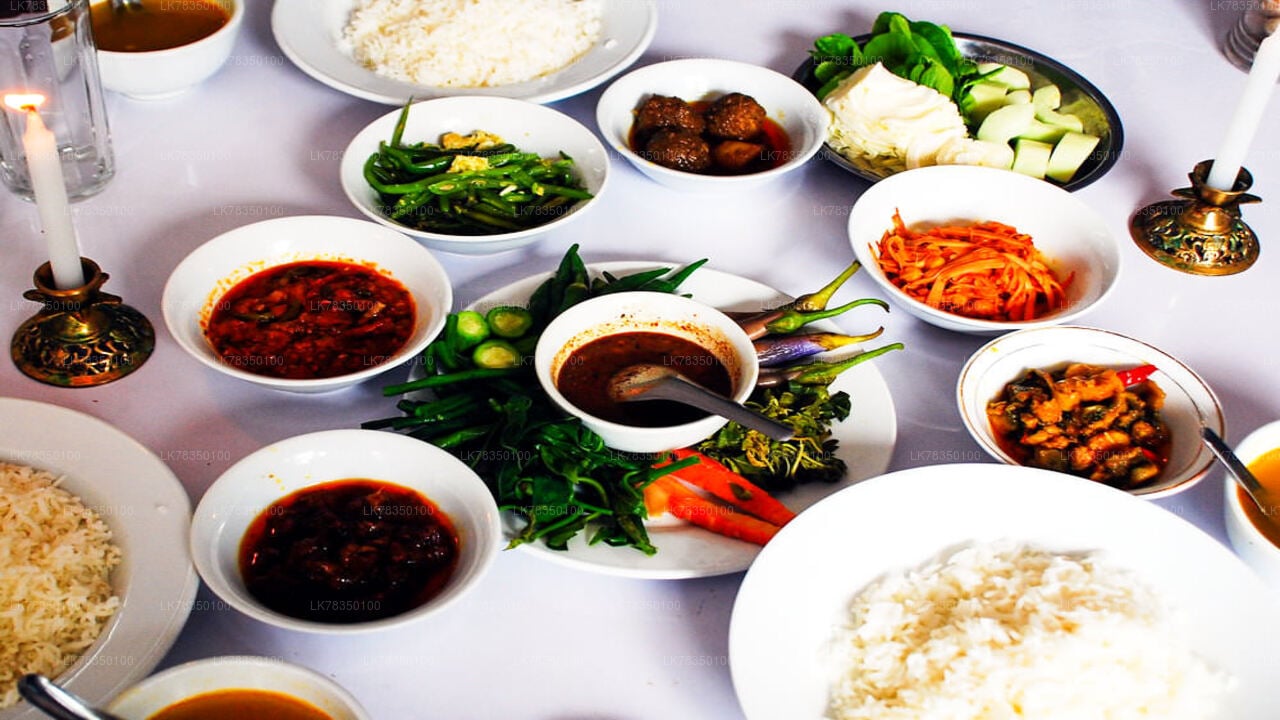
Tissa's food scene is functional rather than remarkable. The highest concentration of restaurants aimed at travellers is along the Tissa Wewa bund road, where guesthouses operate open-sided dining rooms serving rice and curry, grilled fish, hoppers, and the ubiquitous Sri Lankan breakfast of string hoppers with coconut sambol. Seafood arrives fresh from Hambantota and Kirinda, 7 km south on the coast; fresh tuna, seer, and prawns are reliable choices. A full rice-and-curry lunch costs LKR 500–800 at local eateries; traveller-facing restaurants charge LKR 1,200–2,500 for a main course. There is a small but functional local market near the bus stand for fruit, short eats, and provisions. Alcohol is available at hotels and some restaurants; observe that Kataragama is a dry zone — no alcohol is sold or consumed near the pilgrimage precinct.

Where to Stay

Accommodation in Tissa divides broadly into three areas:

  • Tissa Wewa bund: The most popular strip, with guesthouses and small hotels at a range of price points. Rooms directly overlooking the tank can cost USD 30–80 per night for a comfortable double with air conditioning. This location makes early-morning departures for Yala straightforward.
  • Debera Wewa village: Quieter, slightly removed from the main town, with a handful of guesthouses on the smaller lake. Better for those prioritising stillness over proximity to the bus station.
  • Town centre and outskirts: Budget lodges and family guesthouses in the USD 12–25 range for a basic but clean double. Useful if you are on a tight budget or passing through rather than basing yourself for multiple days.

Booking ahead is strongly advised during December–April (dry season, high wildlife season) and essential during the Kataragama Esala festival in July–August, when accommodation across the entire district fills rapidly.

Getting There & Getting Around

Tissa has no railway connection. All access is by road.

  • From Colombo: The fastest route uses the Southern Expressway (E01) to Matara, then the A2 coast road via Tangalle to Hambantota and south to Tissa — approximately 4.5–5.5 hours by car or private transfer. Direct air-conditioned express buses from Colombo Central Bus Station take 5–6 hours and cost roughly LKR 400–600.
  • From Galle or Mirissa: Approximately 2.5–3 hours by road via Matara and Tangalle. Mirissa to Tissa by bus requires a change in Matara or Tangalle.
  • From Ella or the hill country: The A23/A2 route via Wellawaya brings Tissa within 2.5–3 hours of Ella, making a logical south-circuit itinerary possible.
  • Local transport: Tuk-tuks are the standard way to reach Yala gate, Kataragama, Bundala, and town sights. Agree on a price before departing; reckon on LKR 500–700 for short town trips and LKR 2,500–4,000 for a half-day excursion to Kataragama or the park gates. Safari jeeps are arranged separately through guesthouses or directly at Palatupana entrance.

Best Time to Visit

MonthWeatherWildlife & ParksCrowds
Jan–FebDry, 28–32 °CExcellent — water low, animals at tanksHigh
Mar–AprDry, warmingVery goodModerate–high
May–JunIntermittent showers beginGood; Yala less crowdedLow
Jul–AugRelatively dryGood; Kataragama festival draws large crowdsHigh (festival)
SepDry, very hotYala Block I typically closed for annual restLow
Oct–NovNorth-east monsoon; heavy rain possibleBundala flamingos arrive; Yala reopensLow
DecRain easing; coolingGood and improvingRising

The dry season from January to April is the peak period for wildlife and the most comfortable for travel. September is best avoided if Yala is your primary goal. The north-east monsoon (October–December) affects this coast more than the west, and road conditions on unsealed tracks to Situlpawwa can deteriorate significantly after heavy rain.

Practical Tips

  • Money: There are ATMs in Tissa town that accept international cards; carry enough cash before heading to Yala or Kataragama, as card acceptance is limited beyond the main town. Park entry fees are typically cash-only.
  • Safari timing: Morning departures (around 05:30–06:00) are strongly preferred for Yala leopard sightings. The park gets congested with jeeps by mid-morning; afternoon safaris (departing around 14:30) offer a different light and slightly fewer vehicles.
  • Dress: Religious sites require covered shoulders and knees. Carry a light scarf. Remove footwear before entering temple platforms — the ground can be hot at midday; socks help.
  • Wildlife safety: Do not approach elephants on foot, including those near the tank bunds at dusk. Stay in the jeep during Yala safaris.
  • Connectivity: Mobile data (Dialog, Mobitel, Hutch) is reasonably reliable in town. Signal can drop inside Yala and on the road to Situlpawwa. Most guesthouses offer Wi-Fi.
  • Scams: Unsolicited guides offering to take you to Yala at prices that seem very low often work on commission from specific jeep operators. Prices quoted at the Palatupana gate itself are transparent and subject to fixed-rate boards; it is worth verifying the current rate schedule there directly.
  • Health: The dry zone has mosquitoes, particularly near the tanks after sunset. Use repellent and long sleeves in the evenings. Carry sufficient water on safari — dehydration in an open jeep in 35 °C heat is a real risk.

Suggested Itineraries

One Day

Early morning jeep safari in Yala Block I (3–4 hours). Return to Tissa for breakfast and a walk along the Tissa Wewa bund to the Sandagiri Dagoba. Afternoon visit to Kataragama — shrine complex, Kiri Vehera stupa, and riverside walk. Return to Tissa for dinner.

Two Days

Day 1 as above. Day 2: dawn Bundala bird circuit (particularly worthwhile November–March), followed by Yatala Dagoba and Menik Vihara in the late morning. Optional afternoon excursion to Kirinda Beach and its clifftop temple for coastal views and a quieter atmosphere than the tank road.

Three Days

Add a full day for Udawalawe National Park as either a day trip or a one-night detour. Alternatively, extend Yala safaris across two different sessions (morning and afternoon) to maximise sighting opportunities, and add Situlpawwa monastery on the second or third afternoon.

Onward Connections

Tissa sits at a natural junction in south and south-east Sri Lanka. Travellers heading west along the coast pass through Hambantota and Tangalle, a quieter beach town with some of the region's best swimming bays. Continuing west leads to Mirissa (whale watching, December to April) and eventually Galle and the fort. North through the dry zone brings you towards the Cultural Triangle — Dambulla, Sigiriya, and the ancient capitals — with Ella forming a natural hill-country waypoint on that route. East of Tissa, unsealed roads eventually connect to the surf town of Arugam Bay on the east coast, a journey of around 3.5–4 hours in the dry season, though the route becomes difficult during the north-east monsoon.

Ask Lakpura® Agent