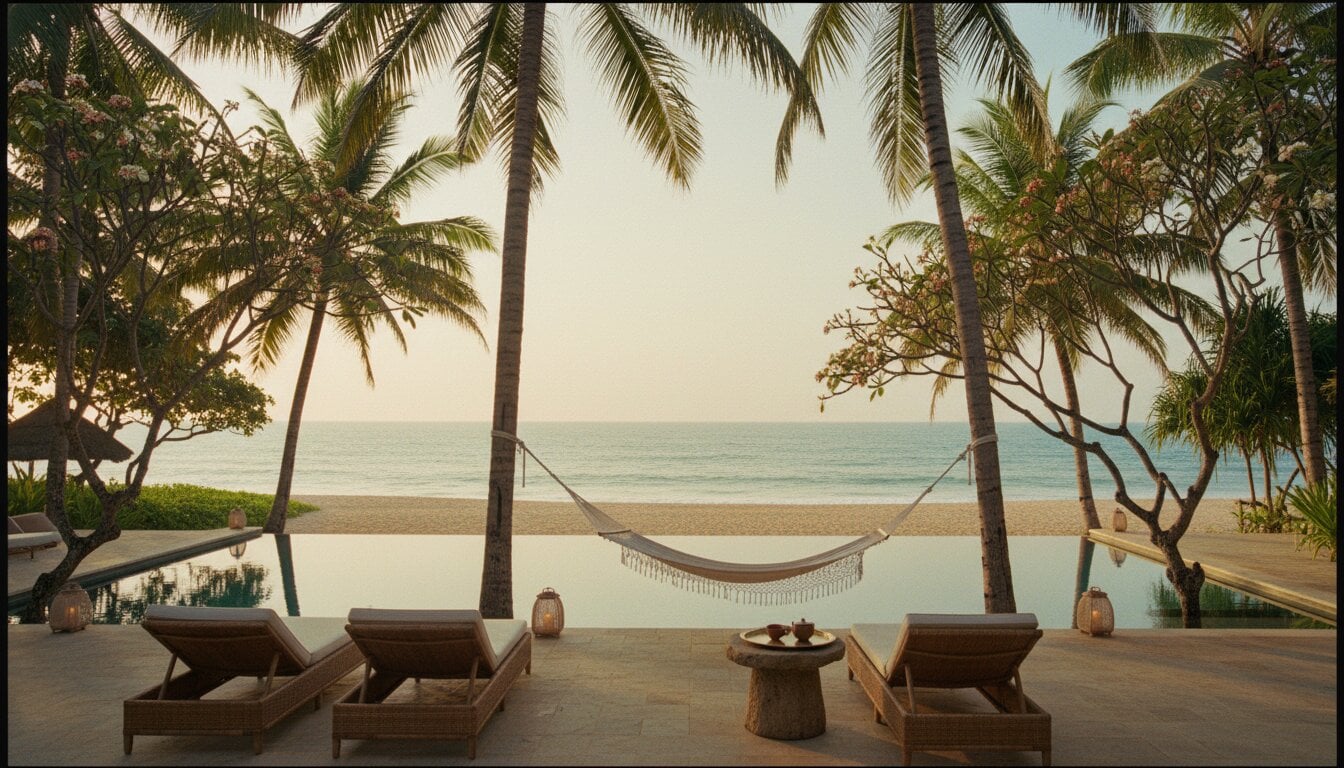
Sri Lanka's northern coastline is one of the island's least-visited and most distinctive stretches of shore. Curving around the Jaffna Peninsula and its scatter of offshore islands, this coast bears the clear imprint of Tamil culture, maritime tradition, and a landscape shaped by shallow lagoons, salt flats, and wind-bent palmyra palms. Travelers who make the journey north find a quieter, more reflective kind of coastal experience — one rooted in community life and long history rather than resort infrastructure.
What makes the northern coastline different from the rest of Sri Lanka?
The southern and western coasts draw the bulk of Sri Lanka's beach tourism, but the north operates on a different register. Beaches here tend to be wide, flat, and unhurried, backed by casuarina trees rather than beach-bar umbrellas. The sea is shallow along much of the peninsula's shore, and the water color shifts from pale turquoise to deep green depending on the season and sandbar depth. Lagoons and tidal flats separate many of the outlying islands from the mainland, creating a mosaic of habitats rarely seen elsewhere in the country.
Culturally, this is Sri Lanka's Tamil heartland. Hindu kovils appear at regular intervals along the coastal road, their gopurams painted in vivid polychrome. Fishing communities trace their livelihoods back many generations, and the daily rhythms of net-mending, boat-launching, and fish-drying still define life on the shore.
Which beaches and coastal spots are worth visiting in the north?
The Jaffna Peninsula offers several beaches that reward the effort of reaching them. Casuarina Beach, near Karainagar, is among the most visited — a long arc of pale sand shaded by casuarina pines, with calm water and very few crowds even during peak season. Nallar Beach provides a more remote feel, while the strip of coast near Kankesanthurai carries historical resonance as a former port of significance.
The islands accessible by causeway — Kayts, Karainagar, Nainativu, and Delft — each have their own coastal character. Delft (Neduntheevu) is particularly striking, with its wild ponies, coral-stone walls, and windswept beaches that feel entirely unlike the rest of Sri Lanka. Nainativu hosts the Nagapooshani Amman temple on its shore, drawing Hindu pilgrims who arrive by ferry from Kurikadduwan.
Further south along the northwest coast, the area around Wilpattu National Park meets the sea at a stretch of coast edged with lagoons and dry-zone forest — a transition zone where leopards and sloth bears have been sighted within reach of the shoreline.
What wildlife and ecosystems does the northern coast support?
The lagoons and tidal flats of the Jaffna Peninsula support significant populations of wading birds, including flamingos that congregate in the shallower basins during the right season. Herons, egrets, terns, and cormorants are common year-round. The mangrove patches that fringe parts of the lagoon edge shelter juvenile fish, crabs, and mollusks that underpin the local fishing economy.
Coral patches exist in waters around the northern islands, though they are generally shallow and less dramatic than the reefs off Pigeon Island in the northeast. Sea turtles nest on certain beaches, particularly in areas where the shoreline remains undisturbed. Salt production continues as a traditional industry in the lagoon margins, and the geometric salt pans attract wildlife of their own — notably the flamingos and stilts drawn to the mineral-rich water.
When is the best time to visit Sri Lanka's northern coastline?
The north follows a different monsoon pattern from the south and west. The southwest monsoon, which brings heavy rain to Colombo and Galle between May and September, largely passes over the Jaffna Peninsula, making those months the best for northern coastal travel. Sea conditions are calmer, roads are dry, and the crossing to the offshore islands by ferry or causeway is straightforward.
The northeast monsoon, which typically runs from October through January, can bring rain and rough seas to the north, though Jaffna town and the peninsula interior remain manageable. Visiting between February and April offers warm, dry weather but can be very hot inland. The period from May to early September is generally the most reliable window for beach walks, island excursions, and exploring the coastal villages.
| Period | Weather | Sea Conditions | Suitability |
|---|---|---|---|
| May – September | Dry, warm | Calm | Best for coastal visits and island trips |
| October – January | Northeast monsoon, some rain | Occasionally rough | Manageable in town; limit offshore crossings |
| February – April | Hot and dry | Calm | Good weather but high temperatures |
How do I get to the northern coastline from Colombo?
The Jaffna Peninsula is connected to the rest of Sri Lanka by road and rail. The A9 highway, known historically as the Kandy Road, runs from Colombo through the Cultural Triangle and the dry zone before reaching Jaffna — a journey of around 400 kilometers. Driving time is typically eight to ten hours depending on stops.
The Northern Railway Line runs from Colombo Fort station to Jaffna, with the Yal Devi express being the most convenient service. Journey time is around six to seven hours. From Jaffna town, local transport — including three-wheelers and hired cars — connects visitors to the coastal beaches and island causeways. Ferries to Nainativu and Delft depart from Kurikadduwan, north of the peninsula.
What cultural and historical sites does the northern coast offer?
Jaffna Fort, originally built by the Portuguese in the seventeenth century and later expanded by the Dutch, stands near the waterfront and is one of the most significant colonial-era structures in Sri Lanka. The fort's irregular bastions and sea-facing walls speak directly to its function as a coastal defense. The nearby Jaffna Public Library, rebuilt after its destruction during the civil conflict, holds considerable symbolic importance for Tamil cultural identity.
Along the coast and on the islands, kovils dedicated to various Hindu deities occupy prominent positions on the shoreline. The Nainativu Nagapooshani Amman temple draws pilgrims from across Sri Lanka and from the Tamil diaspora. The colonial Dutch influence is visible in the grid of streets in Jaffna town, in church architecture, and in the remnants of infrastructure that once made the peninsula a center of regional trade.
The legacy of the civil conflict is also part of the landscape — memorials, rebuilt communities, and the gradual reopening of roads and archaeological sites all tell a story of recovery. Traveling thoughtfully in the north means engaging with this recent history with some care and respect for the communities who lived through it.
What activities can travelers do on the northern coast?
- Island day trips: Take the causeway to Karainagar or Kayts, or the ferry to Nainativu and Delft, for beaches, temples, and wildlife.
- Coastal cycling: The flat terrain of the Jaffna Peninsula makes it well suited to cycling through fishing villages and along shoreline roads.
- Birdwatching: Lagoon margins and salt pans attract flamingos, waders, and shore birds, particularly outside the hottest midday hours.
- Temple visits: Kovils along the coast and on the islands offer an accessible introduction to Tamil Hindu devotional practice and architecture.
- Local markets: Jaffna's markets sell fresh seafood, palmyra-based products, and dried fish — a useful window into the local food economy.
- Photography: The combination of fishing boats, coastal light, temple gopurams, and open lagoon vistas makes the north particularly rewarding for photography.
Is the northern coastline suitable for independent travelers?
The north is increasingly well set up for independent travel, with a growing number of guesthouses and small hotels in Jaffna town. English is spoken in most tourist-facing contexts, and signage on main roads is generally bilingual. That said, the more remote coastal areas and outer islands require some planning — ferry schedules can be infrequent, and facilities on islands like Delft are minimal. Hiring a local driver or arranging a guided day excursion is the most efficient way to cover the peninsula and its beaches in a limited time.
For travelers combining the north with a broader Sri Lanka itinerary, a circuit that includes the Cultural Triangle and the northwest is logical — heading north through the ancient city of Polonnaruwa before continuing toward Jaffna allows a gradual transition from the island's historical heartland to its northern coast.
Nearby places
8 places within about 25 km, nearest first.
- City Tours From Jaffnaunder 1 km
- Jaffna Cityunder 1 km
- Jaffna Districtunder 1 km
- Jaffna Universityunder 1 km
- Maninthalei Shivam Kovilunder 1 km
- North Coastunder 1 km
- Northern Provinceunder 1 km
- Sri Lanka Tamilsunder 1 km
Related reading
1 pages on closely related subjects.