Sri Lanka has practiced the art of natural healing for more than three millennia. Long before the term "wellness" entered the modern vocabulary, palace healers and village physicians across the island compounded herbal preparations, performed ritual bathing ceremonies, and prescribed restorative diets drawn from the land around them. Spa Ceylon — one of Sri Lanka's most recognized luxury Ayurvedic lifestyle brands — was founded on this living tradition, translating ancient Ceylonese and Ayurvedic knowledge into contemporary personal care that travels beyond the island's shores.
What is Ayurveda, and why does it matter for wellness?
Ayurveda is among the world's oldest documented systems of medicine. Its name joins two Sanskrit words — ayus (life) and veda (sacred knowledge) — capturing the central idea that well-being is inseparable from the way one lives. The system was compiled in texts such as the Charaka Samhita and the Sushruta Samhita, and later referenced in the ancient Sanskrit epic Mahabharata, which described eight distinct clinical branches:
- Kayachikitsa — general internal medicine
- Kaumarabhritya — paediatrics and child health
- Shalyatantra — surgical techniques and foreign-object removal
- Shalakyatantra — treatment of the ears, eyes, nose and throat
- Bhutavidya — psychiatry and psychosomatic conditions
- Agadatantra — toxicology
- Rasayanatantra — rejuvenation and longevity tonics
- Vajikaranatantra — reproductive health and vitality
Modern Ayurvedic wellness brands draw primarily on Rasayanatantra — the branch concerned with rejuvenation — using complex herbal compounds, plant-derived minerals, and formulated oils to support skin health, stress relief, and sensory balance.
How did Ayurveda develop its own identity in Sri Lanka?
The Ayurvedic tradition arrived in Sri Lanka from the Indian subcontinent and then evolved distinctively over more than 3,000 years. Sri Lankan practice blended classical Sanskrit Ayurveda with indigenous Sinhala medicine (Deshiya Chikitsa) and elements of the South Indian Siddha system. This synthesis produced a tradition shaped by the island's own ecology: its spice gardens, coastal mangroves, montane forests, and the remarkable botanical diversity that also supports some of the richest biodiversity found anywhere on Earth. Village healers — many of whom maintained hereditary knowledge passed down through families — were the keepers of these formulas for generations. The result is a body of practice that is recognizably Ayurvedic in framework yet distinctly Ceylonese in ingredients and sensibility.
Plants such as Ceylon black pepper, cloves (Syzygium aromaticum), and coconut (Cocos nucifera) are foundational to both Sri Lankan cuisine and its healing pharmacopoeia — a reminder that the boundary between food and medicine was never sharply drawn in traditional Ceylonese life.
What is Spa Ceylon, and what does the brand stand for?
Spa Ceylon is a Sri Lankan luxury Ayurvedic lifestyle brand that draws its inspiration from the wellness traditions of ancient Ceylon. The brand's philosophy centres on combining authentic Ayurvedic ingredients — herbs, spices, botanicals, and precious plant oils sourced from Sri Lanka and across the region — with modern formulation science and elegant presentation. Products are developed around aromatic profiles and therapeutic intentions rooted in classical Ayurvedic texts rather than generic fragrance trends.
The brand operates flagship stores across Sri Lanka as well as internationally, and has become one of the most visible ambassadors of Sri Lankan wellness culture abroad. For visitors to the island, Spa Ceylon retail outlets — particularly those in Colombo's shopping districts, Galle Fort, and Kandy — are a popular stop for authentic, locally produced gifts and personal care items.
What ingredients define Spa Ceylon products?
The formulations draw on a broad palette of Sri Lankan and Ayurvedic botanicals. Some of the most frequently featured include:
- Sandalwood — valued in Ayurveda for its cooling and anti-inflammatory properties, and used in skincare for centuries across South Asia
- Ceylon cinnamon — a warming spice with antimicrobial properties native to Sri Lanka and quite distinct from the cassia cinnamon common in global trade
- Moringa — a nutrient-rich botanical increasingly recognized in contemporary dermatology for its antioxidant profile
- Neem — one of Ayurveda's most thoroughly documented antibacterial and antifungal plants
- Kaffir lime — prized in Southeast and South Asian wellness traditions for its clarifying qualities in both hair and skin formulations
- Ylang ylang, jasmine, and neroli — aromatic florals used for their calming and mood-regulating effects in classical aromatherapy practice
- Coconut oil — the quintessential Sri Lankan carrier oil, used as a base in Ayurvedic body care for thousands of years
Many formulations are also influenced by traditional herbal compounds. Preparations such as Yogaraja Guggulu and Kaishore Guggulu represent the classical end of Ayurvedic pharmacology, while Spa Ceylon's retail range offers a refined entry point to the same botanical tradition.
Where can travellers experience Ayurvedic wellness in Sri Lanka beyond retail?
Sri Lanka offers a wide spectrum of Ayurvedic experiences for visitors, from brief hotel spa treatments to longer residential wellness retreats. The hill country — particularly the areas around Kandy, Ella, and Nuwara Eliya — has a strong tradition of Ayurvedic resorts that combine mountain scenery with therapeutic programs. Coastal destinations such as Beruwala and Weligama also host established wellness hotels drawing on the marine environment and its botanicals.
For those interested in deepening the context of Ayurvedic practice through travel, Sri Lanka's cultural heritage sites add another dimension. Sigiriya, with its 5th-century royal gardens, is one example of the sophisticated relationship between the island's ancient civilization and its natural landscape. Meditation and yoga also complement Ayurvedic wellness for many visitors; Yoga Tours through Lakpura offer a structured way to incorporate practice into a broader Sri Lanka itinerary.
Are Spa Ceylon products available to buy online through Lakpura?
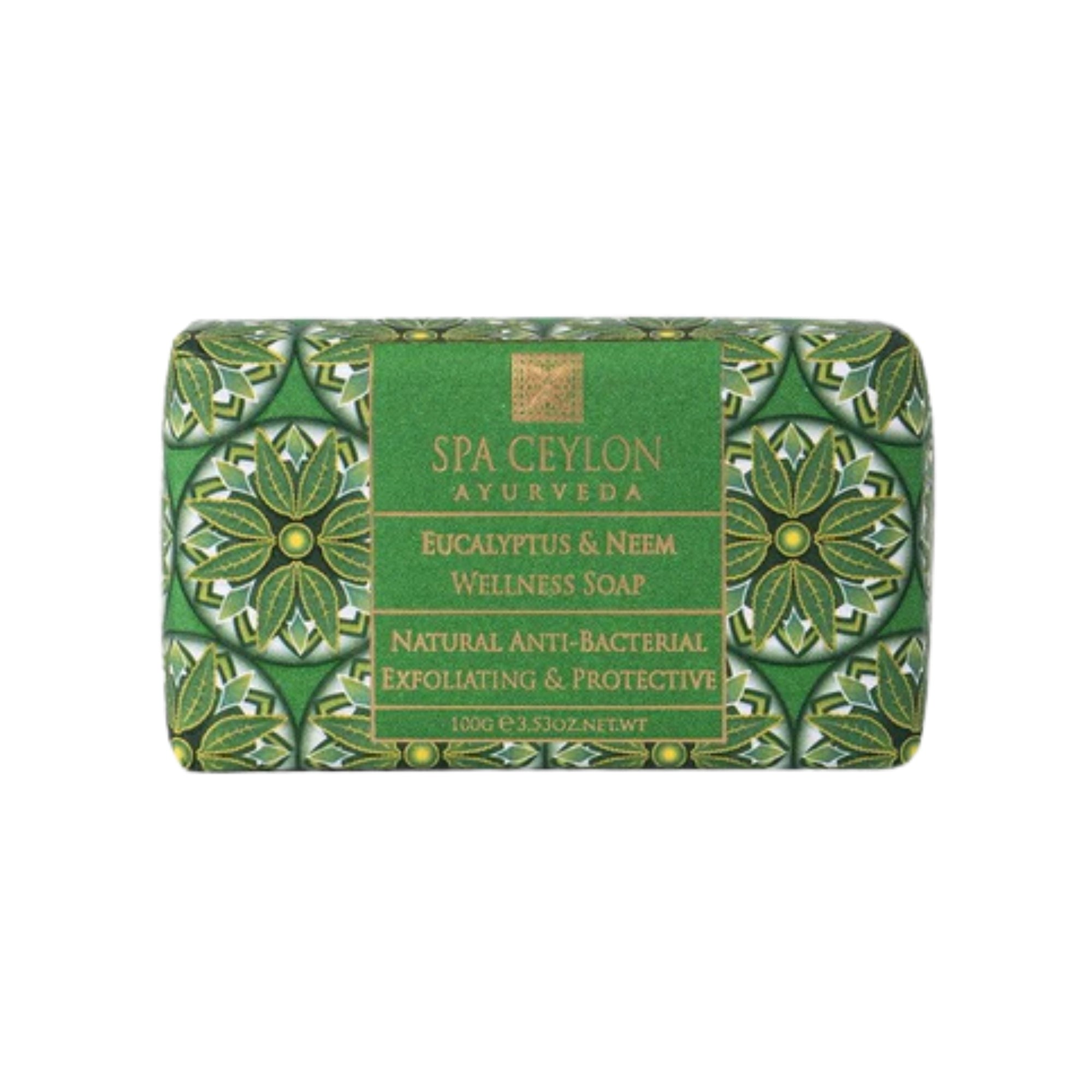
Yes. Lakpura stocks a curated range of Spa Ceylon products — including luxury soaps, body care rituals, facial masques, lip balms, and fragrance collections — available for purchase through the Lakpura shop. Orders can be placed for delivery or collected as part of a tour arrangement. The range makes it straightforward to bring home a piece of Sri Lanka's wellness tradition, or to send authentic Ceylonese gifts abroad. Individual product pages carry full ingredient lists and usage guidance.
How does Sri Lanka's natural environment connect to its Ayurvedic heritage?
The connection is direct and botanical. Sri Lanka's extraordinary biodiversity — concentrated particularly in the wet zone, the highlands, and protected areas such as the Sinharaja Forest Reserve — provides a living pharmacy that sustained traditional healers for millennia. Many of the plants used in Ayurvedic and Sinhala medicine are still found growing wild across the island, and some certified Ayurvedic gardens actively cultivate rare medicinal species. This ecological richness gives Sri Lankan Ayurveda a geographic specificity that distinguishes it from the generic "Ayurvedic" branding found in mass-market wellness products globally.
Understanding that specificity — the soil, the rainfall, the spice routes, the temple gardens — adds real meaning to a Spa Ceylon product sitting on a bathroom shelf. It is, in a modest but genuine sense, a continuation of something that has been practiced on this island for a very long time.
Related reading
3 pages on closely related subjects.