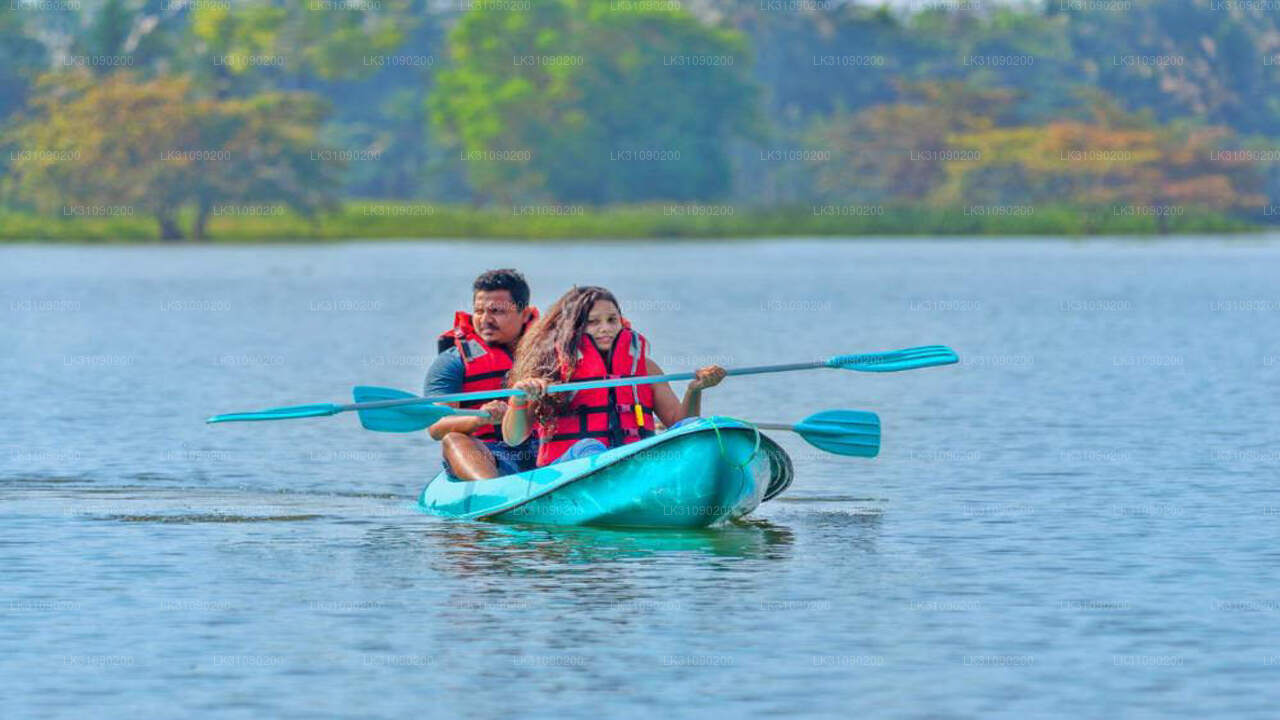
Sri Lanka's coastline stretches for roughly 1,340 kilometres, backed by lagoons, estuaries, mangrove waterways, and reef-sheltered bays. That geography makes the island one of South Asia's most rewarding destinations for sea kayaking — a sport that lets you move quietly through environments that motorised boats simply cannot reach.
What makes sea kayaking in Sri Lanka different?
Unlike whitewater kayaking, sea kayaking uses longer, more stable craft designed to track efficiently across open or semi-sheltered water. The paddler sits low, legs extended forward, and drives the boat with a double-bladed paddle in an alternating left-right stroke. That low centre of gravity keeps the kayak stable in light coastal swells.
What sets the Sri Lankan experience apart is the variety within short distances. Within a single day you can paddle through a Madu Ganga mangrove channel, emerge into a tidal lagoon busy with wading birds, and finish on a sand-fringed beach — all without leaving the southwest coast.
Where are the best places to go sea kayaking in Sri Lanka?
A number of coastal locations are well established for guided and self-guided paddling:
- Bentota and the Bentota Lagoon — calm, sheltered water ideal for beginners, with mangrove fringes that reward slow, quiet paddling.
- Madu River estuary, Balapitiya — a UNESCO-recognised biodiversity area of interconnected channels and mangrove islets, best explored by kayak at dawn or dusk.
- Negombo Lagoon — a large tidal lagoon close to the airport, popular for half-day trips; look for painted storks, pelicans, and traditional fishing outriggers sharing the water.
- Mirissa and Weligama Bay — reef-sheltered bays on the south coast where sea conditions are manageable for intermediate paddlers outside the southwest monsoon.
- Trincomalee and Nilaveli — clear water, coral gardens visible from the surface, and the option to land on Pigeon Island after a short paddle from shore.
- Puttalam Lagoon — a vast, little-visited expanse in the northwest, best reached between November and April when the northeast monsoon has passed.
When is the best time for sea kayaking in Sri Lanka?
Sri Lanka has two distinct monsoon seasons that affect different coastlines. The southwest monsoon (roughly May to September) brings rough seas and strong winds to the west and south coasts, making those shores unsuitable for paddling. The same period is ideal for the east coast, where Trincomalee and Batticaloa offer calm water and reliable sunshine.
The northeast monsoon (roughly October to January) reverses that pattern: the east coast becomes choppy while the west and south coasts enjoy their calmest conditions. For the Negombo Lagoon, Bentota, and the Madu estuary, December through April is generally the most reliable paddling window. Inland reservoir sites — such as Hadapanagala near Ella — are sheltered year-round and unaffected by coastal monsoons.
What activities can you combine with sea kayaking?
Kayaking pairs naturally with several other water-based pursuits available around the island:
- Kayak snorkelling — paddle to a reef or rocky headland, anchor or beach the boat, and snorkel directly from the kayak. This gives access to sites too shallow for dive boats.
- Kayak fishing — fishing from a kayak has grown steadily in popularity along the Sri Lankan coast. The craft is quiet enough not to spook fish and inexpensive compared with hiring a motorised vessel. It complements the tradition of artisanal fishing that defines many coastal communities here. You can read more about shore-based options on the deep sea fishing page.
- Wildlife watching — mangrove paddling produces reliable sightings of monitor lizards, fishing cats, kingfishers, and saltwater crocodiles. The crocodile watching experience around lagoon areas is particularly rewarding from a kayak because the low profile of the hull is far less alarming to wildlife than an outboard engine.
- Sunset lagoon tours — short, guided evening paddles are offered by several operators around Bentota and Negombo, combining the golden light with the return of feeding birds to roost.
What should beginners know before getting in a kayak?
Sea kayaking requires no prior experience for flatwater lagoon trips, but a short orientation from a qualified guide is strongly recommended. Reputable operators will cover wet exits (how to get free of the kayak if it capsizes), basic paddle technique, and tide awareness before launch.
Key practical points:
- Always wear a personal flotation device (PFD), provided by any responsible operator.
- Apply high-SPF sunscreen before you start — reflected glare off the water intensifies UV exposure significantly.
- Wear or bring quick-dry clothing. A light long-sleeved layer protects against sunburn without overheating.
- Carry water. Paddling is more physically demanding than it looks, and dehydration in tropical heat accelerates quickly.
- Check the forecast. Even in calm seasons, afternoon sea breezes can develop quickly on open coasts. Morning sessions are generally safer for beginners.
- Respect marine protected areas — some reef and lagoon zones have designated no-entry areas for conservation. Your guide will know these boundaries.
Are there kayaking options inland as well as on the coast?
Yes. Sri Lanka has 103 rivers and a significant number of reservoirs (called tanks locally) that offer protected flatwater paddling. The Kalu Ganga flowing down through Ratnapura to the west coast, the Kelani River, and reservoirs in the hill country all have stretches suitable for kayaking. The Hadapanagala Reservoir near Ella, set against a backdrop of paddy terraces and forested ridges, is a particularly scenic inland option that is accessible year-round regardless of coastal conditions.
How do modern kayaks used in Sri Lanka differ from the originals?
The kayak is one of the oldest watercraft in the world, developed by Arctic peoples from driftwood frames covered in animal skin — a design so efficient that its fundamental shape has barely changed. By the mid-twentieth century, manufacturers began using fibreglass and later polyethylene plastic, making kayaks lighter, more durable, and easier to maintain in tropical conditions. Most operators in Sri Lanka use sit-on-top polyethylene kayaks for general tours — they are stable, self-draining, and straightforward to re-board after an intentional or unintentional swim.
What should I look for when choosing a sea kayaking operator in Sri Lanka?
Quality varies. When assessing an operator, ask about:
- Guide qualifications and first-aid certification
- Condition and age of equipment, particularly PFDs
- Whether a safety kayak or support boat accompanies open-water trips
- Group size — smaller groups (four to six paddlers per guide) allow more attention and less impact on wildlife
- Environmental policy — responsible operators brief guests on no-wake zones, wildlife distancing, and litter management
Lakpura arranges kayaking experiences across the island's key coastal and inland locations, matching the right experience level and location to each itinerary.