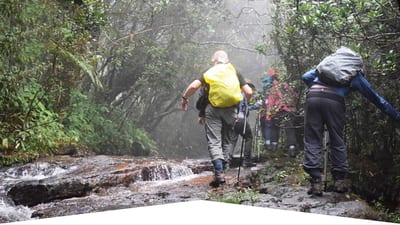
Sri Lanka's reputation rests heavily on its coastline, but the island's mountainous interior rewards those who go on foot in ways that no beach ever could. Tea-covered ridges, cloud-wrapped peaks, ancient pilgrim routes, and dense rainforest corridors all sit within a few hours of the coast — making hiking here unusually accessible for a tropical destination. The trails range from gentle half-day walks to multi-day ridge crossings, and almost every route passes something historically or ecologically remarkable.
What makes Sri Lanka a good destination for hiking?
The island's compact size is a genuine advantage. You can begin a morning hike at a highland trailhead and be back at a coastal hotel by evening. The central massif rises steeply from the surrounding lowlands, which means significant elevation change and correspondingly dramatic scenery without the multi-day approach marches needed in the Himalayas or Andes.
Biodiversity is another draw. Sri Lanka has one of the highest rates of endemic species per square kilometre of any country on Earth. A trail through the Sinharaja Forest Reserve — a UNESCO World Heritage Site — can yield sightings of endemic birds, purple-faced langurs, and rare amphibians within a single morning. The Horton Plains National Park, at around 2,100 metres above sea level, offers a completely different landscape: rolling montane grassland, cloud forest patches, and the sheer cliff edge of World's End.
Where are the best hiking trails in Sri Lanka?
Central Highlands
The highlands around Nuwara Eliya and Ella concentrate the island's most celebrated walks. Adam's Peak (Sri Pada), at roughly 2,243 metres, is a pilgrimage route climbed by Buddhists, Hindus, Muslims, and Christians alike — the season runs broadly from December to May, when the stairway is lit and tea stalls operate through the night. The ascent typically takes three to four hours from the main trailhead at Dalhousie.
Ella has become the hub for casual hikers. Little Adam's Peak is a short, rewarding walk above town with panoramic views across the Uva Basin. Ella Rock, a longer and steeper option following old railway tracks through tea estates, repays the effort with near-360-degree highland views. Neither route requires a guide, though one helps on Ella Rock's less-marked sections.
Horton Plains
The loop trail across Horton Plains to World's End and Baker's Falls is around nine kilometres and can be completed in three to four hours at an easy pace. The plateau is best visited early — cloud typically rolls in by mid-morning and closes the famous cliff-edge view. The park requires entry by ticketed vehicle; hikers walk inside once admitted. Temperatures at altitude can drop sharply, so a light layer is advisable even in the dry season.
Riverston and the Knuckles Range
The Knuckles Conservation Forest, northeast of Kandy, is among the most ecologically rich hiking areas on the island and remains less visited than the southern highlands. Trails cross streams, pass remote villages, and traverse ridgelines with views back towards the Cultural Triangle. Riverston, on the western flank, offers shorter day-hike options with striking panoramas over the lowlands — on a clear day the views extend towards the coast.
Rawanagala
Rawanagala, near Wellawaya, is a rock outcrop rising above the dry-zone plains that earns its own chapter in local hiking guides. The climb is short but steep, and the summit — associated with the Ramayana legend — looks out across the flat southern plains towards the coast. It combines well with a visit to Ella or the southern national parks.
Sinharaja Rainforest
Sinharaja is not a summit trail but a forest immersion. Guided walks enter a primary lowland rainforest that has survived largely intact, and the density of endemic species makes even a two-hour loop ecologically significant. The forest floor is damp year-round, so leech socks and waterproof footwear are practical necessities rather than optional extras.
Makandawa Rainforest (Kithulgala)
The Makandawa Rainforest near Kithulgala is frequently combined with white-water rafting on the Kelani River, but its trail network stands on its own merit. Several loops pass through primary and secondary forest, with a good chance of sighting the Sri Lanka blue magpie and endemic amphibians. The terrain is gentler than the southern highlands and suits hikers who prefer flat-to-rolling forest walking.
When is the best time for hiking in Sri Lanka?
Sri Lanka's two monsoon seasons mean that no single window is ideal island-wide. As a general guide:
- December to April: Best for the central highlands, Horton Plains, Adam's Peak, and trails in the Uva province (Ella, Rawanagala). The southwest receives heavier rain during this period.
- May to September: The southwest monsoon brings rain to the south and west, but the east and north dry out. Sinharaja is accessible but wet underfoot year-round.
- Year-round: Sinharaja and Knuckles walks are possible in any month, with the caveat that trail conditions and leech activity vary with rainfall.
For highland trails, early morning starts serve two purposes: views are clearest before cloud builds, and temperatures are comfortable for sustained uphill walking.
How difficult are Sri Lanka's hiking trails?
Most popular trails are graded easy to moderate and are manageable for reasonably fit travellers without specialist equipment. Adam's Peak and Ella Rock require some cardiovascular effort but no technical climbing. The longer Knuckles routes can be challenging in wet conditions when paths become slippery. True difficulty increases mainly with distance and exposure, not technical terrain.
- Easy: Little Adam's Peak, Horton Plains loop, most Sinharaja day walks
- Moderate: Ella Rock, Riverston day hikes, Rawanagala
- Strenuous: Adam's Peak night ascent, multi-day Knuckles crossings
Do I need a guide for hiking in Sri Lanka?
National parks such as Horton Plains and Sinharaja require visitors to be accompanied by a tracker or park guide, who can be arranged at the entrance. For trails outside protected areas — Ella Rock, Little Adam's Peak, Rawanagala — a guide is not compulsory but is recommended for first-time visitors, as waymarking can be inconsistent and local knowledge adds ecological and cultural context to any walk.
Lakpura arranges guided hikes with experienced local naturalists, handling transport, park permits, and trail logistics so that the focus stays on the walking itself.
What should I pack for hiking in Sri Lanka?
- Lightweight, moisture-wicking clothing — humidity is high even at altitude
- A waterproof layer, particularly for highland and rainforest trails
- Leech socks for forest walks (available locally in Kithulgala and Sinharaja gateway villages)
- Sunscreen and a hat — UV levels are high near the equator
- At least 1.5 litres of water per person for a half-day walk
- Sturdy, closed-toe footwear with ankle support
- Small daypack with snacks; roadside stalls or tea shops are common at trailheads but scarce mid-route
How do I get to Sri Lanka's main hiking areas from Colombo?
Colombo sits at sea level on the west coast, with road and rail access to all major highland areas. Approximate driving times from Colombo:
| Destination | Approximate Drive | Train Option |
|---|---|---|
| Ella | 5–6 hours | Yes (Colombo–Ella, scenic) |
| Horton Plains | 4–5 hours (via Nuwara Eliya) | Partial (train to Nanu Oya, then taxi) |
| Kithulgala (Makandawa) | 2–2.5 hours | No direct service |
| Sinharaja | 3–4 hours | No direct service |
| Dalhousie (Adam's Peak) | 4–5 hours | No direct service |
Private transfers are the most flexible option for trailhead-to-trailhead travel. Lakpura's private driver service can be booked to coordinate early morning departures that align with trail opening times.
Can hiking be combined with other activities in Sri Lanka?
Yes — and this is one of the country's strengths as a hiking destination. The highlands sit within easy reach of wildlife reserves, tea estate visits, and cultural sites. A practical multi-day itinerary might combine a morning hike in the Knuckles with an afternoon at the Bluefield Tea Gardens, or pair Ella's trails with a visit to the Elephant Transit Home near Udawalawe. The adventure tours section of this site covers complementary activities including white-water rafting, cycling, and waterfall exploration.
Related reading
2 pages on closely related subjects.