Salvadora persica is a spiny shrub native to Sri Lanka, known locally as Malittan. It belongs to the family Salvadoraceae, a small plant family of shrubs and trees found across warmer regions of Africa and Asia. This page summarises the recorded botanical facts for the species.
What does Salvadora persica look like?
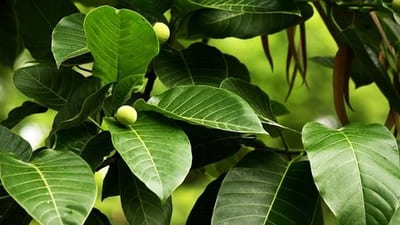
Salvadora persica is a spiny shrub with hairy, quadrangular stems. Each node bears four spines, growing up to 3 cm long. The leaves are arranged oppositely along the stem, measuring 3-4 cm (occasionally up to 7 cm) in length and 1.5-3 cm in width, with tiny stipules at their base.
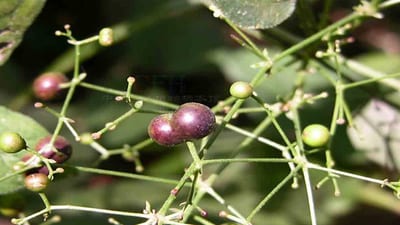
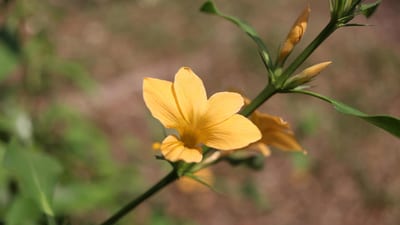
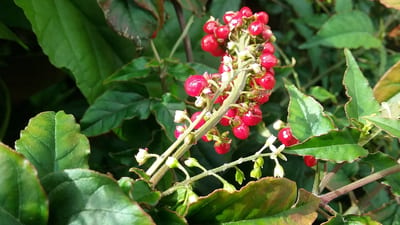
The plant produces unisexual flowers that are sessile, meaning they lack individual stalks. On staminate (male) plants, flowers cluster in groups of two to six at the nodes. On pistillate (female) plants, flowers appear solitarily at the leaf axils. The fruit is globose, white, and fleshy, reaching up to 10 mm in diameter, and typically contains one or two seeds.
Where does Salvadora persica grow in Sri Lanka?
Salvadora persica is recorded as native to Sri Lanka. As a spiny, drought-tolerant shrub, it belongs to a genus generally associated with dry, often coastal or arid habitats across its broader native range in Africa and Asia.
What is its conservation status?
Salvadora persica is classified as a native species in Sri Lanka, meaning it occurs naturally in the country though it is not confined to it alone.
Can you eat Salvadora persica?
No edible parts are recorded for this species. It should not be considered a food source.
What is it called in Sinhala?
In Sinhala, Salvadora persica is known as Malittan.
| Attribute | Recorded detail |
|---|---|
| Scientific name | Salvadora persica |
| Family | Salvadoraceae |
| Sinhala / local name | Malittan |
| Status in Sri Lanka | Native |
| Edible parts | None |
| Growth form | Spiny shrub, hairy quadrangular stems, 4-spinous at each node, spines to 3 cm |
| Leaves | Opposite, 3-4(-7) cm long, 1.5-3 cm broad, stipules tiny |
| Flowers | Unisexual, sessile; staminate 2-6 per node, pistillate solitary at leaf axils |
| Fruit | Globose, white, fleshy, to 10 mm diameter, 1-2 seeds |