The S.S. Rangoon is one of Sri Lanka's most intriguing underwater heritage sites — a 19th-century steamship whose final resting place has, over the decades, become a thriving artificial reef and a draw for experienced divers exploring the island's coastal waters. The wreck sits as a quiet monument to the age of steam-powered trade that once connected the Indian subcontinent with the wider British Empire, and the story of how it came to rest on the Sri Lankan seabed is as compelling as the dive itself.
What is the history of the S.S. Rangoon?
The S.S. Rangoon was a British India Steam Navigation Company vessel that operated freight and passenger services across the Indian Ocean during the latter half of the 1800s. Ships bearing the name Rangoon — after the Burmese capital now known as Yangon — were a common fixture on the Colombo run, calling at the port as part of the busy trade corridor linking Calcutta, Madras, Colombo, and Aden.
The vessel met its end off the Sri Lankan coastline under circumstances typical of the era: a combination of adverse weather, navigational hazards, and the unforgiving reef systems that fringe much of the island's shoreline. Once submerged, the wreck was gradually forgotten by commerce but slowly claimed by the sea, which encrusted every surface with coral, sponge, and the full spectrum of Indian Ocean marine life.
Where exactly is the S.S. Rangoon wreck located?
The wreck lies in Sri Lankan coastal waters, though the precise co-ordinates are typically shared by local dive operators on a trip-by-trip basis to protect the site from unsupervised access. The general area is accessible from established dive centres along the island's western or southern coast, depending on the specific site. Water depth over the main structure varies, making sections of the wreck reachable by advanced open-water divers while other portions sit deeper and are suited to technical divers.
Visibility at the site tends to be best during the inter-monsoon periods — roughly March to April and October to November — when seas are calmer and particulate matter settles. During the southwest monsoon (May to September) access from the western coast becomes impractical, while the northeast monsoon (December to February) can affect eastern approaches.
What can divers see at the S.S. Rangoon wreck?
Decades of submersion have transformed the steel hull into a layered ecosystem. Divers typically encounter:
- Hard and soft corals colonising the deck plating, anchor chains, and hull ribs
- Schools of glassfish and fusiliers moving through the superstructure
- Moray eels, lionfish, and scorpionfish sheltering in darker recesses
- Occasional reef sharks patrolling the outer hull at depth
- Remnants of cargo and mechanical fittings that speak to the ship's working life
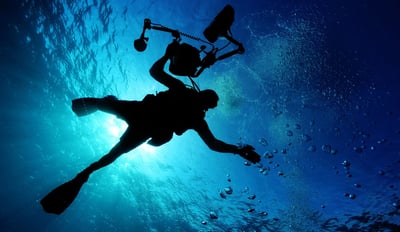
The wreck's iron framework, now heavily encrusted, provides a dramatic backdrop for underwater photography. Natural light filters through gaps in the hull at certain angles and times of day, creating the kind of atmospheric conditions that experienced dive photographers seek out.
What experience level is required to dive the S.S. Rangoon?
The S.S. Rangoon is not a wreck for novice divers. The combination of depth, potentially strong currents in parts of the site, and the penetration risks associated with any enclosed wreck mean that a recognised advanced open-water certification is typically the minimum requirement. Many local operators recommend prior wreck-diving experience or will insist on a check dive before allowing access to deeper or more enclosed sections of the hull.
Divers should always brief thoroughly with their guide before entering the water. Surge and current can change quickly in Sri Lankan coastal waters, and the structural integrity of a 19th-century iron vessel — however romantically encrusted — should never be taken for granted when planning penetration dives.
When is the best time to dive the S.S. Rangoon?
Sri Lanka's dual-monsoon system means that dive seasons vary significantly by coast. For wreck sites on or near the western seaboard, the prime window runs from around November through to April, when the southwest monsoon has passed and seas settle into their calmest state. Sites closer to the south or east coast may offer viable conditions at different times of year.
Water temperatures around Sri Lanka remain warm year-round, typically ranging from around 27°C to 30°C at recreational dive depths, so a 3mm wetsuit is usually sufficient. Thermoclines can occasionally be felt at greater depths.
How do I arrange a dive trip to the S.S. Rangoon?
The most reliable way to access the wreck is through a reputable Sri Lankan dive operator with documented experience at the site. A qualified guide will manage the boat transfer, equipment hire or checks, briefing, and any necessary permits. Independent access to wreck sites in Sri Lanka can be complicated by the need for maritime authority permissions, and working through an established operator simplifies this considerably.
Visitors combining a dive trip with broader Sri Lanka travel will find that many itineraries can be structured to include a day or two on the coast without significantly disrupting plans to visit the island's cultural or wildlife highlights. Colombo and the western coastal strip are well connected to the rest of the country by road and, in some cases, rail.
Is the S.S. Rangoon a protected heritage site?
Sri Lanka's Department of Archaeology and the Sri Lanka Coast Guard both have jurisdiction over historic wrecks in national waters, and removal of artefacts from submerged archaeological sites is prohibited under Sri Lankan law. Divers are expected to observe a strict look-but-don't-touch policy. Responsible dive operators will reinforce this during the pre-dive briefing, and reputable guides will not facilitate artefact removal under any circumstances.
The wreck's ecological value as an artificial reef is also increasingly recognised. Divers contribute to its long-term health simply by diving responsibly — maintaining good buoyancy to avoid contact with coral, and never feeding or harassing marine life.
What should I bring for a wreck dive in Sri Lanka?
- Valid dive certification card (advanced open-water minimum)
- Dive log showing recent experience — operators may ask to see this
- Wetsuit (3mm is generally adequate; some divers prefer 5mm at depth)
- Underwater torch for exploring shaded sections of the hull
- Surface marker buoy (SMB) — essential in open-water ascents
- Underwater camera if photography is a goal
- Sun protection and drinking water for surface intervals
Most dive centres in Sri Lanka provide tanks, weights, and BCDs for hire, though divers with their own regulators and computers may prefer to bring their own equipment for familiarity and fit.