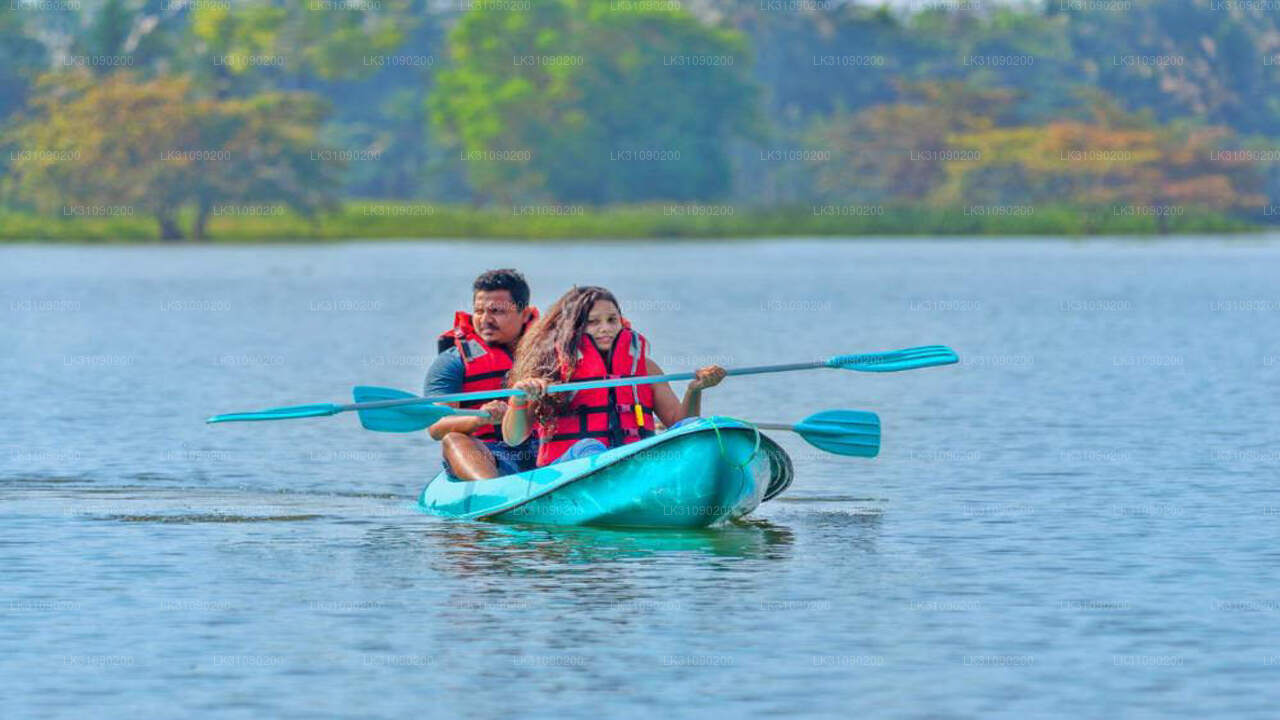
Rambakan Oya Reservoir sits deep in the dry-zone wilderness of Uva Province, roughly 17 kilometres from Maha Oya town. Built as part of a broader irrigation rehabilitation scheme, the dam was completed and opened in 2009, restoring a water-management network that dates back many centuries. The journey to reach it passes through some of Sri Lanka's least-visited countryside — a landscape of scrub jungle, ancient tank beds, and indigenous settlements that makes the drive itself as rewarding as the destination.
What is the Rambakan Oya Reservoir Project?
The Rambakan Oya Project was not simply the construction of a single large dam. As part of the scheme, seven smaller traditional reservoirs in the catchment were also restored to working condition. Those seven tanks are:
- Polwatte Wewa
- Pollebedde Wewa
- Niloba Wewa
- Kiralagas Wewa
- Dumana Wewa
- Bendirekka Wewa
- Akulobe Wewa
Travellers approaching the main reservoir along the access road will pass three of these — Kiralagas Wewa, Niloba Wewa, and Pollebedde Wewa — in sequence. Each is a quiet body of water fringed by scrub forest, and together they give a clear picture of how ancient Sri Lankan engineers managed water across an entire micro-watershed rather than relying on a single large structure.
What is the significance of Pollebedda village?
Just before the Pollebedde Wewa, the road passes through Pollebedda village — one of the recognised traditional homelands of the Veddha (Wanniyalaeto) people, Sri Lanka's indigenous community. The Veddha are considered the island's earliest inhabitants, and small communities have maintained aspects of their ancestral way of life in this part of the Uva interior for generations. Passing through the village is a reminder that this landscape carries deep human history, not only archaeological significance. Visitors should approach any interaction with local communities respectfully and avoid intrusive photography without consent.
What ancient ruins can be found near the reservoir?
A short diversion just before the main embankment leads to the ruins of an ancient twin-barrel stone canal — a hydraulic structure believed to have been constructed thousands of years ago as part of an earlier attempt to build a reservoir at this site. The engineering ambition behind it, cutting twin channels through stone to regulate flow, reflects the sophistication of ancient Sinhalese irrigation technology.
Further archaeological remains were uncovered at the base of the ramp leading up to the embankment when the area was cleared prior to the dam's 2009 opening. Since then, the site has been reclaimed by jungle and thorny scrub, making access difficult without proper footwear and some persistence. There is no formal visitor infrastructure here; it is a site for the genuinely curious rather than casual sightseers.
How do I get to Rambakan Oya Reservoir from Maha Oya?
The reservoir lies around 17 kilometres from Maha Oya town, which itself sits in Ampara District in the Eastern Province. The approach road is rural and conditions can vary, particularly after heavy rain during the monsoon months. A four-wheel-drive vehicle is advisable, especially if you plan to explore the area around the embankment or the ancient canal ruins. There is no regular public transport serving the reservoir, so hiring a vehicle or arranging private transport through your accommodation or a local operator is the practical approach.
When is the best time to visit Rambakan Oya?
The dry season for this part of Sri Lanka — broadly from May to September — generally offers the most comfortable conditions for reaching and exploring the reservoir. Water levels in the surrounding tanks tend to be lower at this time, which can make the archaeological features more visible. During the inter-monsoon and northeast monsoon periods (October to January), the area receives significant rainfall and the access tracks can become muddy and difficult. Mornings are reliably the best time of day: wildlife is more active, the light is pleasant, and temperatures are manageable before the midday heat sets in.
What wildlife might I see around the reservoir?
The forest surrounding Rambakan Oya is part of a broader dry-zone habitat that supports a range of species common to the Uva interior. Elephants move through this corridor, particularly in the early morning and evening. Waterbirds — including painted storks, open-billed storks, and various herons and egrets — are attracted to the tank margins and the smaller wewas along the access road. The dense scrub around the ancient canal ruins provides cover for smaller mammals and reptiles. Because the site receives very few visitors, wildlife encounters here tend to feel more natural than at more heavily touristed reserves.
Is there accommodation near Rambakan Oya?
There are no hotels or guesthouses at the reservoir itself. The nearest significant town with accommodation options is Ampara, to the east. Travellers combining Rambakan Oya with a broader itinerary through the east of Sri Lanka sometimes use Ampara or the Gal Oya area as a base, both of which offer a similar dry-zone wilderness experience. For those approaching from the west or south, options around Mahiyanganaya — a historic town on the Mahaweli River — provide a practical overnight stop before the drive out to the reservoir.
What should I bring when visiting?
- Footwear: Sturdy closed-toe shoes or boots — the terrain around the ruins is uneven and the scrub contains thorns.
- Water: Carry more than you think you need; there are no shops or facilities at the site.
- Sun protection: The embankment and open tank areas offer very little shade.
- Insect repellent: Essential in the jungle margins, especially in the early morning and at dusk.
- A local guide: If you want to find the ancient canal ruins, a guide familiar with the area will save considerable time and effort.
Nearby places
7 places within about 25 km, nearest first.
- Maduru Oya Reservoir15 km
- Maduru Oya16 km
- Maduru Oya National Park16 km
- Padiyathalawa22 km
- Randenigala Dam23 km
- Seetha Kotuwa23 km
- Thoppigala24 km