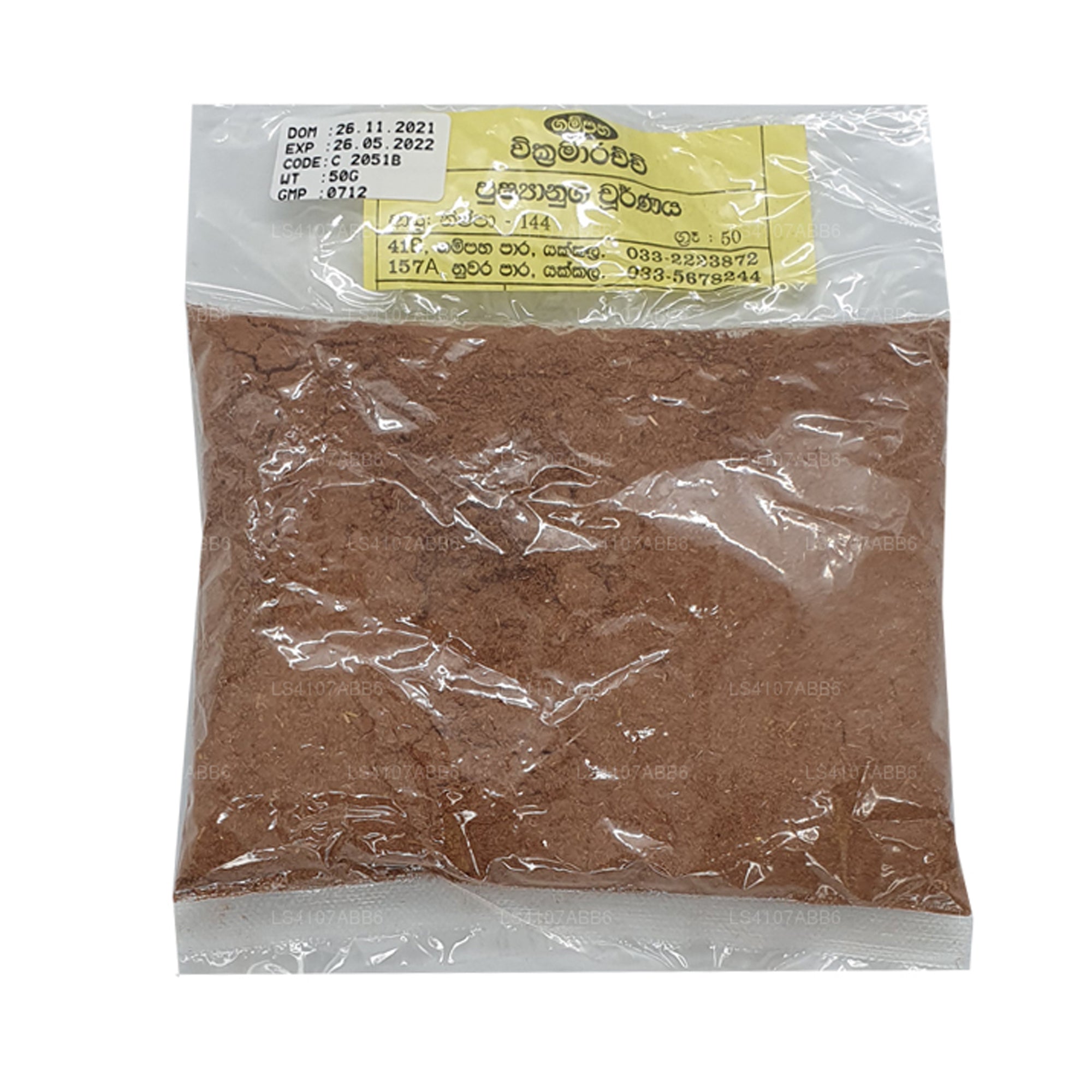
Pushyanug Churna is a classical Ayurvedic herbal powder formulation rooted in the traditional medicine systems of South Asia. Composed of a carefully balanced blend of dried and powdered medicinal herbs, it is primarily associated with supporting digestive health, regulating metabolism, and assisting the body's natural detoxification processes. In Sri Lanka, where Ayurveda remains an active and regulated system of healthcare, preparations like Pushyanug Churna are produced by established manufacturers and dispensed through licensed Ayurvedic practitioners.
What is Pushyanug Churna used for?
Pushyanug Churna is most commonly prescribed in Ayurvedic practice to address imbalances in the digestive system. Its traditional indications include relief from bloating and sluggish digestion, as well as support for conditions linked to impaired nutrient absorption. The formulation is also associated with strengthening immunity and improving general energy levels over consistent use.
In classical Ayurvedic texts, churna (powdered formulations) are valued because their fine particle size allows rapid absorption when taken with suitable anupana — the carrier liquid, typically warm water, honey, or ghee — prescribed by a practitioner to enhance the action of the herbs. Pushyanug Churna is no exception: the choice of anupana and dosage is typically determined by an Ayurvedic physician based on an individual's constitution (prakriti) and the nature of the condition being addressed.
What are the key herbs in Pushyanug Churna?
The precise composition of Pushyanug Churna can vary slightly between manufacturers and classical source texts, but the formulation characteristically draws on herbs with well-documented roles in Ayurvedic digestive and systemic care. Common constituents include:
- Lodhra (Symplocos racemosa) — traditionally used to support mucosal health and reduce inflammation in the gastrointestinal tract.
- Amla (Phyllanthus emblica) — a rich source of vitamin C and antioxidants, regarded as a rejuvenative herb in Ayurveda.
- Musta (Cyperus rotundus) — known for its digestive and carminative properties, particularly in relieving bloating and irregular bowel function.
- Ativisha (Aconitum heterophyllum) — used cautiously in classical formulations for its action on digestive disorders, particularly in paediatric and post-partum contexts.
- Patha (Cissampelos pareira) — included for its role in supporting metabolism and reducing ama (undigested metabolic waste).
Some versions of the formulation also incorporate Ceylon black pepper as a bioavailability enhancer, consistent with its widespread use across classical Ayurvedic compound preparations.
How does Pushyanug Churna support digestive health?
From an Ayurvedic perspective, many chronic health complaints are traced back to weakened agni — the digestive fire — and the accumulation of ama in the channels of the body. Pushyanug Churna is formulated to kindle agni, reduce ama, and restore balanced function across the digestive system. This mechanism explains its use for conditions ranging from irregular bowel habits to post-partum recovery, where restoring metabolic balance is a treatment priority.
Modern Ayurvedic practitioners in Sri Lanka frequently recommend this churna as part of a broader protocol that may include dietary adjustments, lifestyle guidance, and complementary formulations. It is rarely used in isolation when addressing complex or chronic conditions.
Who should take Pushyanug Churna?
Pushyanug Churna is typically recommended for adults experiencing digestive irregularities, fatigue associated with poor nutrient absorption, or as a supportive formulation during post-partum recovery. It is also sometimes used to assist detoxification regimens administered under Ayurvedic supervision.
Because several of the constituent herbs have potent pharmacological actions, it is important that this formulation is taken under the guidance of a qualified Ayurvedic practitioner rather than self-prescribed. This is particularly relevant for pregnant women, individuals taking pharmaceutical medications, and those with pre-existing liver or kidney conditions.
How is Pushyanug Churna taken?
The standard method of administration is to mix the prescribed quantity of churna — typically a small measured amount — with a suitable anupana and consume it at a time of day specified by the practitioner, often before or after meals depending on the condition. Consistency of use over a defined course is generally considered more effective than intermittent use.
Sri Lankan manufacturers of Pushyanug Churna, including established institutions such as Gampaha Wickramarachchi Ayurveda Institute and brands like Link Natural, produce the formulation in pre-measured powder form, making it straightforward to incorporate into a daily routine once a practitioner has confirmed the appropriate dosage.
How does Pushyanug Churna relate to other Ayurvedic churnas?
Pushyanug Churna sits within a large family of classical Ayurvedic powdered formulations, each targeted at different physiological systems or constitutional types. Related formulations that practitioners may consider alongside or instead of Pushyanug Churna include Triphala Churna (a foundational digestive tonic), Sukumara Churna (used particularly in women's health and post-partum care), and Avipaththikara Churna (indicated for acidity and pitta-related digestive disorders). A practitioner will select the most appropriate churna — or combination — based on the individual's presenting symptoms and Ayurvedic assessment.
Similarly, the Yogaraja Guggulu formulation represents a distinct category of Ayurvedic compound — guggulu preparations — which are resin-based and often used for musculoskeletal and metabolic conditions, illustrating the breadth and specificity of classical Ayurvedic pharmacopoeia.
Where can I buy Pushyanug Churna in Sri Lanka?
Pushyanug Churna is available through licensed Ayurvedic pharmacies and wellness retailers across Sri Lanka. Lakpura sources the formulation from reputable Sri Lankan manufacturers, making it accessible for both local customers and visitors who wish to continue an Ayurvedic regimen after leaving the island. When purchasing any churna, it is advisable to check that the product carries registration from Sri Lanka's Department of Ayurveda, which regulates the quality and labelling of Ayurvedic medicines produced and sold in the country.
Related reading
4 pages on closely related subjects.