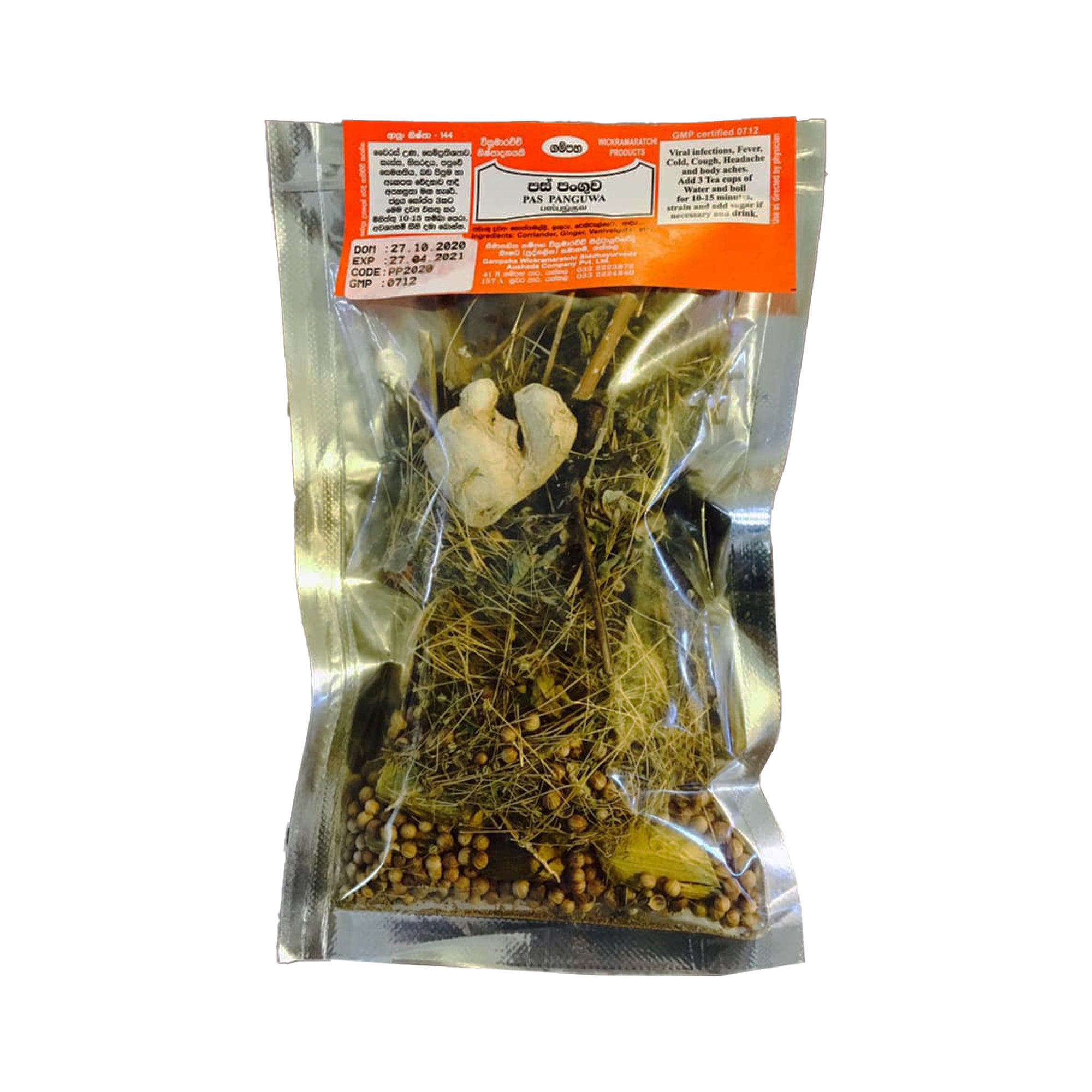
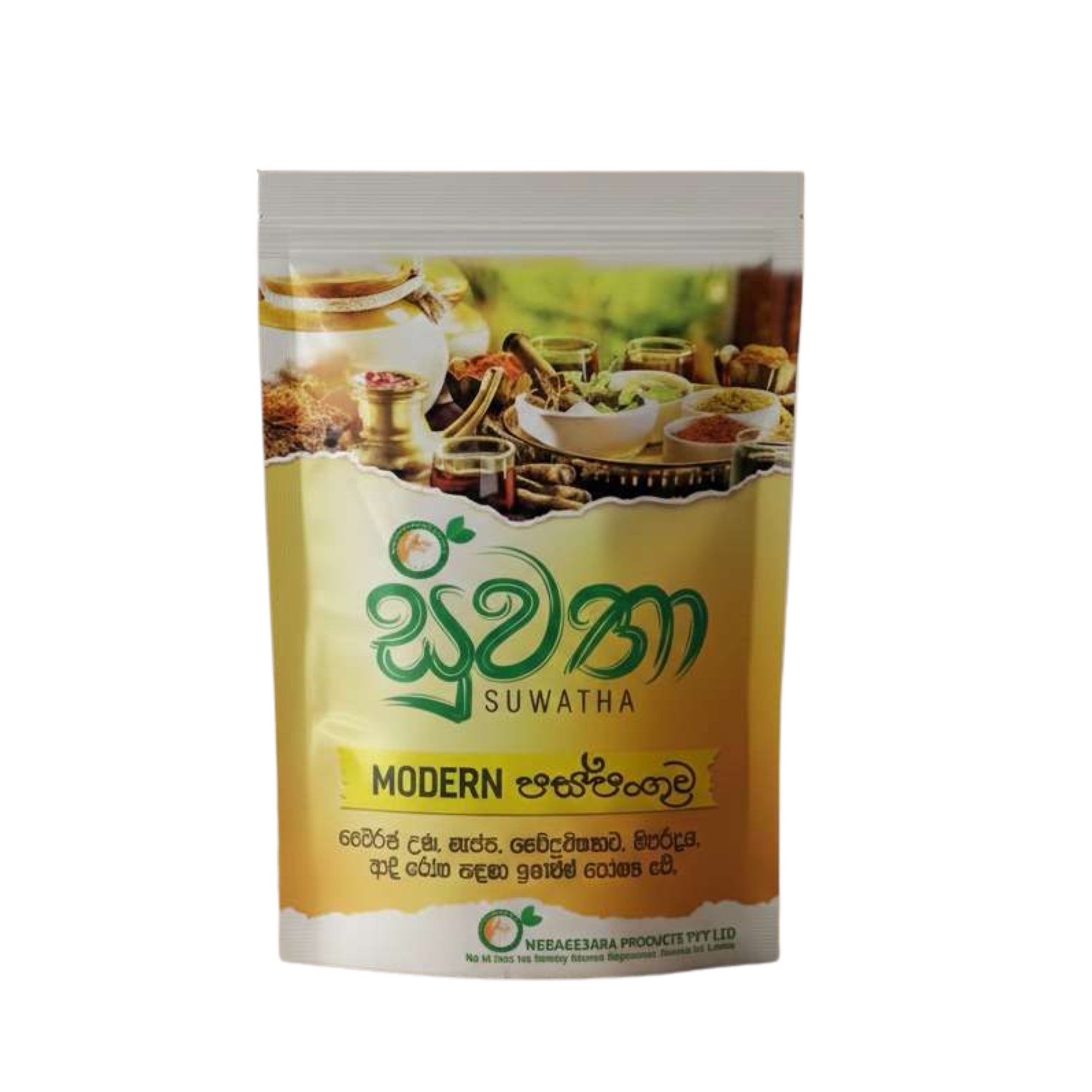
Paspanguwa — literally "five portions" in Sinhala — is Sri Lanka's most enduring household remedy. Rooted in an Ayurvedic tradition that stretches back roughly 3,000 years, this herbal decoction is prepared and consumed across the island at the first hint of a cold, fever, or physical exhaustion. It is not a folk curiosity that survived into the modern era by accident; it persists because generations of families have found it effective, and because a growing body of pharmacological research now supports what traditional physicians long understood.
What are the five herbs in Paspanguwa?
The name tells you the essential fact: exactly five plant-derived ingredients, each with a distinct therapeutic role, combine to form the formula. No single herb dominates — the classical preparation relies on their collective action.
- Coriander (Coriandrum sativum) — Kothamalli: The backbone of the blend. Coriander seeds carry a high phenolic content and act as a natural febrifuge, helping the body regulate temperature during fever.
- Dried Ginger (Zingiber officinale) — Inguru: Globally recognised for anti-inflammatory and anti-emetic properties, dried ginger rhizome soothes sore throats and supports digestion when appetite is suppressed by illness.
- Pathpadagam (Hedyotis corymbosa): A cooling herb included specifically to ease the burning sensations and intense thirst that accompany high fever. It is also valued in classical texts for its hepatoprotective — that is, liver-supporting — qualities.
- Katuwalbatu (Solanum xanthocarpum) — Yellow-Berried Nightshade: A potent expectorant that helps clear phlegm from the respiratory tract and ease persistent coughs. It has a long history of use in bronchial complaints.
- Venivalgata (Coscinium fenestratum) — Yellow Vine: Rich in berberine, a compound with documented antibacterial and antiviral properties, Venivalgata gives the decoction much of its bitter, golden colour and its reputation as a natural antibiotic.
Does the science support Paspanguwa?
Traditional medicine and pharmacology have not always aligned, but Paspanguwa is among the Ayurvedic preparations that have attracted serious academic attention. Studies examining combined extracts of the five herbs report a measurable synergistic effect: the blend scavenges free radicals and inhibits protein denaturation — a widely used laboratory marker of inflammation — more effectively than any individual herb in isolation.
The decoction is also notably rich in antioxidants and flavonoids. This is relevant because oxidative stress is a key mechanism by which the body is damaged during an active infection. Reducing that stress while the immune system responds is precisely where Paspanguwa appears to help most. The Ayurvedic concept at play is balancing the body's three Doshas — particularly Vata and Kapha, the constitutions most implicated in respiratory illness — though modern framing tends to describe the same outcome in biochemical terms.
How do you prepare Paspanguwa at home?
The traditional preparation is called a peyawa — a concentrated decoction produced by prolonged simmering rather than a simple steep. The goal is full extraction of the heavier bioactive molecules locked in woody material such as Venivalgata stems.
- Start with water: Place the contents of one sachet or the measured loose herbs into a pot with three to four cups of cold water.
- Simmer steadily: Bring to a gentle boil, then reduce to a low simmer. Continue for 10–15 minutes, until the liquid reduces to roughly half its original volume.
- Strain and serve: Pour through a fine strainer into a cup. The resulting liquid should be golden-brown and moderately bitter.
To make the drink more palatable, most Sri Lankan households add a small piece of jaggery (palm sugar) to the cup rather than refining the recipe with processed sugar. For additional warmth, a few crushed Ceylon black peppercorns or a pinch of cinnamon can be stirred in — both have their own documented antimicrobial properties and are thought in Ayurvedic practice to stoke digestive fire, or agni.
When should you drink Paspanguwa?
Paspanguwa works best taken early. Waiting until an illness is fully established reduces its effectiveness; the decoction is designed to intercept a viral or bacterial challenge in its initial phase, when the body's inflammatory response is just beginning. Common situations where it is routinely used include:
- Respiratory onset: Sneezing, a scratchy throat, runny nose, or the beginning of a dry cough.
- Flu-like symptoms: Body aches, headache, joint stiffness, and general malaise associated with fever.
- Seasonal transitions: Sri Lanka's inter-monsoon periods — roughly May and October — are the times most families keep a supply at hand, as temperature swings and humidity shifts tend to trigger respiratory complaints.
- Physical exhaustion: When fatigue is not illness-related but stems from overexertion, a cup of Paspanguwa is considered a general restorative.
A standard adult serving is around half a cup, consumed twice daily. For children under twelve, a quarter cup twice daily is the traditionally observed measure. Paspanguwa is not a substitute for medical care in cases of serious or prolonged illness.
How does Paspanguwa fit into Sri Lanka's broader Ayurvedic culture?
Sri Lanka has maintained an unbroken tradition of indigenous medicine — known locally as Deshiya Chikitsa — running parallel to Western healthcare for centuries. Paspanguwa sits at the household end of that spectrum: accessible, inexpensive, and requiring no practitioner. At the other end are complex formulations like Yogaraja Guggulu, classical compound preparations compounded for specific chronic conditions and dispensed by trained Ayurvedic physicians.
What distinguishes Paspanguwa culturally is its near-universal reach. Urban apartments and rural village homes keep a packet in the kitchen with the same instinct that a European household might keep paracetamol. School-age children know its taste; elderly grandparents often prepared it from scratch before pre-packaged sachets became widely available. Several Sri Lankan Ayurvedic manufacturers — including university-linked institutions such as the Gampaha Wickramarachchi Ayurveda Institute — produce standardised Paspanguwa products, which has helped preserve dosage consistency without displacing the traditional preparation method.
Where can you buy Paspanguwa in Sri Lanka?
Pre-packaged Paspanguwa sachets are sold in virtually every pharmacy, supermarket, and roadside grocery across the island. Brands vary in the exact ratio of herbs, the inclusion of secondary ingredients such as additional pepper or cinnamon, and the format — loose dried herb blends versus compressed sachets. Travellers looking to bring some home will find it easily available at Colombo's Pettah market, in airport duty-free Ayurvedic sections, and through online retailers that ship internationally. Lakpura stocks several well-regarded Sri Lankan brands for those who wish to order ahead of or after their visit.
Related reading
1 pages on closely related subjects.