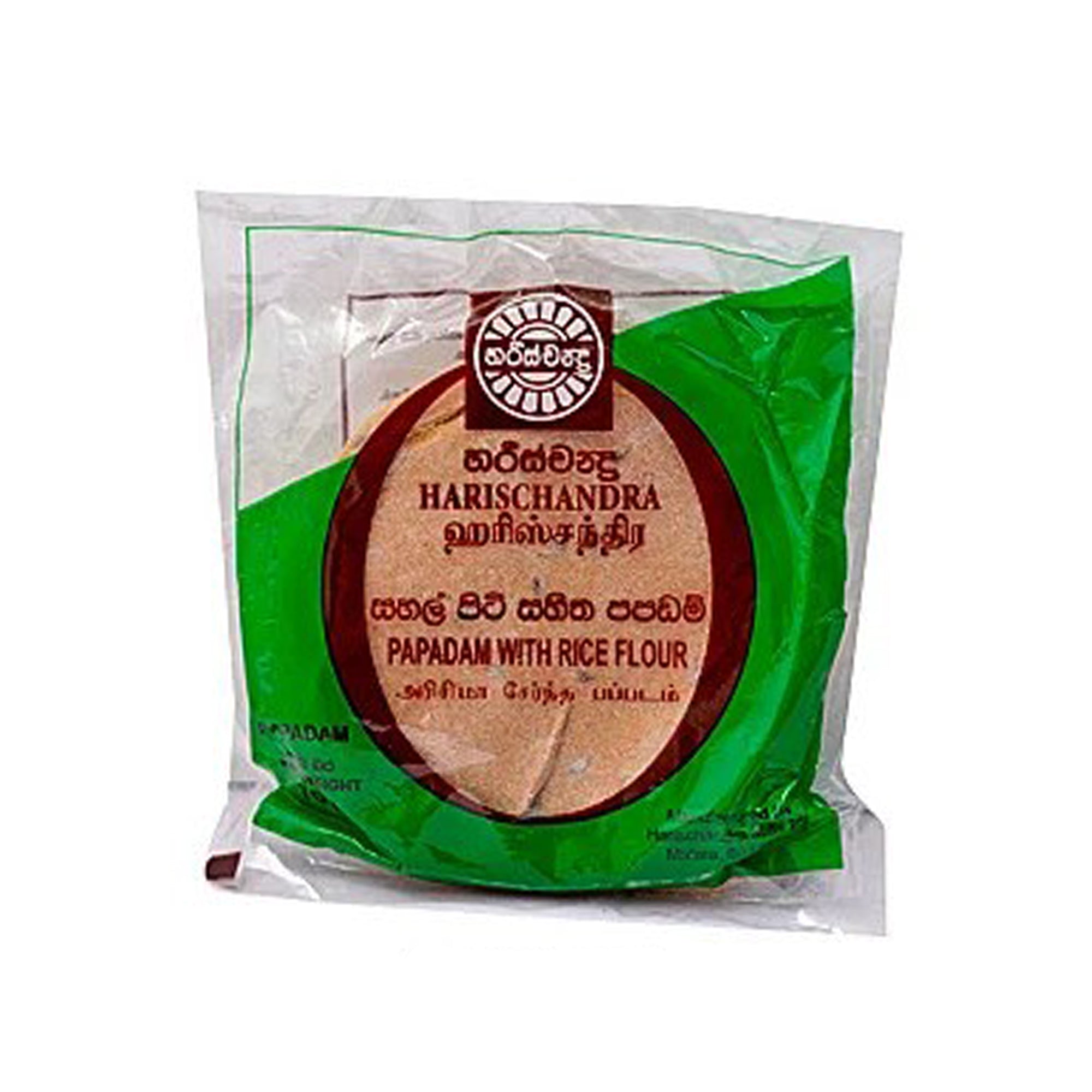
Papadam (also spelled papad or pappadam) is one of the most recognisable accompaniments in South Asian cuisine — a thin, disc-shaped wafer that turns wonderfully crisp when fried in hot oil or toasted over an open flame. In Sri Lanka, it appears on tables at every meal scale, from a modest home lunch to a hotel rice-and-curry spread, sitting quietly alongside sambols and curries as an essential textural counterpoint.
What is papadam made from?
The most traditional papadam is made from black gram (urad dal) flour, seasoned with salt and spices, then rolled paper-thin and sun-dried. That said, a wide range of flours are used depending on regional preference and dietary need — lentil, chickpea, rice, tapioca, millet, and even potato flour all produce slightly different results in texture and flavour. In Sri Lanka, rice-flour papads are particularly popular, offering a lighter, more neutral flavour that pairs well with the island's boldly spiced curries.
Seasonings vary by brand and tradition. Plain versions let the legume flavour carry through cleanly. Masala varieties incorporate black pepper, cumin, dried chilli, or asafoetida for extra depth. Both styles are widely available from Sri Lankan grocery brands.
How is papadam cooked?
There are two main methods, each producing a distinct result:
- Deep frying: Submerging a dry papadam in hot oil for a few seconds causes it to puff and blister almost instantly, producing the lightest, most aerated texture. This is the most common method in Sri Lankan households and restaurants.
- Dry roasting: Holding the papadam over an open gas flame or placing it on a hot griddle and flipping it repeatedly gives a denser, slightly charred result with a more pronounced smoky note. This method uses no oil and is favoured by those seeking a lighter option.
Microwaving is also possible — one or two minutes on a paper towel produces a passable result, though without the same blistering or colour.
How is papadam served in Sri Lanka?
In Sri Lanka, papadam is almost always part of a rice-and-curry meal. It arrives alongside the main dishes rather than as a standalone course, providing crunch to balance the softer textures of rice, dhal, and vegetable curries. It is also served with lunu dehi (lime pickle) or a fresh coconut sambol as a dipping complement.
As a snack or appetiser, papadam is sometimes topped with finely chopped onion, green chilli, tomato, and a squeeze of lime — effectively a quick, no-cook salsa served on a crisp base. Chutneys, particularly coconut or mint varieties, are common dipping accompaniments at restaurants catering to visitors.
Beyond the plate, papadam occasionally appears crumbled as a textural topping over salads or rice dishes, a technique borrowed from broader South Asian cooking traditions.
How does Sri Lankan papadam differ from Indian versions?
Sri Lankan papadam tends to be thinner and crisps faster than many North Indian varieties. Rice-flour papads, common in Sri Lanka, produce a more delicate, translucent wafer compared to the heartier urad dal discs dominant further north. Spicing is generally subtler in Sri Lankan commercial brands, allowing the accompaniments — the curries and sambols — to remain the flavour focus. That said, masala-spiced varieties are widely available for those who prefer more heat in the papad itself.
The word itself shifts across the subcontinent: papad in Hindi and Punjabi, pappadam or appalam in South India and Tamil Sri Lanka, and papadam in Sinhala-speaking regions. The food, however, is essentially the same tradition expressed through local flours and spices.
What are the main Sri Lankan papadam brands?
Several well-established Sri Lankan food manufacturers produce papadam for both domestic consumption and export. Harischandra, one of the island's most trusted food brands, offers plain, masala, and rice varieties. Wijaya and Alli are other widely recognised names. These products are available in Sri Lankan supermarkets, grocery stores, and through online retailers serving the Sri Lankan diaspora.
For visitors wanting to take a taste of Sri Lanka home, packaged papadam is a lightweight, non-perishable souvenir that travels well — similar in spirit to picking up a packet of Ceylon green tea or a local spice blend.
Is papadam suitable for different diets?
Most plain and masala papads are naturally vegan, gluten-free (when made from lentil, rice, or chickpea flour rather than wheat), and low in fat when dry-roasted rather than fried. They are a useful protein source when made from black gram or lentil flour. Those with legume sensitivities should check the base flour of the specific product, as formulations vary. Rice papadams are typically the most allergy-friendly option.
Where does papadam fit in Sri Lankan food culture?
Sri Lanka's culinary identity is built on layering — contrasting flavours, textures, and temperatures within a single meal. Papadam fulfils the crunch dimension in that structure, the same role that kokis plays in festive snack culture or that roasted peanuts serve in a street-food context. It is unpretentious, affordable, and universally present, which is precisely why it endures across every region of the island and every level of the dining experience.
Related reading
1 pages on closely related subjects.