

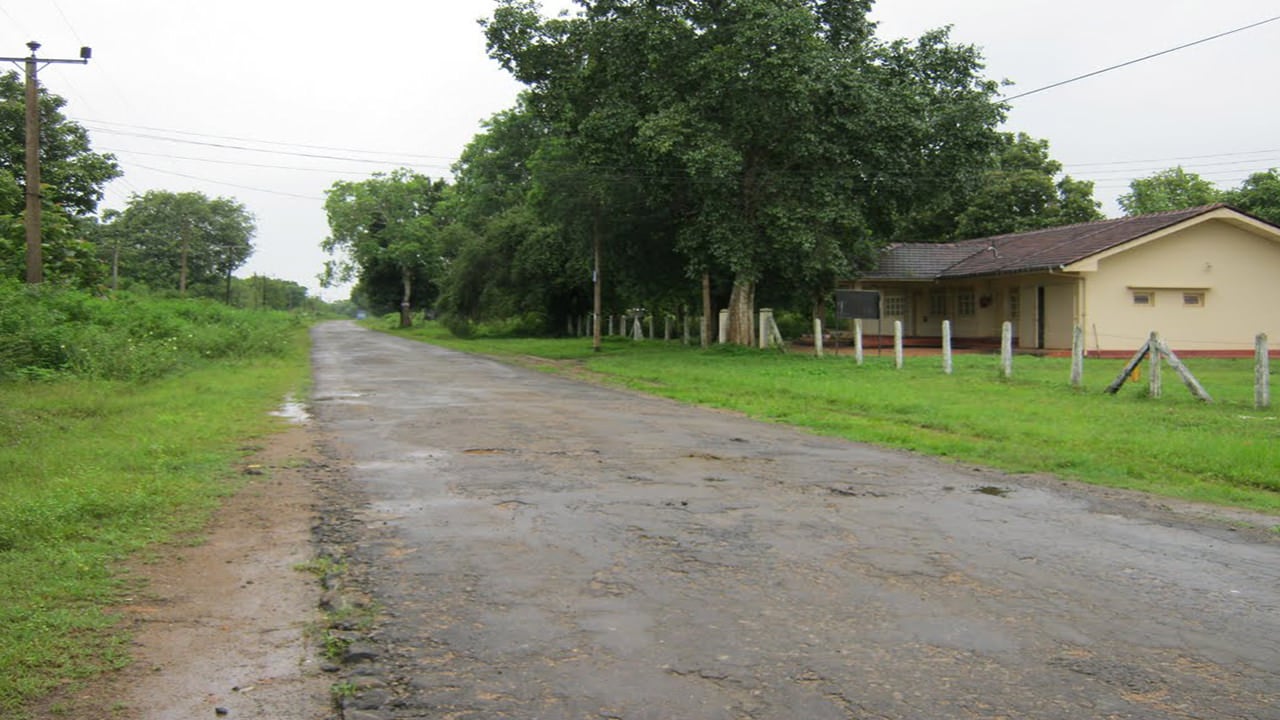

Mamaduwa is a small Sinhalese village situated north-east of Vavuniya, in a landscape quietly scattered with Buddhist ruins. It sits within a region of Sri Lanka's North Central cultural corridor that has seen relatively little tourist footfall, making it of particular interest to travellers who seek out history away from the well-worn circuit.
What is the historical significance of Mamaduwa?
According to local folklore, Mamaduwa owes its name to a celebrated episode from ancient Sri Lankan history. After Prince Dutugemunu defeated the South Indian king Elara and reunified the island under Sinhalese rule — an event recorded in the Mahavamsa chronicle — he is said to have passed through this area on his way to Erupothana, the home village of Nandimithra, one of his ten legendary warriors.
On hearing of the prince's arrival, the villagers erected a large ceremonial shed, known in Sinhala as a maduwa, to honour him and celebrate the victory. The prefix maha, meaning great or large, was attached to describe the scale of this structure. Over generations, the phrase Maha Maduwa contracted in everyday speech to give the settlement its current name, Mamaduwa.
The story places Mamaduwa within one of the most consequential chapters of Sri Lankan history — the second century BCE wars that shaped the island's political and religious identity for millennia. Whether the oral tradition can be verified archaeologically is a matter for scholars, but the Buddhist ruins that punctuate the surrounding terrain lend it plausibility.
What Buddhist ruins can be found around Mamaduwa?
The area around Mamaduwa contains scattered remnants of ancient Buddhist monastic activity, typical of the broader Vavuniya district, which served as a transitional zone between the ancient kingdoms of Anuradhapura and Polonnaruwa. Visitors may encounter eroded brick platforms, fragmentary stone pillars, and partially buried stupas reclaimed by scrubland vegetation.
These ruins are generally unexcavated and unsigned, which means a local guide familiar with the terrain adds considerable value to any visit. The site rewards the curious and unhurried traveller rather than those expecting a fully interpreted heritage experience.
- Brick structural remains consistent with monastic viharas
- Partially visible dagoba (stupa) foundations
- Stone inscription fragments reported in the wider district
- Surrounding forest that may conceal further undocumented remains
Where exactly is Mamaduwa located?
Mamaduwa lies in the Vavuniya district of the Northern Province. Vavuniya town is the nearest significant service centre, and the village is accessible from there by road heading north-east. The broader district borders the Mannar district to the west and the Mullaitivu district to the north-east, situating Mamaduwa in a transitional zone between the dry lowland plains and the northern stretches of the island.
Road conditions in this part of the Northern Province have improved significantly since the end of the civil conflict in 2009, and most routes are navigable in a standard vehicle during the dry season. Travellers arriving from Colombo typically pass through Dambulla or Anuradhapura before continuing north to Vavuniya.
How does Mamaduwa connect to the legend of Nandimithra?
Nandimithra is one of the Dasa Maha Yodhayo — the ten great warriors of Prince Dutugemunu — celebrated in the Mahavamsa as men of extraordinary strength and loyalty. His home village of Erupothana is associated with the broader Vavuniya area, and Mamaduwa's founding legend is essentially a waypoint story: a community marking the moment a heroic prince passed through on his way to honour one of his own.
This type of local foundation myth, in which a place name derives from an event rather than a geography, is common across Sri Lanka's north-central and northern regions. It reflects the dense web of Mahavamsa-era memory that still anchors community identity in these villages, even after decades of conflict and displacement.
When is the best time to visit Mamaduwa?
The Vavuniya district falls within Sri Lanka's dry zone, which means it receives the bulk of its rainfall from the north-east monsoon, typically between October and January. The most comfortable period for visiting is the dry season, roughly from February through to September, when roads are firm and the scrub vegetation is less dense, making it easier to locate and walk around the ruins.
Midday temperatures in this region can be intense, particularly between April and June. An early morning start is advisable, both for the cooler conditions and for the quality of light across the landscape.
Is Mamaduwa worth visiting as a day trip from Anuradhapura?
Mamaduwa is best suited to travellers with a specific interest in off-the-beaten-track archaeology, Mahavamsa-era history, or the cultural geography of the Northern Province. It is not a site with visitor infrastructure — no ticketing office, refreshment stalls, or interpretation boards — so expectations should be calibrated accordingly.
For those travelling between Anuradhapura and Vavuniya, or continuing further north toward Mannar or Jaffna, a detour to Mamaduwa can slot naturally into a longer itinerary through Sri Lanka's ancient north. Combining it with the better-documented sites of the Anuradhapura Sacred City or the Madhu Road Shrine helps build a fuller picture of the region's layered history.
What should visitors know before going to Mamaduwa?
- Guide recommended: The ruins are not signposted; a knowledgeable local guide helps identify remains that would otherwise be easy to overlook.
- No facilities on site: Carry sufficient water, sun protection, and any food you may need. The nearest town services are in Vavuniya.
- Respectful conduct: The site has religious and cultural significance for local communities. Treat any ruins or sacred objects with care.
- Footwear: Sturdy, closed footwear is advisable given the uneven terrain and possibility of thorny scrub undergrowth.
- Photography: The surrounding landscape and ruins can be photographed freely, but check with local residents before photographing people or active religious objects.
Nearby places
12 places within about 25 km, nearest first.
- Kimbulagala7 km
- Vavuniya District12 km
- Vavuniya City12 km
- Vavuniya Railway Station12 km
- Vavuniya Airport (VCCV)12 km
- Nedunkeni13 km
- Ancient Sapumalgaskada Monastery14 km
- Thandikulam Railway Station15 km
- Padaviya15 km
- Horowpathana National Park17 km
- Hindu Sites17 km
- Padaviya Wewa19 km