


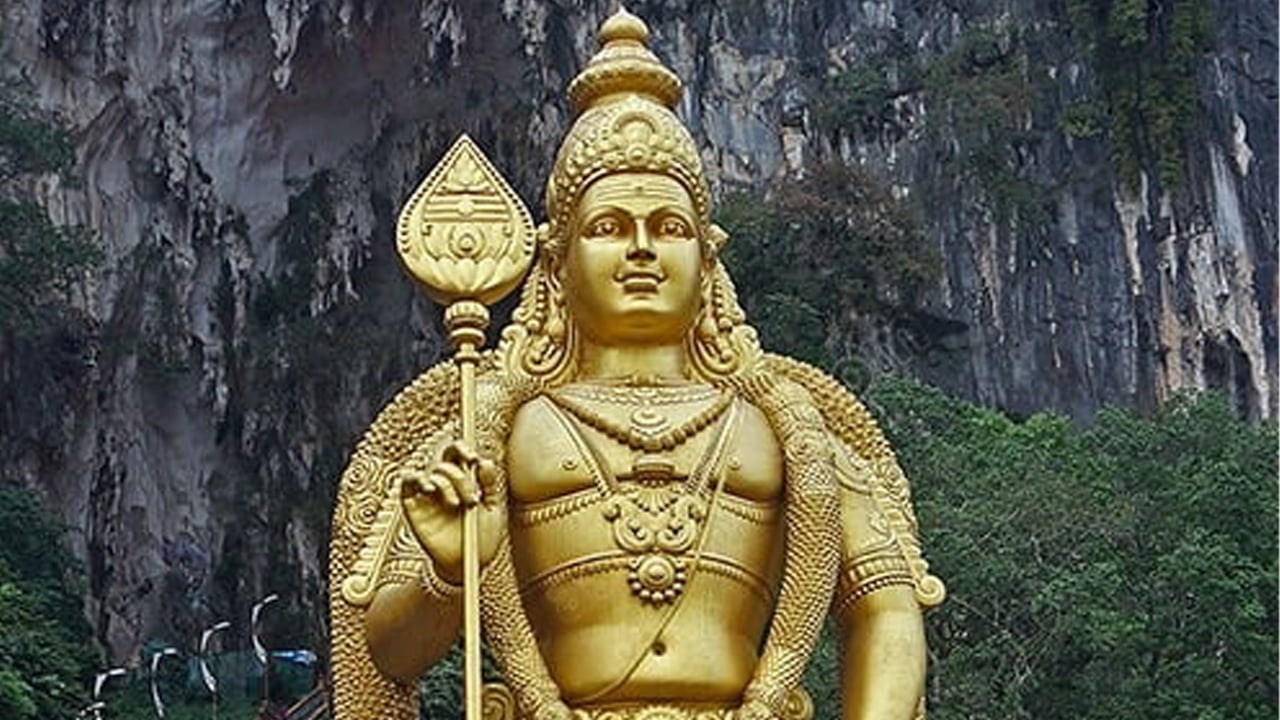


Lord Murugan — known also as Skanda, Kartikeya, and Subramanya — is among the most deeply venerated deities in Sri Lanka. Revered especially within Tamil Hindu communities, he is the god of war, wisdom, and knowledge, and his worship permeates temple life, annual festivals, and daily devotion across the island. His presence is felt as keenly in the highlands of the north as in the pilgrimage towns of the deep south.
Who is Lord Murugan and what does he represent?
In Hindu tradition, Murugan is the second son of Shiva and Parvati, and the younger brother of Ganesha. He is almost universally depicted as a youthful, radiant figure — a choice that emphasises his boundless energy and vitality. His principal weapon is the Vel, a divine spear symbolising the piercing of ignorance and the conquest of evil. He rides a peacock, whose beauty and courage in the face of serpents is understood as an allegory for the triumph of spiritual knowledge over base instincts.
Devotees approach Murugan for protection during adversity, clarity in pursuit of knowledge, and victory over the obstacles — both worldly and spiritual — that obstruct a righteous life. In Sri Lankan Hinduism, these qualities make him especially relevant to communities navigating hardship, and his temples serve as sanctuaries of collective resilience as much as places of individual prayer.
Where are the most important Lord Murugan temples in Sri Lanka?
The Kataragama Temple complex in southern Sri Lanka is the single most significant site of Murugan worship on the island. Located near the Elephant Transit Home in the Uva Province, Kataragama draws hundreds of thousands of pilgrims each year — Hindus, Buddhists, and Muslims alike — a rare interfaith convergence that underscores the deity's broad spiritual authority. The site sits along the Menik Ganga river, and the act of crossing the river barefoot before entering the inner sanctum remains an important ritual gesture.
Beyond Kataragama, significant Murugan temples include the Nainativu Nagapooshani Amman Temple on an island in the Jaffna lagoon, accessible only by boat, and the Maviddapuram Kandaswamy Temple near Keerimalai in Jaffna. The Sella Kataragama sub-shrine, a short walk through jungle from the main Kataragama complex, is considered the older and more esoteric site, especially revered by pilgrims completing the traditional overland yatra on foot.
In the Hill Country, several kovils (Hindu temples) in Nuwara Eliya and the plantation districts are dedicated to Murugan, reflecting the heritage of Tamil communities who came to Sri Lanka as estate workers during the British colonial era.
What are the main festivals dedicated to Lord Murugan in Sri Lanka?
Two festivals dominate the devotional calendar for Murugan worship in Sri Lanka.
- Thaipusam: Observed in the Tamil month of Thai (typically January or February), Thaipusam marks the occasion when Parvati gifted the Vel to Murugan to vanquish the demon Soorapadman. Devotees who have made vows to the deity carry kavadi — ornate, arched structures that can be attached to the skin via hooks and skewers as an act of mortification and surrender. The spectacle is extraordinary and deeply moving, drawing large crowds to major temples across Sri Lanka's north and east.
- Skanda Sashti: Celebrated over six days in the Tamil month of Aippasi (October or November), Skanda Sashti commemorates Murugan's battle with Soorapadman. Each evening, the narrative of this cosmic conflict is recited in the form of the Kanda Sashti Kavasam, a devotional hymn chanted by large congregations. The sixth and final day — Soorasamharam — involves elaborate ritual enactments of Murugan's victory, often conducted on the beach or by a body of water.
At Kataragama, the annual Esala festival (typically July or August) is the largest single event of the religious calendar, featuring nightly torch-lit processions, firewalking, and the ceremonial bringing forth of the deity's casket. The Esala Perahera Festival in Kandy occurs at roughly the same time, and many pilgrims combine both in a single journey through the island.
What rituals do devotees perform at Murugan temples?
Morning and evening puja (ritual worship) forms the backbone of daily temple life, with priests performing ablutions of the deity's image using milk, honey, rosewater, and sandalwood paste in a sequence known as abhishekam. Devotees typically bring offerings of coconuts, flowers — particularly marigold and champak — and camphor for burning.
The breaking of a coconut on the temple precincts is a common act of devotion, the coconut's hard shell representing the ego that must be cracked open before the divine can enter. Devotees who have made specific vows may shave their heads at the temple, offering their hair as a symbol of surrendering pride. During festival periods, the intensity of these practices increases considerably, and the air around major shrines is thick with incense, camphor smoke, and chanting.
When is the best time to visit Murugan temples in Sri Lanka?
Temples are active throughout the year, but visiting during a major festival offers a qualitatively different experience. Thaipusam (January–February) and Skanda Sashti (October–November) are the two high points for those specifically interested in Murugan worship. The Kataragama Esala festival in July or August is the most visually spectacular event at that particular site.
Outside festival seasons, weekday mornings offer a quieter, more contemplative visit. The dry season from May to September generally brings more comfortable conditions in the south and east of the island, while the northern temple sites are best visited between January and April when the peninsula is typically dry.
How do I get to Kataragama from Colombo?
Kataragama lies roughly 250 kilometres south-east of Colombo. The most comfortable option is a private car, which typically takes around five to six hours depending on the route chosen. Intercity bus services run from Colombo and from Matara on the southern coast. Many visitors approaching from the south combine Kataragama with a stop at Sinharaja Forest Reserve, which lies a few hours to the west, making a logical circuit through the island's southern interior.
Traditional pilgrims undertake the pada yatra — a barefoot overland pilgrimage that can begin as far north as Jaffna and take several weeks to complete. While this is a minority practice today, it remains a living tradition and pilgrims on this route are given food and shelter by communities along the way.
Is Kataragama only a Hindu site?
No — and this is one of the most remarkable aspects of Kataragama's religious life. The complex hosts a Buddhist dagoba (the Kiri Vehera), a Hindu kovil, and a mosque, all within close proximity. Buddhist Sinhalese revere the site's guardian deity, Kataragama Deviyo, as one of the four great protective gods of Sri Lanka. Muslim pilgrims visit a shrine associated with a companion of the Prophet. This convergence of three religious traditions in a single jungle town is almost without parallel in South Asia and makes Kataragama a destination of broad cultural significance, not only for those with a specific interest in Hindu worship.
Nearby places
11 places within about 25 km, nearest first.
- Kataragama Esala Peraheraunder 1 km
- Ruhunu Katharagama Devalayaunder 1 km
- Kataragama Esala Festivalunder 1 km
- Kirivehera Stupaunder 1 km
- Maha katharagama devalayaunder 1 km
- Menik Gangaunder 1 km
- Kataragamaunder 1 km
- Kataragama Templeunder 1 km
- Sella Kataragama3 km
- South Entrance6 km
- Lunugamvehera City11 km
