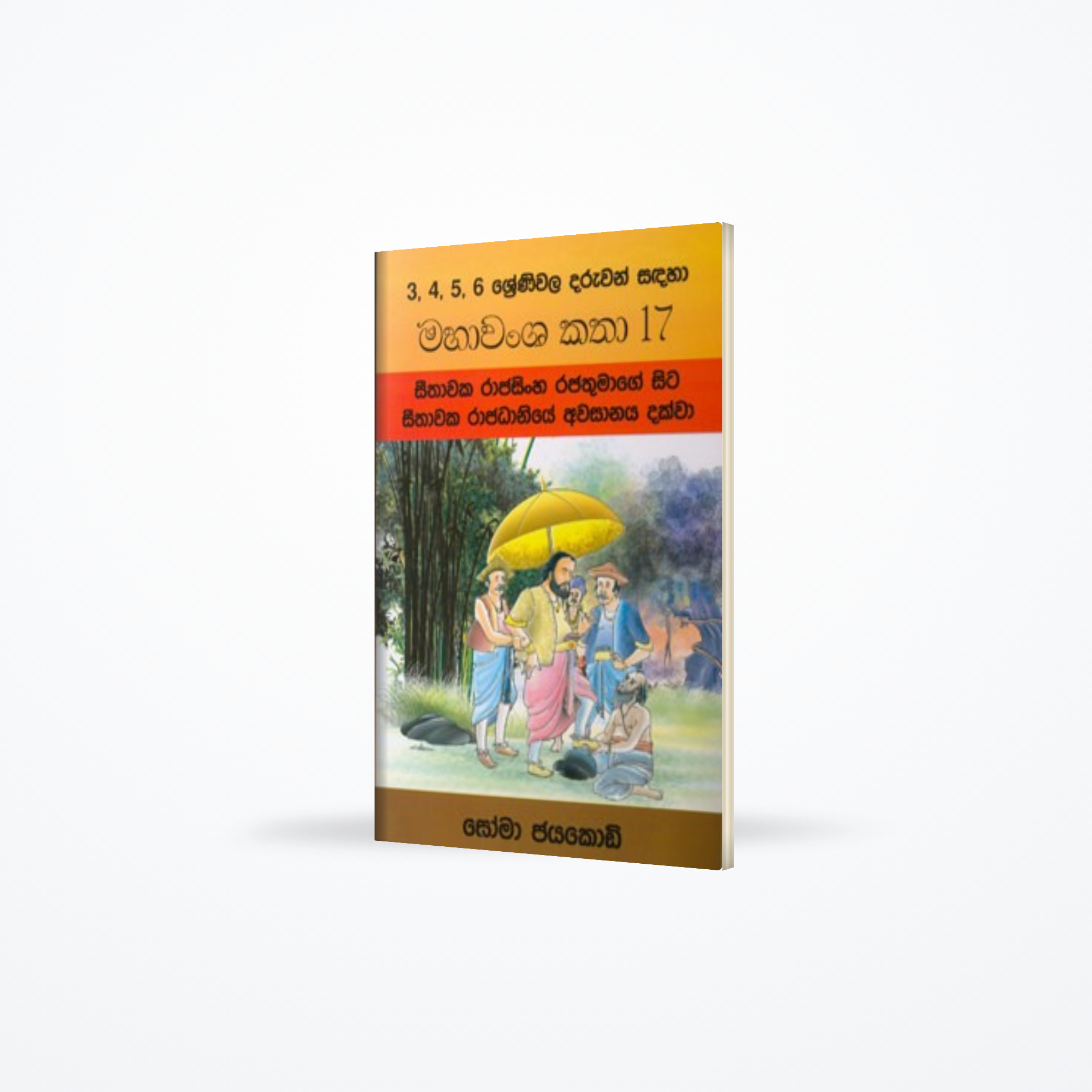
King Rajasinghe II (also spelled Raja Sinha II) ruled the Kingdom of Kandy from 1635 to 1687, making his reign one of the longest and most consequential in Sri Lankan history. He is remembered above all as the king who outmanoeuvred two European colonial powers — first the Portuguese, then the Dutch — using each against the other in a calculated strategy that kept Kandyan sovereignty intact for over a century more.
Who Was King Rajasinghe II?
Born around 1617, Rajasinghe II was the son of Senarat, King of Kandy. He ascended to the throne in 1635 at a relatively young age and would go on to reign for more than five decades. His father had maintained an uneasy truce with the Portuguese, who controlled the island's coastal lowlands, but Rajasinghe II adopted a far more assertive posture. He viewed the coastal territories as rightfully Kandyan land and dedicated much of his reign to recovering them.
Unlike many of his predecessors, he was also a noted patron of Buddhist culture and Sinhalese literature. His reign saw the composition of several important texts, and he maintained the ceremonial traditions of the Kandyan court that gave the kingdom its distinctive cultural identity.
How Did Rajasinghe II Use the Dutch Against the Portuguese?
The defining diplomatic achievement of his reign was the 1638 treaty with the Dutch East India Company (VOC). Rajasinghe II invited the Dutch to assist in expelling the Portuguese from the coastal ports, promising them trading privileges in return. The alliance proved militarily effective: Dutch and Kandyan forces captured Batticaloa in 1638 and Galle in 1640, and the Portuguese were finally driven out of Colombo in 1656.
The arrangement was never simply one of gratitude, however. Rajasinghe II consistently resisted Dutch attempts to consolidate their hold over the captured ports, arguing that the treaties entitled the VOC only to trading rights, not territorial sovereignty. He engaged in prolonged negotiations and periodic armed skirmishes with the Dutch throughout the 1650s and 1660s, refusing to allow them to replicate the Portuguese presence he had worked so hard to eliminate. His successor kings inherited a coastline controlled by the Dutch, but the Kandyan highlands remained independent — a direct result of the strategic ground he had prepared.
What Were His Military Campaigns?
Rajasinghe II was an active military commander. He led or directed numerous campaigns against Portuguese positions in the lowlands, and Kandyan forces under his authority harried coastal settlements and supply lines for years before the Dutch alliance shifted the balance decisively. He also organised and inspired a system of irregular warfare — using the jungle terrain of the interior as a strategic asset — that would later become central to Kandyan resistance tactics against the British as well.
Within the highlands, he dealt firmly with rival factions and maintained internal order across a kingdom that drew its nobility from diverse regional and caste backgrounds. His long reign meant that he outlasted most of the political rivals who might have challenged him, and by the 1660s his authority within Kandy was largely unchallenged.
What Role Did He Play in Kandyan Culture?
Beyond warfare and diplomacy, Rajasinghe II was a significant cultural figure. He is credited with sponsoring works of Sinhalese poetry and is associated with the continuation of royal Buddhist patronage that had defined Kandyan kingship since the sixteenth century. The Esala Perahera Festival — the great annual procession in Kandy honouring the Sacred Tooth Relic — continued during his reign as a central expression of royal legitimacy and Buddhist piety.
He also maintained diplomatic contacts with South Indian kingdoms and was known to have sought support from Nayak rulers in Madurai at various points during his conflict with the Portuguese. This continental reach distinguished him from earlier Kandyan monarchs who had operated in a more insular regional context.
Where Did Rajasinghe II Rule From?
The seat of Kandyan power throughout his reign was Kandy itself — known in Sinhala as Maha Nuwara, the great city — nestled in the central highlands. The kingdom extended across most of the island's interior, from the hill country down to the edges of territories the Europeans controlled on the coast. The Kandyan court at this period was a sophisticated institution with its own ceremonial protocols, judicial system, and land-tenure arrangements that Rajasinghe II both inherited and reinforced.
Visitors to Kandy today can get a sense of the royal and religious world he inhabited by exploring the Temple of the Tooth (Sri Dalada Maligawa) and the surrounding old city. The Kandy City Tour offered through Lakpura covers the key heritage sites in and around the city centre.
What Is His Legacy in Sri Lankan History?
Among Sri Lankan historians, Rajasinghe II occupies a complicated but largely admired position. He is credited with preserving Kandyan independence at a moment when the island's coastal regions had fallen entirely under European control. His willingness to engage colonial powers diplomatically — without ever fully conceding sovereignty — set a precedent that shaped Kandyan foreign policy for the next 150 years until British annexation in 1815.
He is sometimes compared to other early modern rulers who navigated European expansion by playing competing powers against one another, and his success in doing so for more than five decades is considered a significant political achievement. His reign is covered extensively in the Mahavamsa and its continuations, which remain primary sources for the Kandyan period of Sri Lankan history.
He died in 1687 after a reign of roughly 52 years and was succeeded by his son Vimaladharmasuriya II. The kingdom he passed on was politically intact, culturally vibrant by the standards of its time, and still independent — a legacy that defined the Kandyan state well into the eighteenth century.
How Can I Learn More About Sri Lanka's Royal History?
Sri Lanka's royal chronicles — particularly the Mahavamsa and the Culavamsa — are the foundational texts for understanding Kandyan and earlier Sinhalese kingship. The UNESCO World Heritage listing for the Sacred City of Kandy offers further context on the religious and architectural heritage connected to these monarchs. For those travelling to Sri Lanka, a guided heritage tour remains the most rewarding way to connect the historical record with the physical sites that survive from these kingdoms.
Related reading
2 pages on closely related subjects.