Sri Lanka has long been home to two distinct traditions of natural healing: Helawedakama, the island's own indigenous system, and Ayurveda, which arrived from the Indian subcontinent centuries ago and has since taken deep root locally. Both draw on plant-based remedies and a belief that the body, mind, and environment are inseparable. Beyond that shared foundation, however, the two systems diverge considerably — in their origins, philosophical frameworks, treatment methods, and the way they are practised today.
What are the origins of Helawedakama and Ayurveda?
Helawedakama — sometimes written Hela Wedakama — is the ancestral healing tradition of the Sinhala people. Its knowledge was built up over centuries by village healers who worked within the specific ecology of Sri Lanka, identifying medicinal properties in plants, minerals, and animals found on the island. Much of this knowledge was never codified into formal texts; instead it passed orally from teacher to student, often within hereditary healing families known as wedamahattaya lineages.
Ayurveda, by contrast, is one of the world's oldest documented medical systems. It originated in India more than 3,000 years ago and is underpinned by a substantial body of classical Sanskrit texts, most notably the Charaka Samhita and the Sushruta Samhita. Ayurveda entered Sri Lanka through historical and religious exchange — particularly following the arrival of Buddhism in the third century BCE — and became institutionalised alongside local practice. Today Sri Lanka formally recognises Ayurveda through regulated colleges, hospitals, and a dedicated government ministry.
How do the philosophical approaches differ?
Ayurveda is built around a clearly articulated cosmology. It classifies all matter into five elements (panchamahabhuta) — earth, water, fire, air, and ether — and describes human constitution through three bio-energetic forces called doshas: Vata, Pitta, and Kapha. Disease, in Ayurvedic thinking, is understood as an imbalance among these doshas, and treatment aims to restore equilibrium through diet, herbal medicines, cleansing therapies, and lifestyle adjustments.
Helawedakama operates from a more localised and intuitive worldview. It does not use the dosha framework. Healing is understood to involve not just physical symptoms but also social and spiritual dimensions. A practitioner might address the same complaint through herbal preparations, dietary guidance, and ritual elements in combination — recognising that the cause of illness can sometimes be traced to disrupted relationships with community, ancestors, or spiritual forces. This integrative approach reflects the worldview of early Sri Lankan society rather than any single codified philosophy.
What treatments and practices does each system use?
In practice, the two traditions share certain tools — both rely heavily on medicinal plants — but apply them differently and supplement them with very different supporting therapies.
- Helawedakama treatments typically include: decoctions and pastes prepared from locally sourced herbs; dietary prescriptions tied to seasonal and environmental conditions; and, in some cases, ritual healing ceremonies such as thovil, which use drumming, dance, and incantation to address ailments believed to have a spiritual dimension.
- Ayurvedic treatments are more systematised and include: Panchakarma (a structured five-step detoxification programme); shirodhara (a continuous oil-pour therapy); herbal steam baths; medicated enemas; yoga and pranayama; and individualised dietary protocols based on the patient's assessed constitution.
Ingredients such as Ceylon black pepper and Syzygium aromaticum (clove) appear in the pharmacopoeias of both systems — unsurprisingly, given that Sri Lanka has been a source of spices valued for their medicinal properties for millennia.
How are the two systems regulated today?
Ayurveda in Sri Lanka operates within a formal regulatory structure. Practitioners typically complete a degree-level programme at a recognised institution such as the Institute of Indigenous Medicine at the University of Colombo. There are government Ayurvedic hospitals and dispensaries across the country, and the Ministry of Indigenous Medicine oversees standards.
Helawedakama sits largely outside this framework. Most practitioners are self-taught or trained through family apprenticeship. There is no nationally recognised qualification, and the tradition is not regulated in the same way. This informality is both a vulnerability — there is no quality assurance mechanism — and a strength, in that it preserves a highly localised body of ecological knowledge that formalised curricula do not always capture. Efforts to document and protect Helawedakama knowledge are ongoing, with some academics and cultural organisations working to record hereditary healers before the oral tradition erodes further.
Which system is more widely known internationally?
Ayurveda has achieved significant global recognition and is now integrated into wellness resorts, spa menus, and integrative medicine practices across Europe, North America, and East Asia. Sri Lanka has capitalised on this demand: the island's Ayurvedic resorts attract visitors specifically for multi-week treatment programmes covering stress, chronic pain, weight management, and preventive health.
Helawedakama remains largely unknown outside Sri Lanka. Within the island it continues to command respect in rural communities, and some urban Sri Lankans also consult wedamahattaya practitioners — particularly for complaints they feel have not responded well to biomedical or Ayurvedic treatment. International wellness travellers rarely encounter it directly, though it forms part of the broader cultural landscape that makes Sri Lanka's approach to health distinctive.
Can travellers experience these traditions in Sri Lanka?
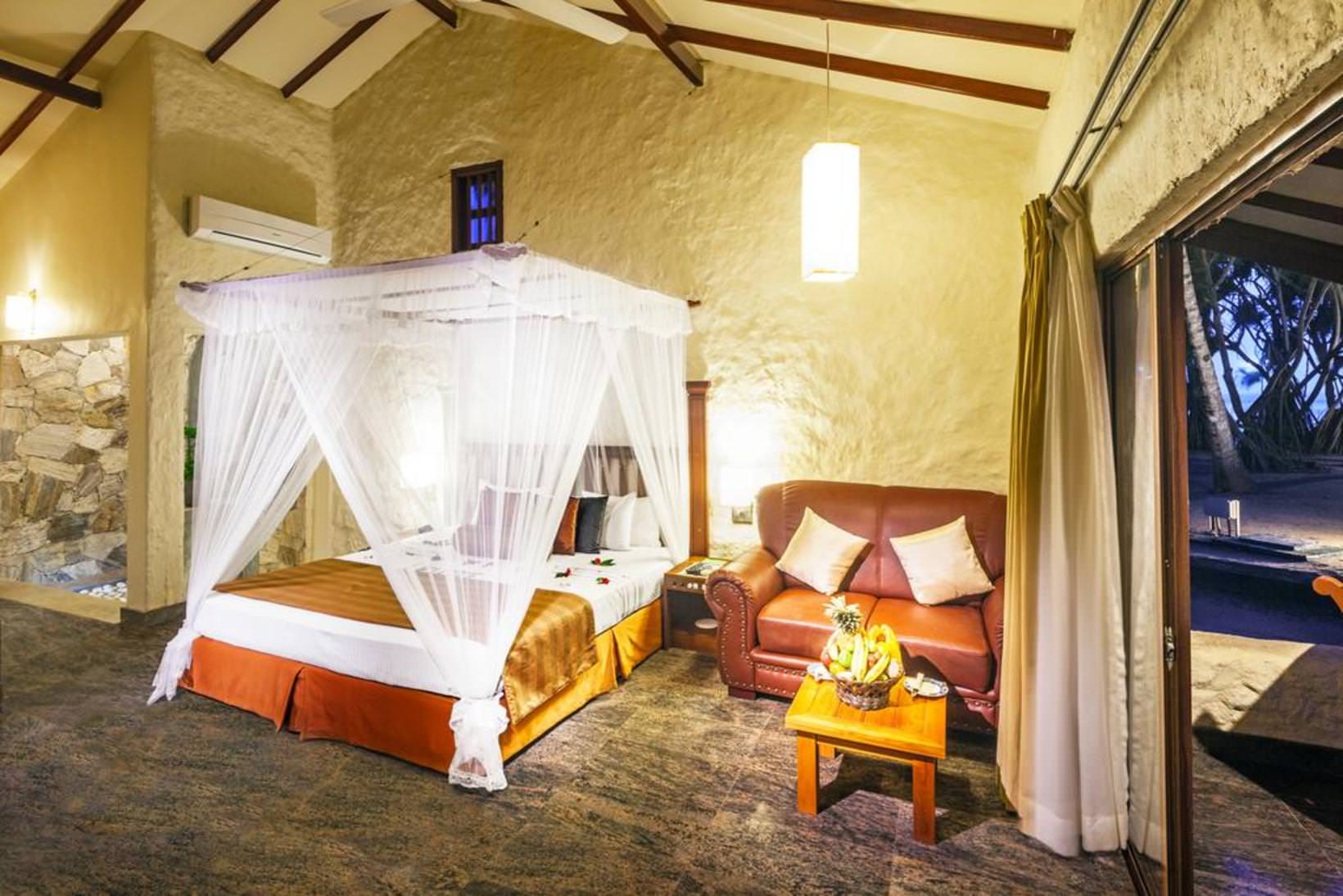
Visitors interested in Ayurveda will find a well-developed infrastructure of dedicated resorts and retreat centres, particularly along the southwest coast and in the hill country. A reputable Ayurvedic stay typically begins with a physician consultation and constitution assessment before any treatments are recommended — this is a marker of a serious programme rather than a spa offering superficial oil massages under an Ayurvedic label.
Engaging with Helawedakama is less straightforward, since it has no equivalent tourism infrastructure. Cultural encounters are most likely in rural areas or through community-based experiences that include traditional knowledge holders. Some village tours and herbal garden visits around the Cultural Triangle and the Sinharaja Forest Reserve region offer glimpses into indigenous plant knowledge, though the depth of engagement varies widely.
For travellers drawn to yoga and wellness experiences, Sri Lanka offers the rare opportunity to encounter Ayurveda in its historically connected context, on an island where many of the herbs used in classical formulations grow wild or in cultivation. That proximity to the source material — from forest to pharmacy — gives treatments here a quality of authenticity that is difficult to replicate elsewhere.
What is the relationship between the two systems?
Helawedakama and Ayurveda are not opposed systems. Over centuries of coexistence they have influenced each other considerably, and many Sri Lankan Ayurvedic practitioners draw on locally developed plant knowledge that has Helawedakama roots. The distinction is perhaps most meaningful in its cultural rather than pharmacological dimension: Ayurveda represents a systematised, exportable framework, while Helawedakama is an embedded, place-specific tradition — one that cannot easily be separated from the Sri Lankan landscape and the communities that formed it.
Understanding both enriches any engagement with Sri Lanka's healing heritage, whether you are visiting an Ayurvedic resort, walking through a medicinal herb garden, or simply curious about how generations of islanders maintained health long before modern medicine arrived.
Related reading
3 pages on closely related subjects.