
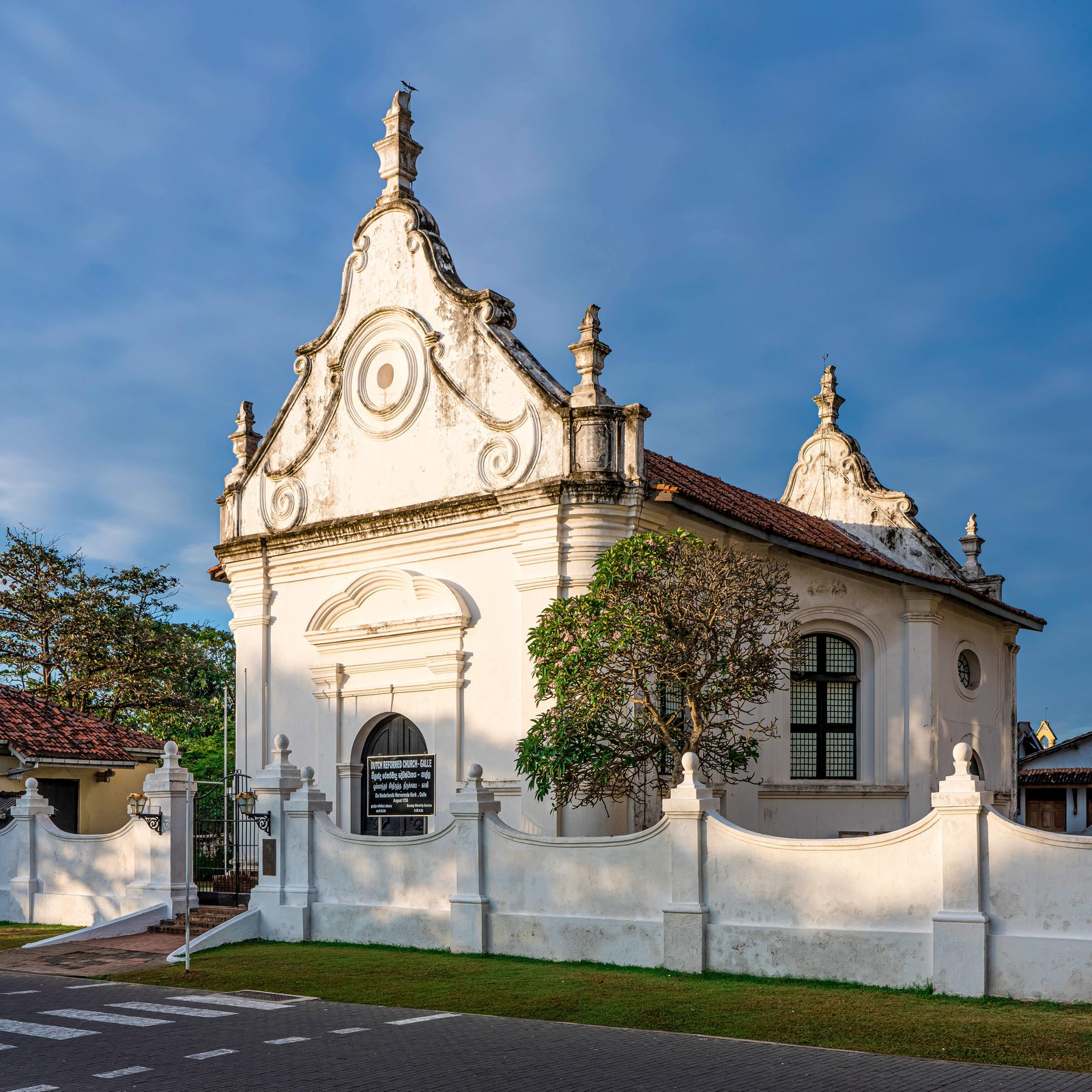
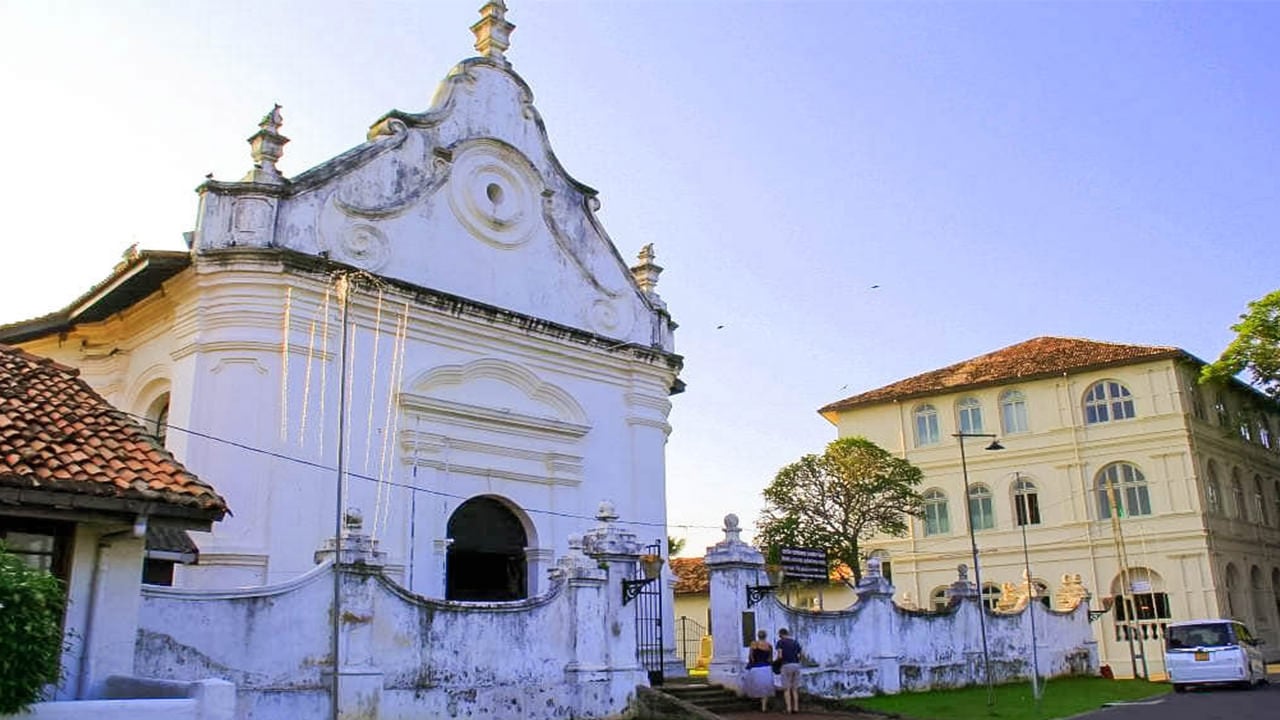
Inside the UNESCO-listed Galle Fort, Groote Kerk stands as one of the most tangible reminders of Dutch colonial rule in Sri Lanka. The name translates simply as 'Great Church' in Dutch, and the building has anchored the fort's skyline for nearly three centuries. For visitors exploring Galle's layered colonial past, this church offers a rare window into the lives of the Dutch administrators, merchants, and families who once governed this port city.
What is the history of Groote Kerk in Galle?
Sri Lanka — then known as Ceylon — passed through successive waves of European occupation between the 15th and 20th centuries: first the Portuguese, then the Dutch, and finally the British. Galle, as a strategically vital deep-water port on ancient Indian Ocean trade routes, was one of the most fiercely contested cities in this period. The Dutch established a firm administrative base here, and their Reformed Church community grew steadily throughout the 17th century.
The congregation's first place of worship stood near what is now the Clock Tower — a modest building that quickly became too small. A second, larger church was constructed on the opposite side of the street from the current site, but that structure proved structurally unsound. The Dutch Reformed Church community resolved to build a new, permanent home on higher ground directly across the street. At roughly 12 metres above sea level, the chosen plot was the highest point within Galle Fort.
Foundations were laid in 1682, but the project stalled almost immediately for want of funds. The old church was patched up and kept in service, and in 1701 a belfry was added to it as a stopgap measure. The bell installed in the tower was cast in 1709 and was rung each Sunday to call the congregation to prayer.
The breakthrough came in 1755. Casparus de Jong, Lord of Spanbroek and Commandeur of Galle, and his wife Geertruyda Adriana Le Grand donated the funds needed to complete the long-dormant construction, reportedly in gratitude for the birth of their daughter after a long wait. According to the church's Baptismal Register, De Jong's daughter was baptised on 24 August 1755 — meaning the building was completed shortly before that date. The construction that had languished for decades appears to have been finished in a matter of months once adequate funding arrived. The completed church was formally named Groote Kerk, and the congregation moved into their third — and final — home in Galle.
What can visitors see inside Groote Kerk today?
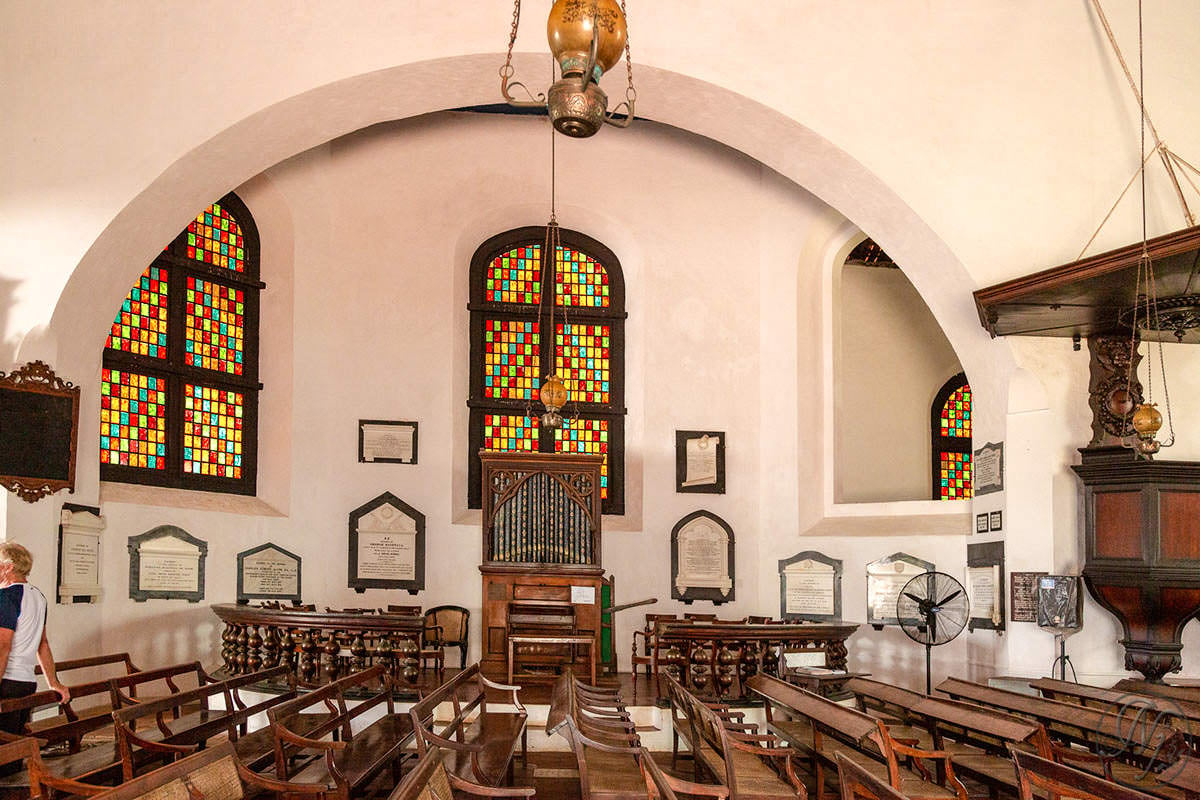
The church interior is notable for its age and the stories embedded in its fabric. The floor is laid with tombstones salvaged from the earlier Dutch burial ground, each carved with the names and heraldic crests of colonial-era families. Reading these stones is, in itself, a kind of archaeology — the inscriptions catalogue the lives of VOC (Dutch East India Company) officials, traders, and their households.
In 1760, a second-hand but high-quality pipe organ was purchased in Colombo and installed in the nave. The instrument gave rise to a church choir, and regular musical services became a feature of worship in the fort. The organ's presence speaks to the ambition of the community: this was not a provisional outpost chapel but a proper Reformed church intended to endure.
The pulpit, pews, and wooden gallery retain much of their original Dutch character. The walls display memorial tablets and plaques commemorating prominent members of the colonial administration. The overall atmosphere is austere in the Reformed tradition — plain white walls, clear-glass windows, and an emphasis on the spoken word over visual decoration.
What happened to Groote Kerk after the Dutch left Ceylon?
The Dutch ceded Ceylon to the British in 1796, and the colonial community that had built and sustained Groote Kerk gradually dispersed. The British administered the church for a period but placed less emphasis on maintaining Dutch Reformed worship. Over the following century the building passed through several phases of use and varying states of repair.
Today the church is administered by the Church of South India, which has maintained it as an active place of worship. This continuity of religious use — across more than 260 years and at least three colonial regimes — is remarkable, and it has helped preserve the structure in far better condition than many of its counterparts elsewhere in Sri Lanka. The Dutch Fort in Negombo offers a useful comparison: Dutch colonial architecture that survived into the present, though in a very different state of preservation.
How does Groote Kerk fit within Galle Fort?
Galle Fort was designated a UNESCO World Heritage Site in 1988, recognised for the exceptional integrity of its Dutch colonial urban fabric. Groote Kerk sits near the centre of the fort, close to the former administrative buildings and within easy walking distance of the ramparts, the National Museum of Galle, and the lighthouse at the fort's southern tip.
A Galle city tour typically includes the church alongside the fort walls, the old Dutch Hospital precinct, and the various street-level heritage buildings that make this one of the best-preserved colonial towns in South Asia. The fort is compact enough to explore on foot in half a day, though a guided visit adds considerable depth to what might otherwise seem like a quiet, unremarkable building.
When is the best time to visit Groote Kerk?
Galle Fort can be visited year-round, but the dry season on the southern coast — roughly December through April — offers the most comfortable conditions for exploring on foot. The fort's narrow streets retain heat in the midday sun, so mornings and late afternoons are generally more pleasant for walking tours. The church itself is typically open during daylight hours, though hours can vary; it is worth checking locally or with your guide before planning a specific visit time.
Galle is approximately 120 kilometres south of Colombo along the Southern Expressway, making it reachable in under two hours by car. The town is also served by rail, with the coastal line from Colombo Fort station offering a scenic, slower alternative.
What else is worth seeing near Groote Kerk?
The fort itself contains enough to fill a full day of exploration. Beyond Groote Kerk, highlights include the Dutch-era ramparts with sea views in three directions, the Galle National Museum (housed in a former Dutch building), and a concentration of independent boutique shops and cafes that have taken root in restored colonial shophouses. The coastline immediately outside the fort wall offers views across the Indian Ocean and, on calm days, a chance to watch local fishermen at work on the rocks below the bastion.
For those interested in extending their time in the region, the wetland waterways of the Madu Ganga lie about 30 kilometres north of Galle, offering a very different — and equally rewarding — natural experience along the southwest coast.