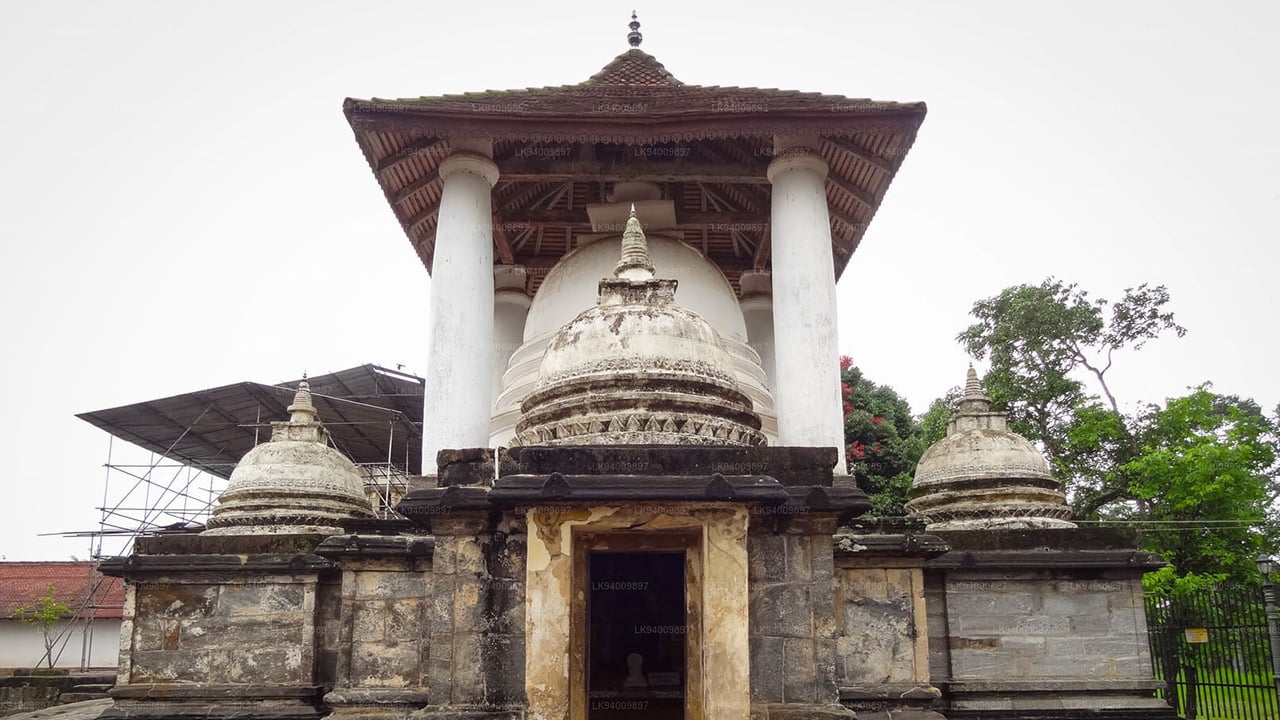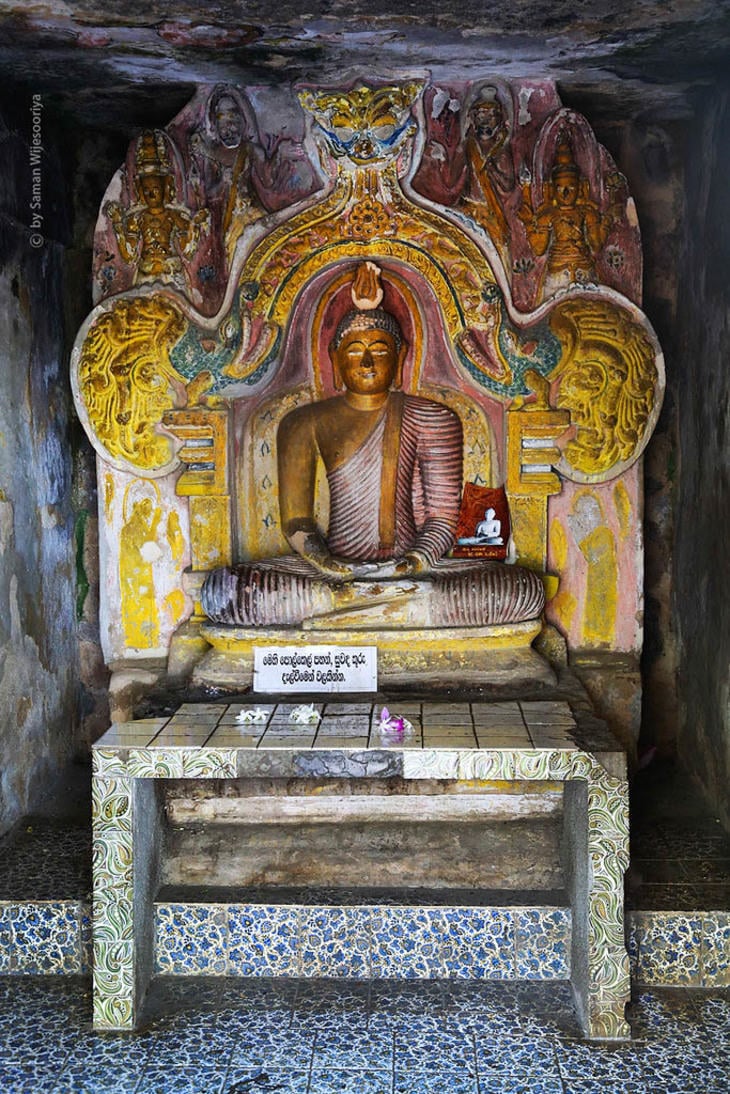

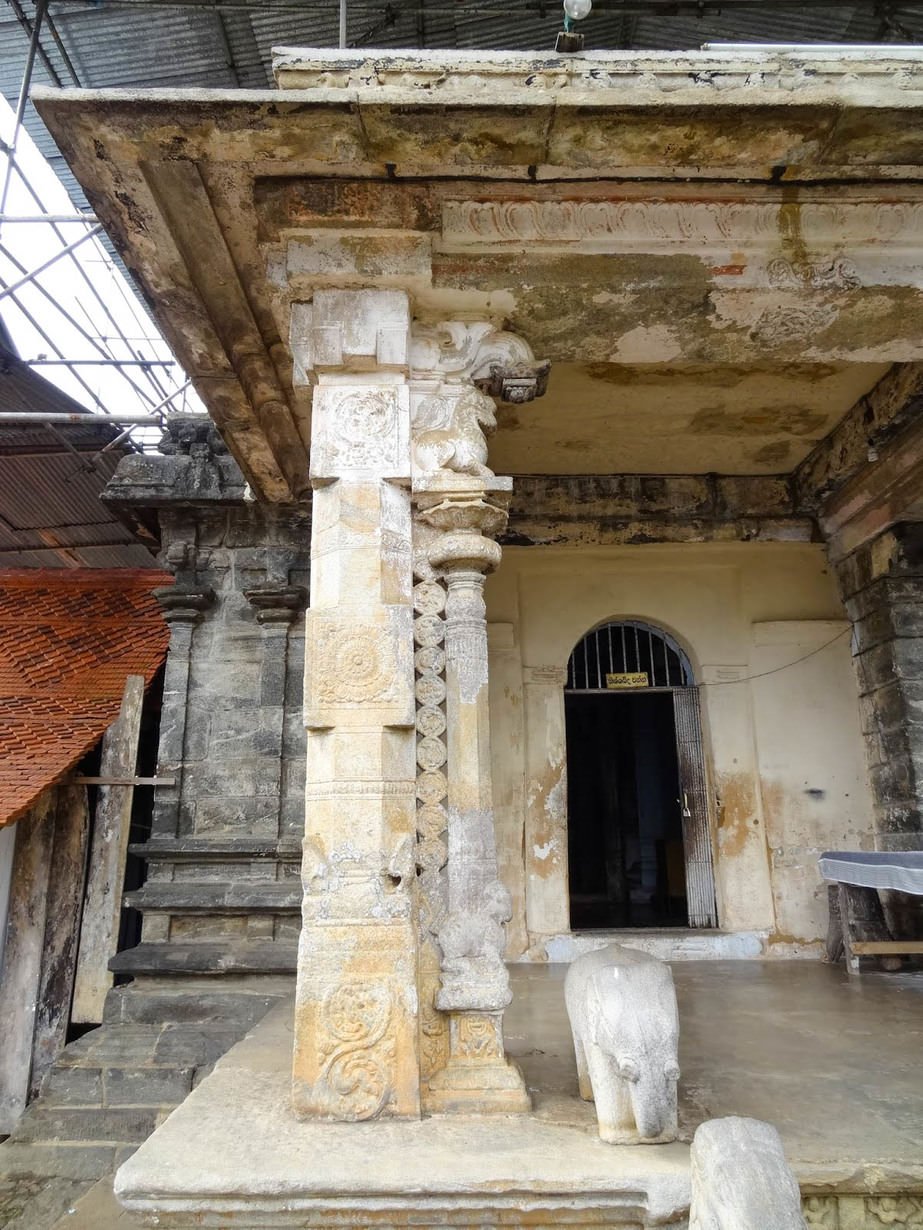
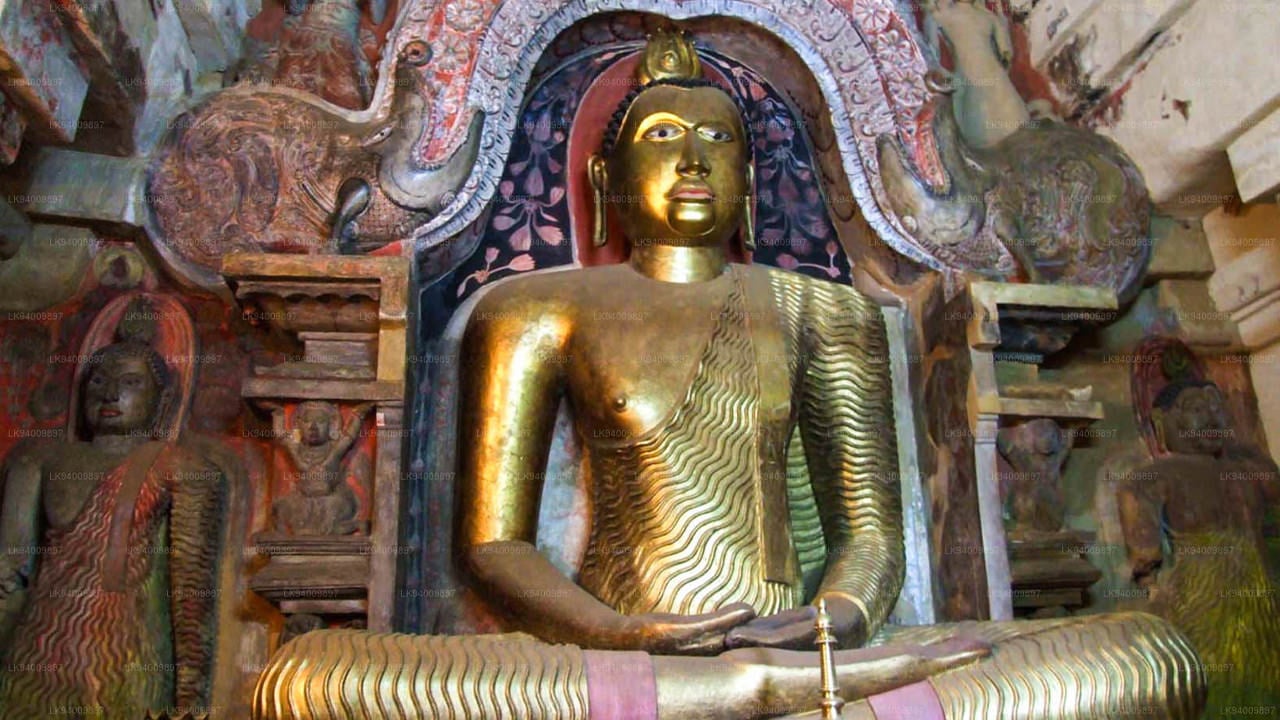
Gadaladeniya Viharaya stands on a broad granite outcrop in Diggala, a quiet village roughly ten kilometres south-west of Kandy. Built in 1344 AD during the reign of King Bhuvanekabahu IV, the complex is one of the finest surviving examples of how South Indian architectural traditions were absorbed and adapted by medieval Sinhalese builders. An inscription carved into the temple walls records both the date of construction and the name of the architect: Ganesvarachchari, a craftsman from South India whose influence is visible in almost every carved surface.
The temple was originally consecrated under the name Dharma Keerthi Vihara. It later acquired the name Gadaladeniya from the surrounding village, and is also referred to in historical texts as Saddharmathilaka and Saddharmalankaraya. Today it functions as an active monastery and draws pilgrims and heritage travellers in roughly equal measure.
What can I see at Gadaladeniya Viharaya?
The complex is arranged around three principal elements: the main shrine hall, a Vishnu devale, and a large central stupa. Each rewards close attention.
The main shrine hall is the architectural centrepiece. A large seated Buddha image, believed to have been carved directly from the underlying rock and then plastered and gilded, occupies the inner chamber beneath an elaborate Makara Thorana — the traditional dragon arch framing the deity. Four standing Buddha statues flank the central figure. The arch itself is decorated with celestial figures and planetary deities, and the surrounding columns and walls carry deep-relief carvings of elephants, dancers, and guardian figures executed in the South Indian idiom. A secondary chamber within the dome once housed another image, though it was reportedly destroyed during Portuguese campaigns in the sixteenth and seventeenth centuries.
The Vishnu devale sits immediately adjacent to the main shrine. Its presence reflects the syncretic religious landscape of fourteenth-century Sri Lanka, where the veneration of Hindu deities within Buddhist complexes was commonplace, particularly in royal patronage contexts.
The Vijayothpaya stupa, erected by King Parakramabahu V, rises from the bedrock at the heart of the compound. A roof carried on four stone pillars shelters the main stupa, and four smaller satellite stupas mark the cardinal directions around it. Each satellite stupa has its own small shrine room and stone flower altar. The entire arrangement is said to be modelled on Vijayantha Prasada, the mythological palace of the god Indra.
What is the architectural style of Gadaladeniya Temple?
Gadaladeniya belongs to a group of three closely related fourteenth-century temples in the Kandy district — the others being Lankatilaka and Embekke — all constructed during a period of intensive cultural exchange with South India. The building plan, the decorative vocabulary of the columns, and the treatment of the gopura-like entrance all reflect the Dravidian tradition brought by Ganesvarachchari, yet the stupa and its enclosure remain distinctly Sri Lankan in form. The result is a hybrid that historians of Asian art regard as architecturally significant precisely because neither tradition overwhelms the other.
The stonework at Gadaladeniya is particularly noteworthy. Unlike temples that apply carved decoration as a surface treatment, here the carvings are integral to the structural elements — columns, lintels, and wall faces — giving the building a coherent sculptural quality rather than a decorated one.
How does Gadaladeniya compare to nearby temples?
Visitors with an interest in medieval Kandyan religious architecture typically combine Gadaladeniya with Lankatilaka Viharaya and Embekke Devale, which lie within a short distance and were built around the same period under similar royal patronage. Together the three form an informal circuit that can be covered in half a day. The Kandy city tour offered by Lakpura can be extended to include all three sites. The Esala Perahera Festival, held annually in Kandy, provides additional context for understanding the living ritual culture that these temples continue to sustain.
For those interested in cave-temple traditions further afield, Sri Lanka's stupa heritage spans the island from Anuradhapura in the north to the south coast, and Gadaladeniya sits within that broader continuum.
When is the best time to visit Gadaladeniya Viharaya?
The temple is accessible year-round. The Kandy district receives its heaviest rainfall between October and January, so the drier months from January through April and again from June through September tend to be more comfortable for exploring outdoor sections of the compound. Morning visits are preferable: the light falls directly into the main shrine hall and the site is quieter before organised tour groups arrive around mid-morning. On poya (full-moon) days the temple sees higher numbers of local pilgrims, which can add atmosphere but also crowds.
How do I get to Gadaladeniya from Kandy?
Gadaladeniya is approximately ten kilometres from Kandy town, accessible by road via Peradeniya and then towards Diggala. The journey by car or tuk-tuk takes around twenty to thirty minutes depending on traffic. There is no reliable direct bus service that terminates at the temple itself, so private transport is the practical option for most visitors. Parking space on the rock approach is limited; drivers typically wait at the base.
What is the history of Gadaladeniya after the 14th century?
Following its consecration in 1344 the temple passed through periods of royal favour and subsequent neglect. Portuguese military activity in the sixteenth and seventeenth centuries caused damage to at least one of the interior images. By the early eighteenth century the complex had fallen into disrepair, and King Viraparakrama Narendrasinha transferred custodianship to a Buddhist monk, establishing the monastic succession that continues today. The temple has remained in the care of the Gadaladeniya monastery ever since, which accounts for its relatively intact state compared to sites that lacked continuous institutional stewardship.
Is there an entry fee for Gadaladeniya Viharaya?
A modest entrance fee is typically charged to non-resident visitors. The fee is collected at the site and contributes to maintenance of the complex. Dress codes apply: shoulders and knees should be covered, and shoes must be removed before entering the shrine rooms. Photography inside the main shrine is subject to the guidance of the resident monks.
Nearby places
9 places within about 25 km, nearest first.