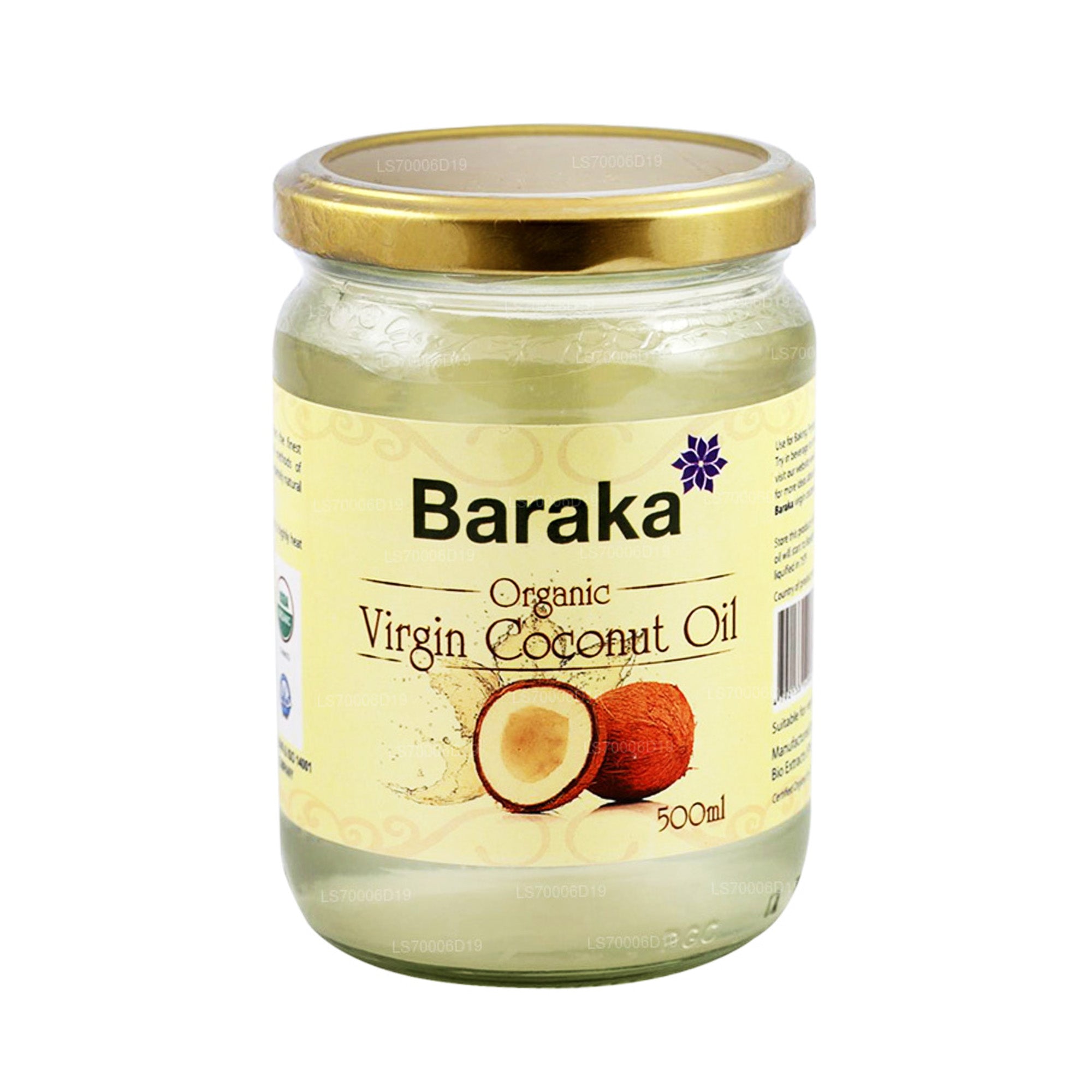
Extra virgin coconut oil from Sri Lanka occupies a respected place in kitchens, bathrooms, and wellness routines worldwide. Cold-pressed from mature coconut kernels grown in the island's tropical lowlands, it retains its natural aroma, mild flavour, and full complement of nutrients — none of which survive the high-heat refining used to produce ordinary coconut oil. The result is a versatile oil that works equally well on a salad as it does on dry skin or damaged hair.
How is extra virgin coconut oil made?
The term "extra virgin" signals minimal processing. The flesh of freshly harvested coconuts is dried or wet-milled, then pressed at low temperatures — a method known as cold-pressing — so no external heat or chemical solvents strip away the oil's naturally occurring compounds. This preserves medium-chain triglycerides (MCTs), polyphenol antioxidants, and lauric acid at their original concentrations. Organically grown coconuts are preferable because no synthetic pesticides or fertilisers enter the supply chain before pressing begins.
Sri Lanka has produced coconut oil commercially for well over a century, and the country's equatorial climate — consistent rainfall, warm temperatures, and sandy coastal soils — suits Cocos nucifera exceptionally well. The Kurunegala and Puttalam districts account for the bulk of commercial coconut cultivation, and many smaller estates cold-press on-site to minimise the time between harvest and bottling.
What are the health benefits of extra virgin coconut oil?
Research into coconut oil's health profile has grown considerably over the past two decades. The following points reflect well-established findings, though individual results always depend on overall diet and lifestyle.
- MCTs for energy: The medium-chain triglycerides in coconut oil — primarily lauric acid, caprylic acid, and capric acid — are metabolised differently from long-chain fats, moving quickly from digestion to the liver where they can be converted into usable energy.
- Antimicrobial activity: Lauric acid, which makes up roughly half of coconut oil's fatty-acid profile, has demonstrated antiviral, antibacterial, and antifungal properties in laboratory studies, attributed in part to its conversion to monolaurin in the body.
- Antioxidant content: Cold-pressed extra virgin oil retains polyphenols that can help neutralise free radicals, contributing to the oil's anti-inflammatory reputation.
- Blood sugar regulation: Some studies suggest MCTs may support insulin sensitivity, which is relevant to blood sugar management, though coconut oil should be seen as one element of a balanced diet rather than a standalone remedy.
- Heart health context: Coconut oil is high in saturated fat, but its saturated fats are predominantly MCTs rather than the long-chain varieties associated with adverse cardiovascular outcomes. Moderation and overall dietary balance remain important.
Coconut oil has also been explored in relation to liver health and respiratory wellbeing, though these areas require further clinical investigation before strong conclusions can be drawn.
How can extra virgin coconut oil be used in cooking?
One practical advantage of extra virgin coconut oil over many plant-based oils is its relatively high smoke point — typically around 177 °C (350 °F) for cold-pressed varieties — which makes it suitable for light frying, sautéing, and roasting without degrading into harmful compounds. It solidifies at room temperature in cooler climates, which is normal and does not affect quality; it melts again with gentle warmth.
- Frying and sautéing: Works well for shallow frying vegetables, eggs, and seafood, and for sautéing aromatics as a base for curries.
- Baking: Substitutes directly for butter or neutral oils in cakes, biscuits, and energy bars. A mild coconut note carries through to the finished product.
- Raw consumption: A spoonful stirred into coffee or tea is a popular practice among those following high-fat dietary approaches. It can also be used as a spread on toast or drizzled over fruit.
- Salad dressings: Liquid at room temperature in warm climates, it blends well with citrus, honey, and spices such as Ceylon black pepper for a tropical-inspired dressing.
What are the skincare and haircare benefits of extra virgin coconut oil?
Coconut oil has been used in South and Southeast Asian personal care for generations, and contemporary dermatology has lent some scientific weight to these traditions. Its fatty acids — particularly lauric acid — help reinforce the skin's moisture barrier, making it a practical option for dry or sensitive skin. Vitamin E, present in small amounts in cold-pressed oil, supports skin repair.
For haircare, coconut oil penetrates the hair shaft more effectively than many mineral-based oils because of its low molecular weight and affinity for hair protein. Applied as a pre-wash treatment or leave-in conditioner, it can reduce protein loss and add apparent thickness and lustre. It is gentle enough for use on babies and young children, and suitable for all hair types, though those with fine hair may find a small amount sufficient to avoid weighing strands down.
Beyond skin and hair, extra virgin coconut oil is used in oil pulling — an oral hygiene practice where a tablespoon of oil is swished around the mouth for several minutes — with proponents citing its antimicrobial properties as beneficial for gum health. It is also used as a base in natural body scrubs, lip balms, and massage blends, including aromatherapy formulations that benefit from its light, tropical scent.
How does extra virgin coconut oil differ from other coconut oil types?
| Type | Processing method | Colour & aroma | Best uses |
|---|---|---|---|
| Extra virgin (cold-pressed) | Low-temperature pressing, no chemicals | Clear/white, mild coconut scent | Cooking, skincare, haircare, oral health |
| Virgin coconut oil | Cold or expeller-pressed, minimal heat | Clear/white, light scent | Cooking, skincare |
| Refined (RBD) coconut oil | Bleached and deodorised at high heat | Clear, neutral scent | High-heat cooking where neutral flavour is required |
| Fractionated coconut oil | Long-chain fats removed, stays liquid | Clear, odourless | Massage, carrier oil for essential oils |
For culinary and wellness use, extra virgin or virgin grades are consistently preferred because their nutrient and antioxidant profiles are left intact by the cold-pressing process.
How should extra virgin coconut oil be stored?
Coconut oil is naturally resistant to oxidation due to its high saturated fat content, giving it a shelf life of around two years when stored correctly. Keep it in a sealed container away from direct sunlight and heat sources. There is no need to refrigerate it; in fact, chilling makes it harder to scoop. A cool, dark cupboard is ideal. If the oil develops a rancid or sour smell, it should be discarded — this is uncommon with good-quality cold-pressed oil but can occur if the container is repeatedly contaminated with water or food particles.
What should I look for when buying Sri Lankan extra virgin coconut oil?
Labelling can be inconsistent across the industry, so a few markers help distinguish genuinely cold-pressed extra virgin oil from more heavily processed alternatives. Look for an organic certification from a recognised body, a clear statement of cold-pressed or expeller-pressed production, and ideally a harvest or pressing date. Sri Lankan-origin oils often carry the Sri Lanka Standards Institution (SLSI) mark, which indicates compliance with national quality benchmarks. Glass packaging is preferable for long-term storage, as it does not leach plasticisers into the oil over time.
Related reading
4 pages on closely related subjects.