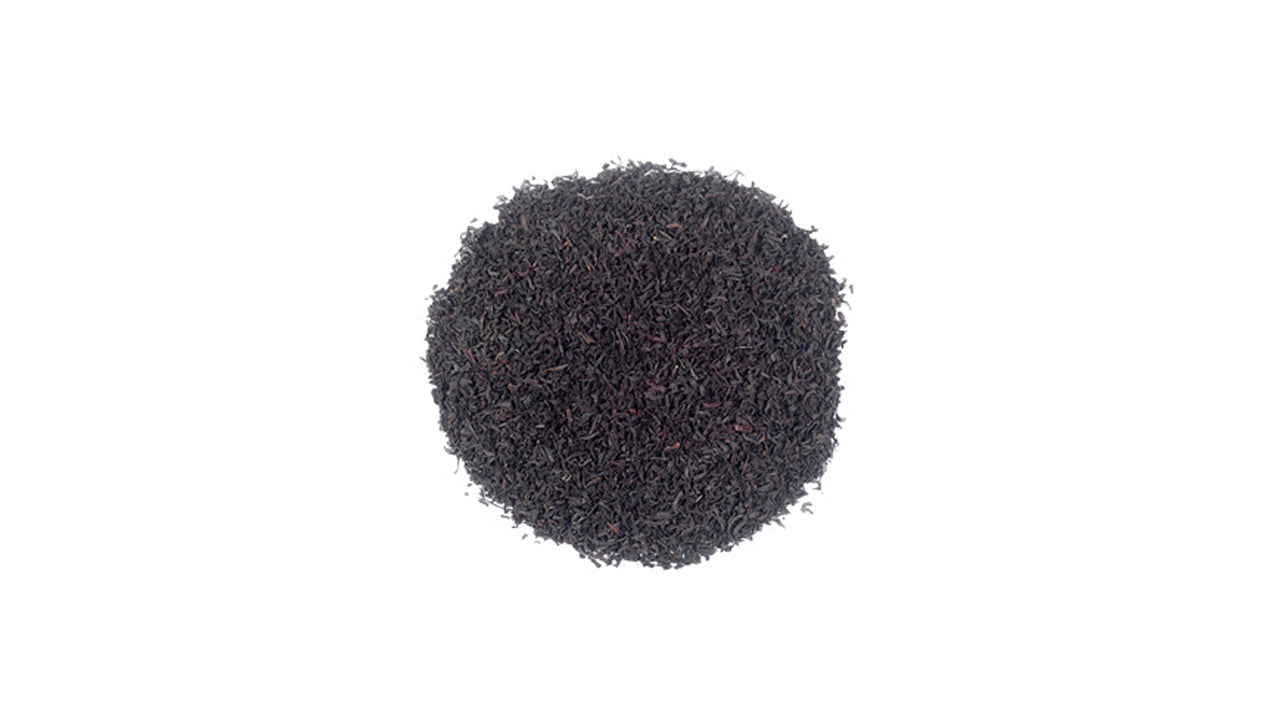
Doombagastalawa Estate sits in the rolling highlands of the Nawalapitiya–Kotmale corridor, a stretch of the Kandy District that has been shaping Ceylon tea's character since the 19th century. Positioned within Sri Lanka's Western Medium growing region, the estate produces teas that sit in a distinct flavour register — fuller-bodied than high-grown Nuwara Eliyas, yet carrying more brightness and complexity than low-grown coastal leaves.
Where exactly is Doombagastalawa Estate?
The estate lies in the Nawalapitiya area, roughly midway along the Central Province's western slopes. Nawalapitiya itself is a tea-country town on the Kandy–Hatton road, flanked on all sides by estates that climb from valley floors at around 750 metres up to peaks above 1,400 metres. Doombagastalawa occupies this middle-elevation band, broadly defined as the Western Medium region — altitudes that typically produce tea with a robust liquor and a warm, rounded finish rather than the delicate floral notes found higher up.
The surrounding Kotmale valley adds a geographical dimension worth noting: the Kotmale Reservoir, built as part of the Mahaweli Development Programme, lies nearby, and the entire region is characterised by a mosaic of tea slopes, remnant cloud-forest patches, and river gorges that give the landscape its layered appearance.
What makes the Western Medium region distinctive?
Ceylon tea is officially classified into low, medium, and high-grown categories according to elevation, and each band has a recognised flavour profile. Western Medium estates — of which Doombagastalawa is one — occupy elevations roughly between 600 and 1,200 metres on the western-facing slopes of the central massif. The combination of moderate altitude, the south-west monsoon influence, and well-drained acidic soils encourages bushes to yield a leaf that processes into a richly coloured, full-flavoured cup.
- Liquor colour: Deep amber to rich copper, stronger than most high-grown teas.
- Flavour profile: Robust body with a clean, slightly malty character and moderate astringency.
- Best brewing style: Works well as a standalone black tea or paired with a small amount of milk; holds up without losing character.
- Grade availability: Doombagastalawa teas are offered in multiple grades including FBOP, FBOP1, PEKOE, and OP1, each produced from different stages of the leaf and lending subtly different cup qualities.
What tea grades does Doombagastalawa produce?
Grade names in Ceylon tea describe the physical size and cut of the processed leaf, not a quality ranking. Different grades from the same estate brew differently, which is why single-estate collections often include more than one grade.
| Grade | Leaf description | Typical cup character |
|---|---|---|
| FBOP (Flowery Broken Orange Pekoe) | Small broken leaf with tip content | Brisk, full-bodied, slightly floral |
| FBOP1 | Selected FBOP with higher tip ratio | Brighter liquor, more pronounced aroma |
| PEKOE | Short, rolled whole-leaf pieces | Smooth, medium-strength, clean finish |
| OP1 (Orange Pekoe 1) | Longer wiry whole-leaf, limited tips | Lighter colour, delicate flavour, good clarity |
For those new to single-estate tasting, starting with the FBOP grade gives the most characteristic expression of the estate's terroir, while the PEKOE and OP1 grades reward slower, attentive brewing.
How does the Kataboola connection relate to Doombagastalawa?
Historical records and estate maps for this part of the Nawalapitiya region reference the Kataboola Estate, which originated in the 19th century and now encompasses six divisions spread across terrain ranging from 750 to 1,400 metres above sea level. The factory serving this cluster sits at around 1,021 metres. Doombagastalawa forms part of this broader estate geography, meaning its leaf may be processed alongside teas from adjacent divisions before being graded and sold as distinct single-estate lots at the Colombo tea auction or through direct channels.
This clustering of divisions under a single estate umbrella is common practice across the Central Province highlands. It allows factory operators to blend expertise and machinery while still marketing individual garden lots — like Doombagastalawa — to buyers who value single-origin provenance.
What is the history of tea growing in the Nawalapitiya–Kotmale area?
The first commercial tea estates in the Central Province were planted in the 1860s and 1870s, following the catastrophic collapse of coffee cultivation caused by the coffee leaf rust fungus. British planters pivoted quickly to tea, and the western slopes around Nawalapitiya were among the earliest areas to be developed because of their accessible elevation, reliable rainfall, and proximity to the Kandy–Colombo rail line.
By the early 20th century, this corridor had matured into one of the most productive tea belts in the island. After Sri Lankan independence in 1948 and the nationalisation of estates in the 1970s, many properties were consolidated under state-run regional plantation companies. Subsequent privatisation in the 1990s returned management to private operators, and estates like Doombagastalawa moved towards quality-focused production and single-estate branding — a trajectory that continues today.
How do I brew Doombagastalawa estate tea properly?
Western Medium teas are forgiving, but a few guidelines help bring out the best in Doombagastalawa's leaf. Use freshly drawn water brought to a full rolling boil — around 95–100 °C. For broken grades like FBOP and FBOP1, steep for two to three minutes; whole-leaf grades such as PEKOE and OP1 benefit from a slightly longer infusion of three to four minutes. Avoid squeezing the infuser or pressing the leaves, as this releases tannins that can make the cup bitter.
- Water temperature: 95–100 °C
- Dosage: approximately 2–3 g per 200 ml cup
- Steeping time: 2–4 minutes depending on grade
- Milk or plain: both work; the robust liquor holds character either way
Can I visit tea estates in the Nawalapitiya area?
The Nawalapitiya–Kotmale corridor is not as heavily commercialised for estate visits as Nuwara Eliya or the Haputale ridgeline, which means visitors who do make the trip encounter working estates rather than tourist-facing factory tours. Some estates in the region do accept guided visits arranged through a destination management company — the route from Kandy takes roughly one to one-and-a-half hours by road. The journey itself passes through some of the most photogenic tea country in the Central Province, with the Kotmale gorge visible from several vantage points along the way.
Travelling with a private car and driver-guide is the most practical way to explore this area, since public transport does not reach the upper estate roads reliably.
Nearby places
14 places within about 25 km, nearest first.
- Westhall Estate (Rillagalla)3 km
- Craighead Estate3 km
- Kadiyanlena Falls (Kataboola Ella Falls)4 km
- Rassagala4 km
- Kothmale Coffee4 km
- Kotmale City4 km
- Kotmale Dam4 km
- Imboolpittia Estate5 km
- Nawalapitiya5 km
- Kataboola Estate (Dombagastalawa)5 km
- Nawalapitiya Railway Station5 km
- Galboda Falls6 km
- Ulapane Railway Station6 km
- Kotmale Mahaweli Maha Stupa8 km
Related reading
5 pages on closely related subjects.