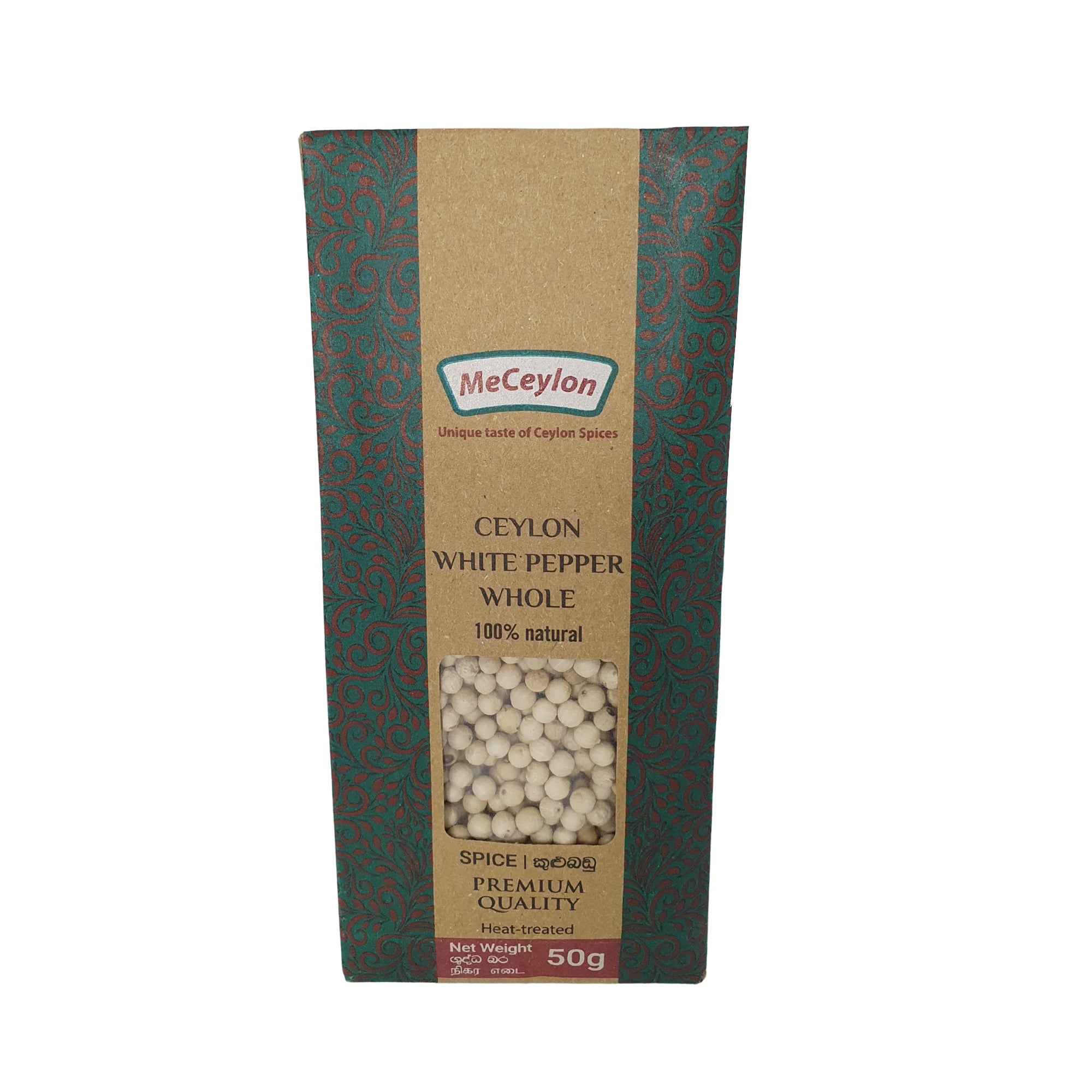
White pepper and black pepper share the same botanical origin — the fruit of Piper nigrum, an evergreen climbing vine native to South and Southeast Asia that has been cultivated in Sri Lanka for centuries. What sets them apart is not the plant, but the processing method applied after harvest. Ceylon white pepper carries a subtler, more refined heat than its black counterpart, and its clean ivory appearance makes it a preferred choice in pale sauces, seafood dishes, and spice blends where dark flecks would be unwelcome.
How Is White Pepper Different from Black Pepper?
Both varieties begin as the same small, round drupe. For Ceylon black pepper, the berries are harvested while still green and almost ripe, then sun-dried until the outer skin shrivels and darkens. White pepper follows a different path: the outer skin — known as the pericarp — is removed either before or after drying, leaving behind only the inner seed. This stripping process, whether done by soaking the ripe red berries in water (a traditional method called retting) or by mechanical hulling after drying, produces the pale, smooth peppercorn familiar in kitchens worldwide.
The removal of the outer layer also removes some of the volatile oils and terpene compounds concentrated in that skin, which is why white pepper has a different — and to many palates, milder — aromatic profile. At the same time, certain pungent compounds remain concentrated in the inner seed, so white pepper is not necessarily less spicy; it simply delivers heat with less of the floral, piney top notes characteristic of black pepper.
Where Is Ceylon White Pepper Grown?
Sri Lanka's pepper cultivation is concentrated in the wet and intermediate zones of the island — particularly the districts of Kandy, Matale, Kegalle, and Ratnapura. The island's combination of well-distributed rainfall, rich laterite soils, and tropical humidity suits Piper nigrum vines well. Smallholder farms account for the bulk of production, with vines traditionally grown up shade trees or areca palms in mixed home gardens rather than monoculture plantations.
Ceylon pepper — both black and white — has long held a reputation among spice traders for consistent quality. The island's historical role in the spice trade stretches back to antiquity, and pepper remains one of Sri Lanka's significant export spices today alongside cinnamon, cardamom, and cloves.
How Is Ceylon White Pepper Processed?
The traditional retting method involves soaking fully ripe red pepper berries in slow-moving water for around ten days. Microbial activity during soaking loosens the outer skin, which is then rubbed away and washed off. The pale seeds are dried in the sun until their moisture content is low enough for safe storage. The result is a smooth, off-white to cream-coloured peppercorn with a clean surface.
A faster alternative, increasingly used in commercial production, is dry processing: black peppercorns are soaked briefly and mechanically dehulled, removing the outer layer without prolonged fermentation. This method produces a slightly different flavour profile — some producers argue the traditional retting imparts a characteristic earthiness that dry-processed white pepper lacks. Discerning buyers often specify which method they prefer.
What Are the Culinary Uses of White Pepper?
White pepper is valued in cuisines where a clean, even heat is needed without visible dark specks. Common applications include:
- White cream sauces and béchamel
- Chowders, bisques, and pale seafood soups
- Mashed potato and egg-based dishes
- Chinese and Vietnamese stir-fries, where white pepper is traditional
- Spice rubs for light-coloured meats such as chicken and fish
- Pickling blends and dry-cured meats
In Sri Lankan home cooking, white pepper appears in milder curries and rice preparations, and is occasionally ground fresh into seafood dishes along the southern and western coasts.
White pepper is available in three main forms: whole peppercorns (best for freshness and longevity), cracked (for a coarser, more immediate flavour release), and ground powder (most convenient but quickest to lose aroma). Buying whole and grinding at home gives the best flavour return.
Does White Pepper Have Health Benefits?
Like black pepper, white pepper contains piperine — the alkaloid responsible for pungency. Piperine has been studied for its potential role in enhancing the bioavailability of other nutrients and compounds, including curcumin from turmeric. Traditional Ayurvedic medicine, practised in Sri Lanka for centuries, uses pepper in formulations addressing digestive complaints, respiratory conditions, and circulation.
White pepper also contains small amounts of manganese, iron, and dietary fibre. While the quantities consumed in everyday cooking are modest, regular inclusion of whole spices in the diet is broadly consistent with anti-inflammatory eating patterns. It should be noted that whole spices complement a balanced diet rather than serving as a primary medicinal remedy.
How Should Ceylon White Pepper Be Stored?
Whole white peppercorns keep well for up to three years when stored in an airtight container away from light, heat, and moisture. Ground white pepper loses its aroma significantly faster — typically within six to twelve months — which is why grinding small quantities as needed is advisable. Unlike some spices, white pepper does not benefit from refrigeration; condensation inside the jar can accelerate degradation. A cool, dark cupboard is sufficient.
How Does Ceylon White Pepper Compare to Other Origins?
The major commercial origins for white pepper include Muntok (Indonesia), Sarawak (Malaysia), and Vietnam, each with distinct flavour characteristics shaped by variety, soil, and processing tradition. Ceylon white pepper is produced in smaller volumes than these origins, which contributes to its premium positioning in specialty spice markets. Its flavour is generally described as clean and warm, without the strong fermented earthiness sometimes associated with Muntok pepper, making it well suited to delicate European-style dishes as well as traditional Asian recipes.
What Forms of Ceylon White Pepper Can I Buy from Lakpura?
Lakpura sources Ceylon white pepper from trusted Sri Lankan producers and offers it in multiple forms — whole peppercorns, cracked, and ground powder — across several brands and pack sizes. Whether you are looking for a small retail pack to take home as a souvenir or a larger quantity for regular kitchen use, the range covers both convenience and quality. Organic-certified options are also available for those seeking pesticide-free sourcing.