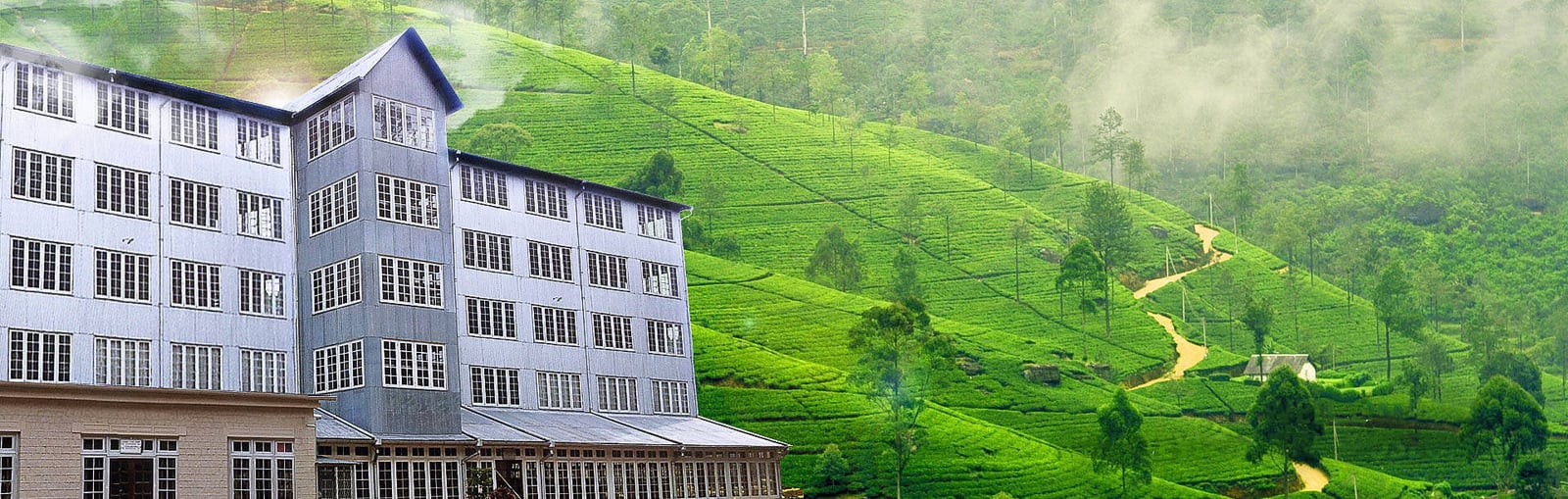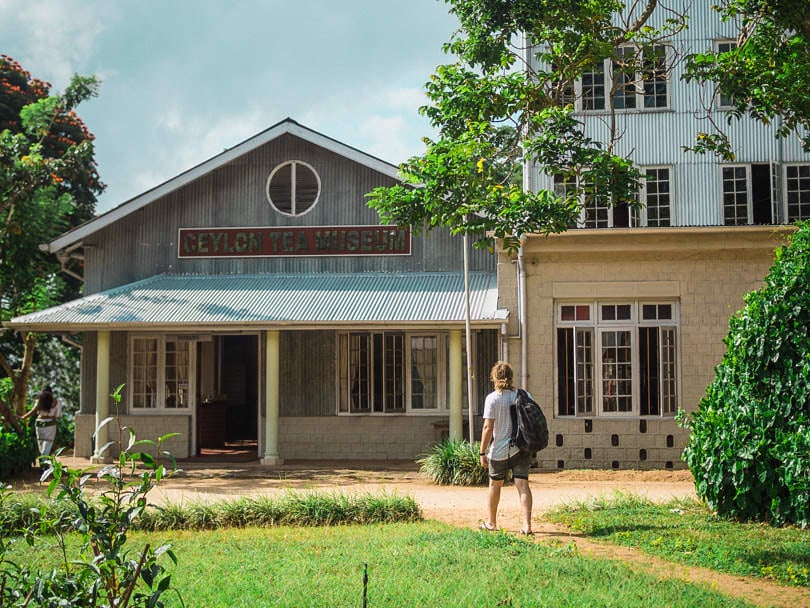
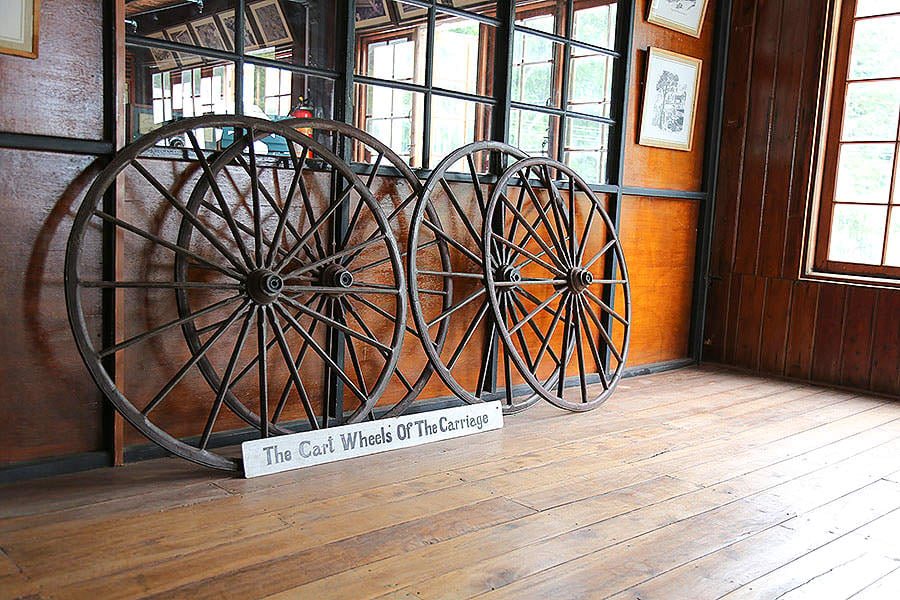

Perched on a hillside at Hantane, roughly three kilometres from the centre of Kandy, the Ceylon Tea Museum is one of the most focused heritage attractions in Sri Lanka's hill country. Housed in a restored colonial-era factory building, it traces the full arc of the island's tea story — from the pioneering experiments at Loolecondera estate in the 1860s to the global commodity that today carries the Lion Logo on millions of packets. The surrounding slopes are planted with demonstration tea bushes in several cultivated varieties, giving the approach road its own quiet, garden-like character.
What can you see at the Ceylon Tea Museum?
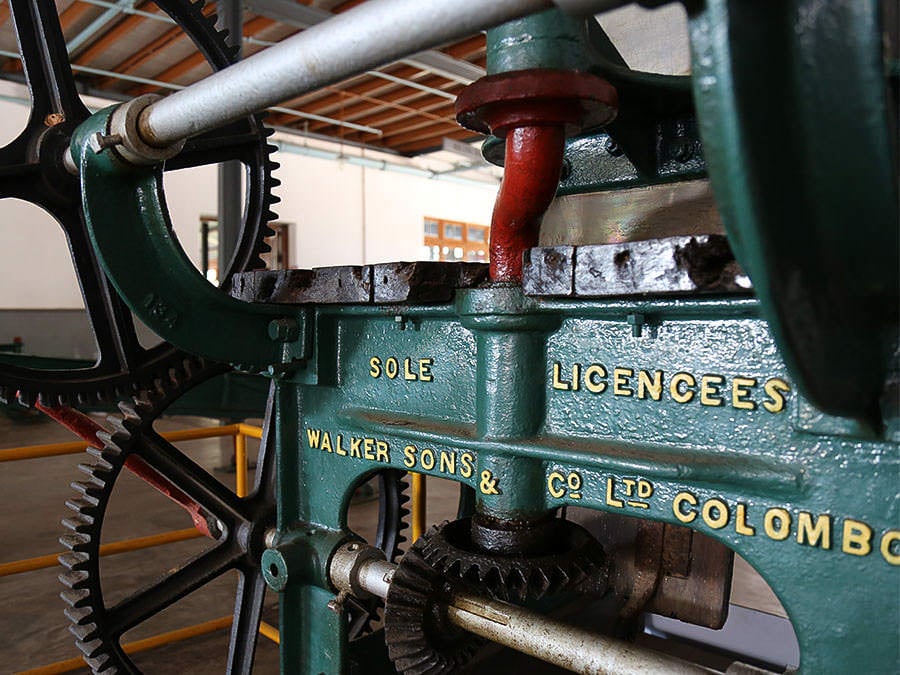
The museum occupies four floors, each with a distinct character. The ground floor and second floor are devoted to machinery: original rollers, withering troughs, CTC cutters, dryers, and sorting tables sourced from estates across the island. Many pieces date to the late nineteenth and early twentieth centuries, and interpretive panels explain how each stage of manufacture transforms a fresh green leaf into the black tea Sri Lanka is known for worldwide.
The first floor holds a library and an auditorium equipped for audio-visual presentations — a useful starting point if you want context before walking the machinery exhibits. School groups, researchers, and tea-trade visitors use this space regularly. The third floor is given over to a retail outlet where you can buy Ceylon tea from a curated selection of estates and grades, including low-grown, mid-grown, and high-grown origins.
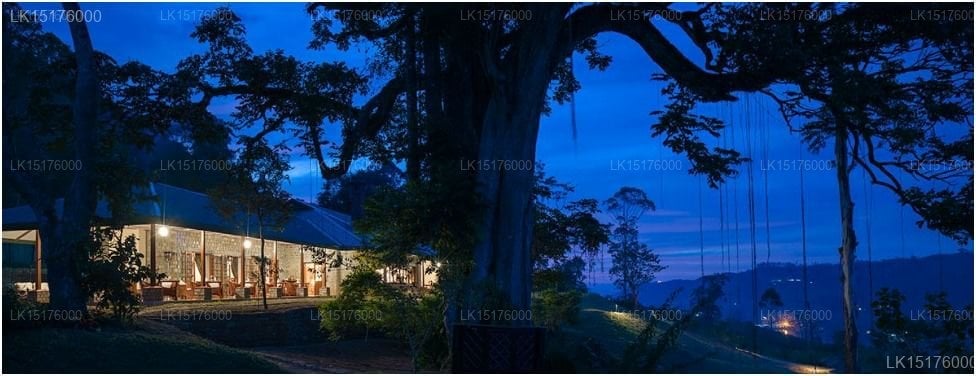
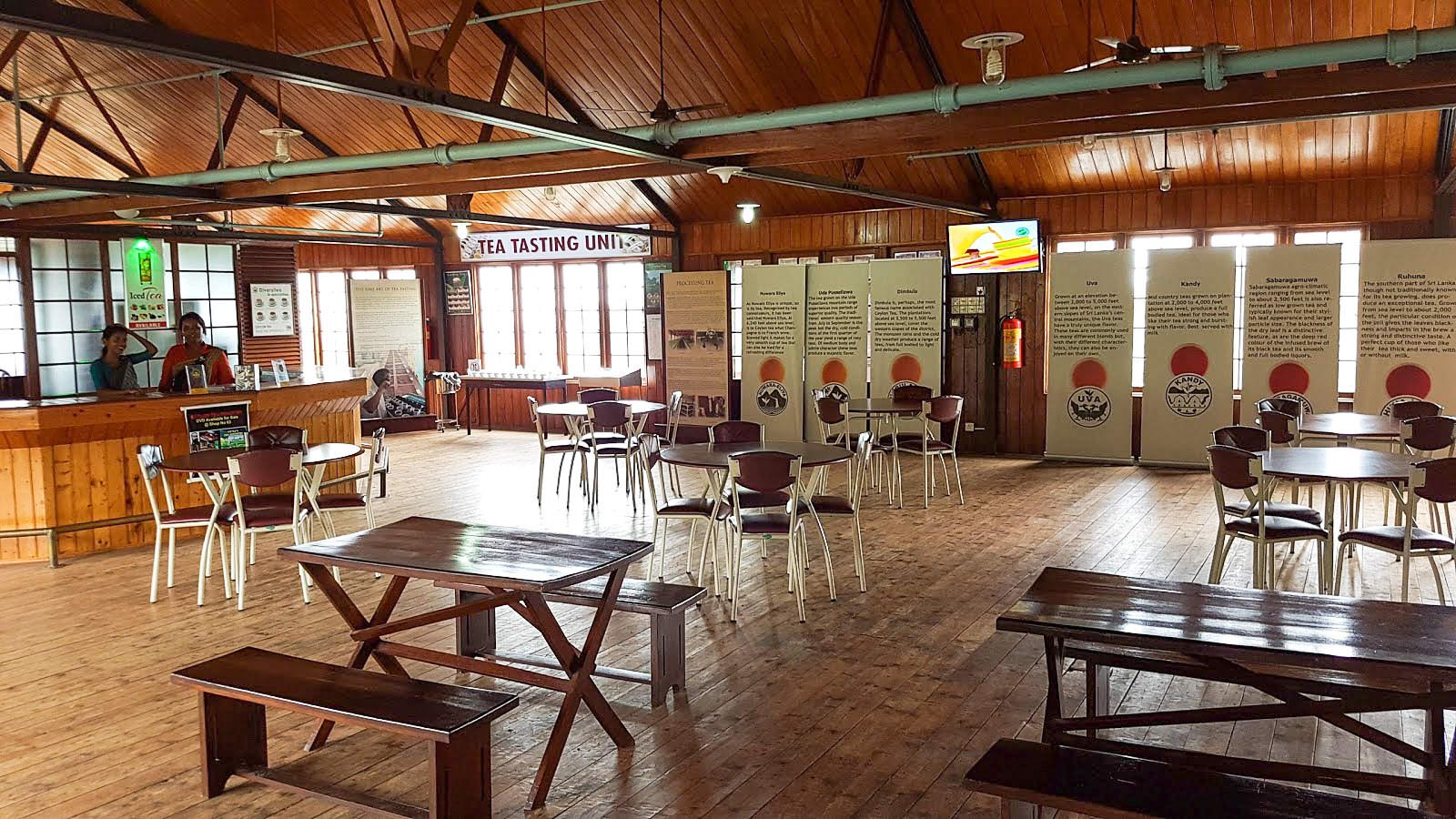
The entire top floor operates as a tea café. Sit with a properly brewed cup and, on a clear day, look out over the Kandy valley toward the Knuckles Range, the Hunasgiriya hills, and the Matale range. A telescope is mounted on this level for a closer look at the surrounding landscape.
Why is the Hantane location significant?
Hantane sits close to Loolecondera estate, where Scottish planter James Taylor made his first commercial tea plantings in 1867 — widely regarded as the founding moment of the Ceylon tea industry. Choosing this hillside for the museum rather than a city site connects the exhibits to living landscape. The Peradeniya Botanical Gardens, another landmark closely tied to colonial-era botanical and agricultural research, lies within a short drive, making the area a coherent half-day itinerary for anyone interested in Sri Lanka's plantation heritage.
For visitors already including a Kandy city tour in their schedule, Hantane adds perhaps forty-five minutes to an hour without requiring significant backtracking. The road that circles the museum is motorable and has parking for both cars and coaches.
How does the Ceylon Tea Museum connect to Sri Lanka's tea history?
Sri Lanka's tea industry emerged almost by accident. Coffee blight in the 1860s and 1870s destroyed the colony's primary plantation crop, and planters scrambled for an alternative. Taylor's early success at Loolecondera, followed by rapid expansion across the central highlands and later the southern and Sabaragamuwa districts, created one of the world's most geographically diverse tea-producing countries within a single generation.
Today Sri Lanka produces teas across a spectrum of elevations — each elevation band yielding a distinctive cup character. Ceylon green tea has also grown as a category alongside the traditional black styles. The museum's collection of grading screens, weighing equipment, and branded tea chests documents this evolution in material form, making the exhibits more legible than a purely text-based account.
What should I know before visiting the Ceylon Tea Museum?
The museum is managed by the Sri Lanka Tea Board and is generally open Tuesday through Sunday. Visiting hours and admission fees are set by the Tea Board and may be revised; confirm current details directly or through your tour operator before travelling. Photography is typically permitted in the machinery halls. The rooftop café is the most popular area for independent travellers and tends to fill up around mid-morning, so arriving early gives you a quieter experience and better views before haze builds over the valley.
- Location: Hantane, approximately 3 km from Kandy city centre
- Access: Motorable road with parking for cars and coaches
- Floors: Four — machinery (ground and second), library and auditorium (first), tea retail (third), tea café (top)
- Nearby: Loolecondera estate, Peradeniya Botanical Gardens, Kandy city
- Managed by: Sri Lanka Tea Board
How do I get to the Ceylon Tea Museum from Kandy?
The most straightforward option is a private car or tuk-tuk from Kandy city, a journey of around ten to fifteen minutes depending on traffic. The road climbs steadily through tea-bush slopes and small residential areas. Public transport reaches Hantane but may require a short uphill walk; visitors with limited mobility are better served by private vehicle. If you are arriving from Colombo, Kandy is accessible by expressway and then the A1 road, or by train on the scenic main line — the rail journey through the lower hill country is itself part of the experience for many travellers.
What else is worth visiting near the Ceylon Tea Museum?
The Peradeniya Botanical Gardens, roughly ten kilometres from Hantane, is Sri Lanka's foremost botanical collection and well worth pairing with a museum visit. Kandy itself — home to the Temple of the Tooth Relic and the annual Esala Perahera Festival — anchors any hill-country itinerary. Further into the highlands, the Bluefield Tea Gardens near Nuwara Eliya offer a working estate tour that complements the museum's historical perspective with a live view of contemporary production. The Horton Plains National Park and the hill town of Ella are natural extensions for travellers spending more time in the tea country.
Is the Ceylon Tea Museum suitable for children?
The large-scale machinery is generally engaging for older children and teenagers with an interest in industrial history. The tea café provides a comfortable pause, and the telescope on the top floor tends to be a highlight for younger visitors. The museum does not have dedicated children's programming, but the audio-visual presentations in the first-floor auditorium give context in an accessible format. Allow roughly ninety minutes for a comfortable visit covering all four floors.