Nai Miris (නයි මිරිස්) is one of Sri Lanka's most recognisable chillies — small in size, intensely hot, and deeply woven into the island's culinary and medicinal traditions. Known in Sinhala as kochchi and in Tamil as mulaga, it belongs to the species Capsicum frutescens and shares botanical kinship with some of the world's most pungent peppers, including the scotch bonnet and habanero, which fall under the related Capsicum chinense group. For anyone exploring Sri Lankan food culture, understanding Nai Miris is essential — it is not simply a spice, but a defining flavour of the island.
What does Nai Miris look like and how hot is it?
The Nai Miris plant is a soft-stemmed, perennial shrub that grows readily in tropical lowland conditions. Its fruits are small — typically 2 to 4 centimetres long — and ripen from green through yellow to a vivid red. Despite their modest size, these chillies deliver a fierce, immediate heat that sits in the upper range of commonly cultivated Sri Lankan peppers. The heat comes from capsaicin and related compounds concentrated in the fruit's inner membrane and seeds. Dried or fresh, the flavour carries a sharp, fruity bite rather than the slow burn associated with dried red chillies.
Local cultivars vary in heat intensity and fruit characteristics. Certain strains selected from growing regions in the dry and intermediate zones have shown notably larger fruit size and higher yield potential — qualities that have attracted attention from both commercial growers and export-focused researchers.
How is Nai Miris used in Sri Lankan cooking?
In the Sri Lankan kitchen, Nai Miris is the chilli of choice when raw, punchy heat is the goal. It is most closely associated with pol sambol — a fresh coconut relish made with grated coconut, red onion, lime, and Maldive fish — where two or three finely sliced kochchi can lift the entire dish. It also features prominently in onion sambol and green chilli sambol, and is added whole or sliced to rice and curry accompaniments.
Unlike dried red chillies, which provide colour and background warmth, Nai Miris delivers a direct, vegetable-forward heat. Home cooks across the island keep a handful in the kitchen at all times, and street-food stalls frequently offer sliced kochchi as a condiment alongside hoppers, kottu, and string hoppers.
- Pol sambol — grated coconut base, raw Nai Miris sliced fine
- Lunu miris — a coarse paste of Nai Miris, red onion, salt, and Maldive fish, served with rice
- Green chilli curry — whole or split kochchi cooked in a coconut-milk gravy
- Pickles and chutneys — preserved in vinegar or brine, common in the north and east
- Kottu and rice accompaniments — sliced raw as a table condiment
The chilli pairs naturally with Ceylon black pepper in spice blends, the two together forming the heat backbone of many traditional recipes.
What are the medicinal and Ayurvedic properties of Nai Miris?
Capsicum frutescens has a documented place in Sri Lanka's Ayurvedic pharmacopoeia. Capsaicin, the primary active compound, is well-studied for its analgesic and anti-inflammatory properties — topical capsaicin formulations are used internationally for joint and muscle pain. Within the Sri Lankan Ayurvedic tradition, preparations incorporating dried Nai Miris are used to support digestion, stimulate circulation, and address respiratory conditions.
The plant is listed in the catalog of Ayurvedic medicinal plants of Sri Lanka, meaning it is recognised by national health authorities as a plant of therapeutic significance. Research institutions on the island have examined its phytochemical profile, looking at capsaicin concentrations across different local cultivars and assessing their potential in standardised herbal preparations.
Regular consumption of capsaicin-rich foods is also associated in epidemiological studies with improved metabolic markers, though clinical recommendations should always come from a qualified practitioner.
Where is Nai Miris grown in Sri Lanka?
Nai Miris cultivation is spread across Sri Lanka's dry zone and intermediate zone, where the warm temperatures, moderate rainfall, and well-drained soils suit the plant's requirements. Districts in the North Central and North Western provinces have traditionally been significant growing areas, though home garden cultivation is common island-wide.
Interest in controlled-environment agriculture for Nai Miris has grown in recent years. Greenhouse and net-house systems allow growers to manage moisture stress and pest pressure more precisely, resulting in higher and more consistent yields. Some smallholder programmes have focused on selecting superior local ecotypes — strains adapted to specific microclimates — to improve both quality and marketability.
Export-oriented production is an area of active development. Certain Nai Miris strains have attracted interest from specialty food importers in Europe and East Asia, where demand for authentic regional chilli varieties with traceable origin has increased alongside broader interest in global hot sauce culture.
How does Nai Miris differ from other Sri Lankan chillies?
Sri Lanka uses several chilli types in its cuisine, and distinguishing them matters for both cooks and growers. The most common comparison is between Nai Miris (kochchi) and the longer, milder red chilli (rata miris) used primarily for colour in curries. A fuller comparison appears on the dedicated Nai Miris vs. Kochchi page, but the key differences are summarised below.
| Characteristic | Nai Miris (Kochchi) | Rata Miris (Long Red Chilli) |
|---|---|---|
| Species | Capsicum frutescens | Capsicum annuum |
| Fruit size | Small (2–4 cm) | Long (8–15 cm) |
| Heat level | Very high | Mild to moderate |
| Primary use | Raw sambols, fresh condiments | Cooked curries, colour |
| Typical form used | Fresh or lightly dried | Dried and ground |
Can I buy Nai Miris seeds or plants?
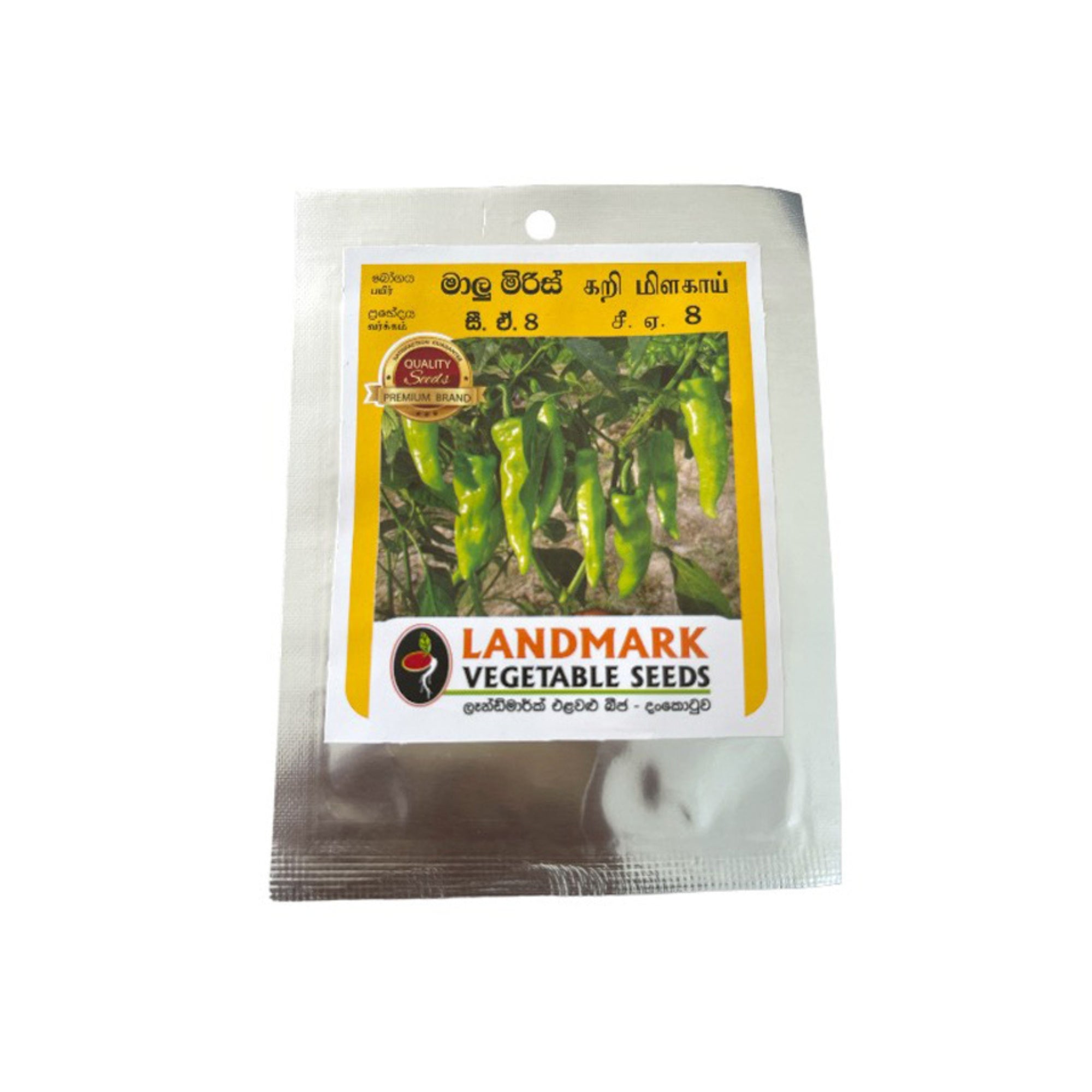
For those looking to cultivate Nai Miris at home or at a commercial scale, seed selection is the critical first step. Lakpura offers several Sri Lankan capsicum seed varieties suited to different growing conditions and objectives, including selections with improved yield and fruit uniformity. These are available for gardeners and smallholders who want to grow authentic local strains rather than importing generic chilli varieties of uncertain provenance.
Related reading
1 pages on closely related subjects.