Bodhinagala Forest Reserve is one of the closest intact wet-zone rainforests to Colombo, sitting roughly 60 km south of the capital in the Kalutara district. Spread across around 347 hectares of lowland jungle, it shelters an active forest hermitage, a remarkable range of endemic wildlife, and the kind of quiet that most visitors have to travel much further to find. For travellers who want genuine rainforest immersion without a full-day journey from the coast or the hill country, Bodhinagala is an underrated option worth knowing about.
Where exactly is Bodhinagala Forest Reserve?
The reserve occupies a low hill — Dombagaskanda — on the outskirts of Ingiriya town in the Kalutara district. The Kalu Ganga (Kalu River) forms its southern boundary, paddy fields border it to the north, Ingiriya Ela frames the eastern edge, and a monastery approach road marks the west. The highest point in the reserve rises to around 186 metres above mean sea level, so the terrain is gently rolling rather than strenuous.
To reach the reserve, take the Panadura–Ratnapura A8 highway toward Ingiriya, then follow the minor road that runs approximately 1.5 km toward the Kalu Ganga. Before reaching the river, the road forks left and continues for another 1.1 km to the foot of Dombagaskanda. Although a vehicle can technically reach this lower trailhead, it is more rewarding to park here and walk the remaining distance through the forest canopy.
What is the history of the Bodhinagala hermitage?
At the centre of the reserve stands the Bodhinagala Forest Hermitage, also referred to as the Dombagaskanda Hermitage. Records suggest it has been occupied since at least the early 1950s, making it one of the longer-established forest monasteries in Sri Lanka's wet zone. The surrounding jungle was conserved in large part to protect the meditative environment of the resident monks — the reserve's forested buffer acts as a natural barrier against noise and encroachment. The hermitage is active, so visitors should dress modestly and move quietly when passing through the monastery grounds.
The forest itself was once closer to 407 hectares before boundary adjustments reduced it to its current extent. What remains is still considered a meaningful fragment of lowland rainforest in a region where such habitat has been heavily cleared for rubber and other plantation crops.
What wildlife can you see at Bodhinagala?
The reserve's biodiversity is what draws most naturalists. Sri Lanka's endemic Sri Lanka Grey Hornbill is commonly spotted near the entrance trail, and the forest canopy carries a near-constant soundtrack of Hill Myna calls, Rose-ringed Parakeet chatter, and the soft whistles of Sri Lanka Hanging Parakeet. Deeper into the forest, patient observers can find:
- Black-naped Monarch
- Tickell's Blue Flycatcher
- Scaly-breasted Munia flocks
- Yellow-browed Bulbul
- Green Imperial Pigeon
- Oriental Dwarf Kingfisher (along stream sections)
Mammals include both endemic primate species: the Toque Macaque and the Purple-faced Langur. The forest floor is damp year-round, which means land leeches are a routine companion on the trails — tucking trousers into socks and using leech socks is straightforward preparation.
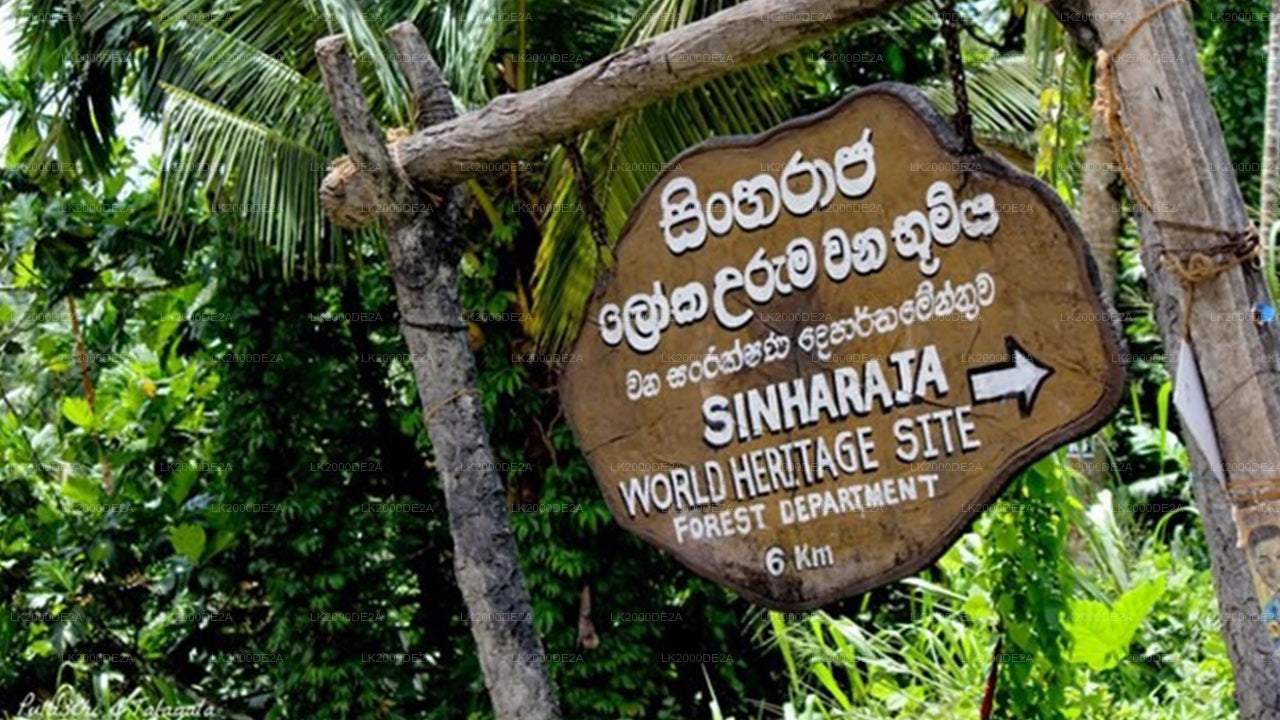
For context on what a fully protected rainforest ecosystem looks like at larger scale, the Sinharaja Forest Reserve — Sri Lanka's UNESCO-listed rainforest — shares many of the same species and lies within reach of a southern Sri Lanka itinerary.
When is the best time to visit Bodhinagala Forest Reserve?
Because Bodhinagala sits in Sri Lanka's wet zone, it receives rainfall for much of the year and is genuinely lush regardless of season. The south-west monsoon (May to September) brings the heaviest precipitation, making trails muddier and leech activity higher. The inter-monsoon months of March–April and October–November can also bring heavy showers. January through early March is typically the driest window and offers the most comfortable walking conditions, though birding is productive throughout the year.
Early mornings — arriving at the trailhead by 6:30–7:00 a.m. — yield the best wildlife encounters, as the forest canopy is most active before the midday heat quiets bird movement.
How does Bodhinagala compare to other rainforests near Colombo?
Bodhinagala is frequently described as the closest tropical rainforest accessible from Colombo, which gives it a practical advantage for short day trips. The Makandawa Rainforest near Kitulgala is another wet-zone alternative, situated further into the interior and better known for white-water rafting alongside forest walks. Sinharaja, by contrast, is a larger and more biodiverse reserve but requires an overnight stay or a long drive from the western coast. Bodhinagala suits travellers who have a half-day available and are staying along the southern or western coast.
What should visitors know before going?
There is no formal ticketing infrastructure at Bodhinagala comparable to national parks — access is generally open, but visitors are expected to respect both the forest rules and the religious nature of the hermitage. A few practical points worth noting:
- Footwear: Closed trail shoes or boots are appropriate; flip-flops are not suitable on the muddy slopes.
- Clothing: Light long trousers and a long-sleeved shirt help with both leeches and sun exposure on open ridgelines.
- Noise: Keep voices low, particularly near the monastery. This is a working hermitage, not a tourist site.
- Guides: The trails are not extensively signposted. Visiting with a knowledgeable guide improves both safety and wildlife identification.
- Photography: The forest interior and birds are the draw; seek permission before photographing monks or monastery structures.
Is there accommodation near Bodhinagala Forest Reserve?
Ingiriya town has limited accommodation options. Most visitors approach Bodhinagala as a day excursion from Kalutara, Beruwala, or Colombo, all of which offer a wider selection of hotels and guesthouses. If you are planning a circuit that combines rainforest visits with the coast, the western seaboard between Colombo and Bentota provides a convenient base. For a broader forest-focused stay, lodges near Sinharaja in the Southern Province are worth considering for a multi-day itinerary.
Nearby places
9 places within about 25 km, nearest first.
- Kiriella City3 km
- Angampitiya Railway Station4 km
- Bodhinagala Forest Hermitage7 km
- Ingiriya City9 km
- Dehiowita10 km
- Kadugoda Railway Station10 km
- Seethawaka Odyssey Train10 km
- Bope City11 km
- Thudugala Ella19 km
Related reading
4 pages on closely related subjects.