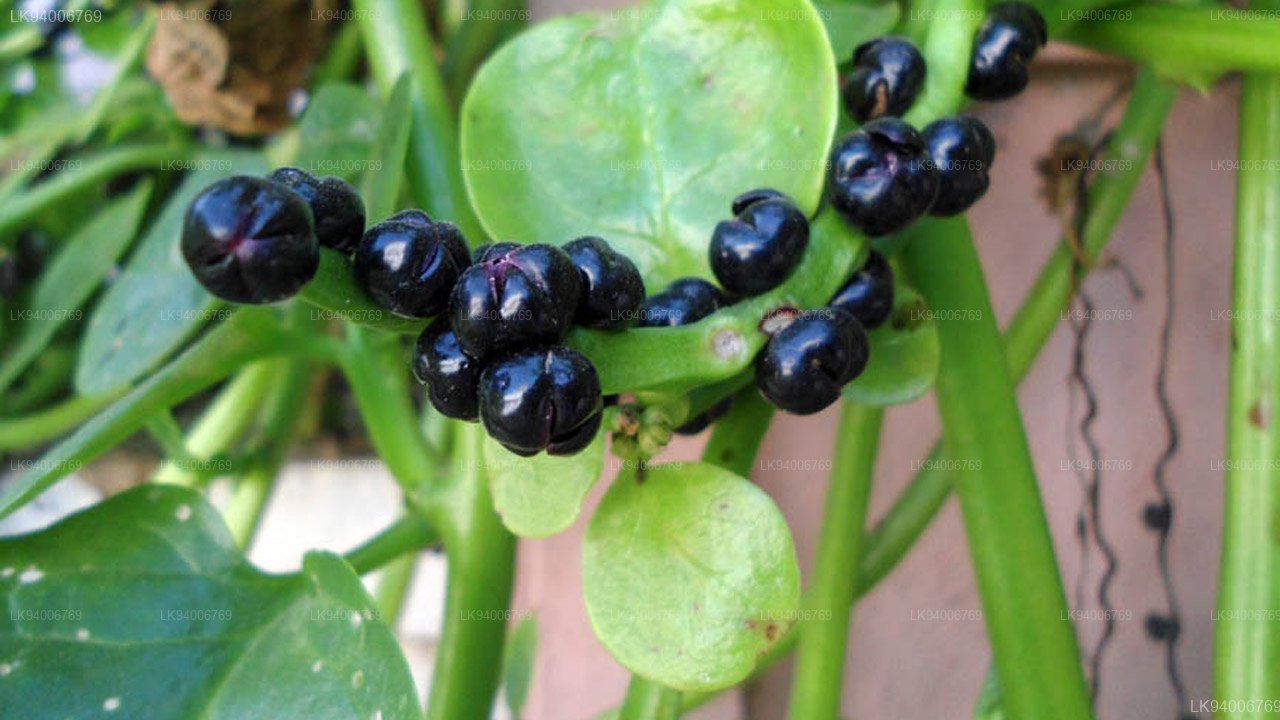
Basella alba, commonly known as Malabar spinach, is a fast-growing, tropical vine in the family Basellaceae. It is native to Southeast Asia and is cultivated in tropical and subtropical regions around the world.
Description
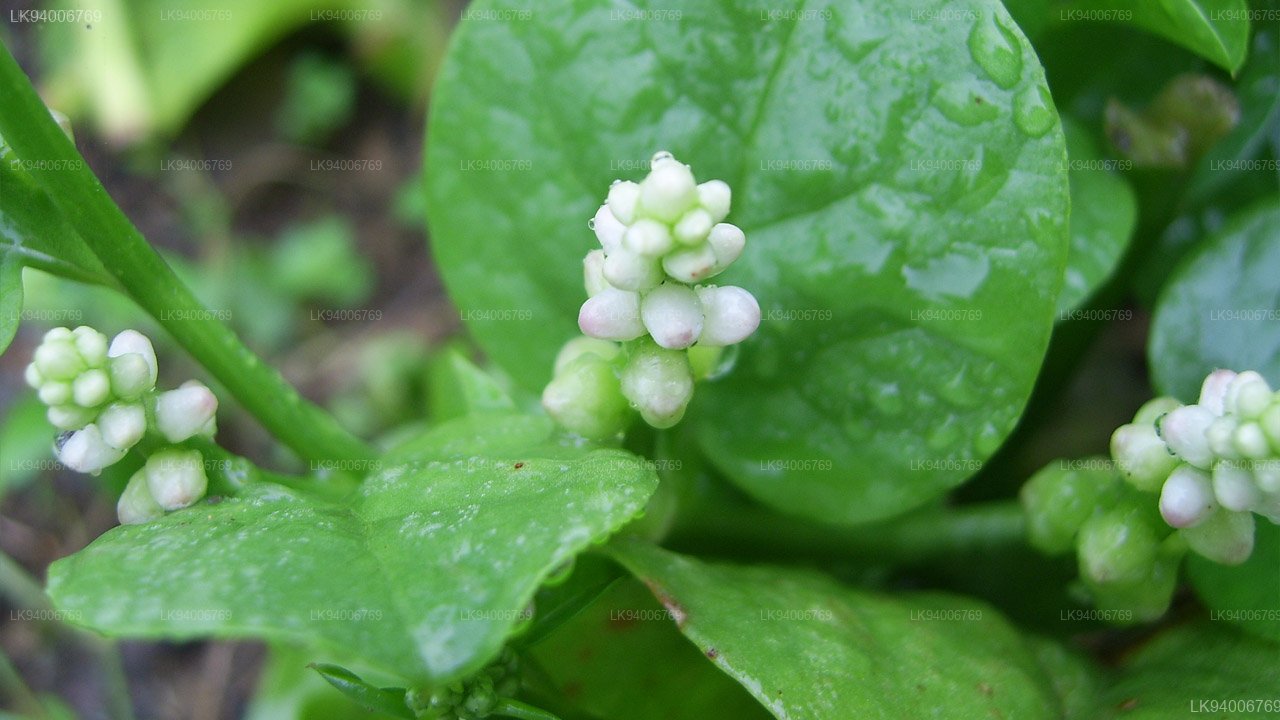
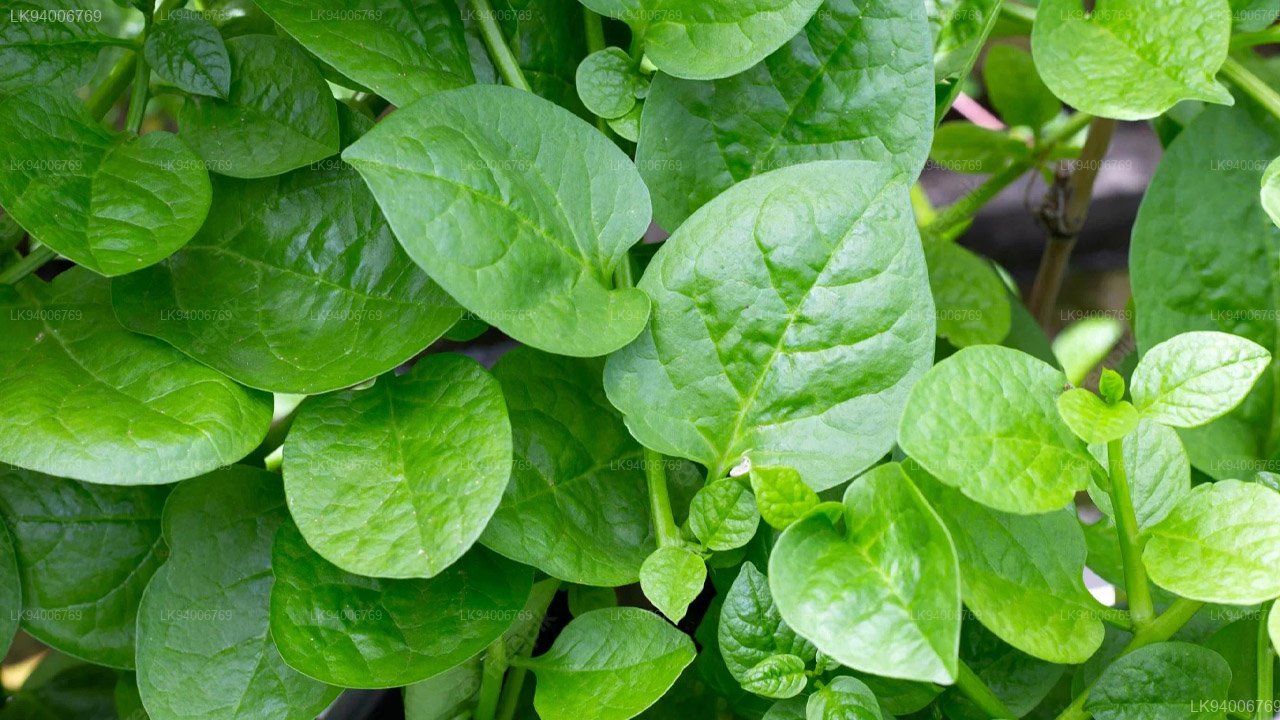
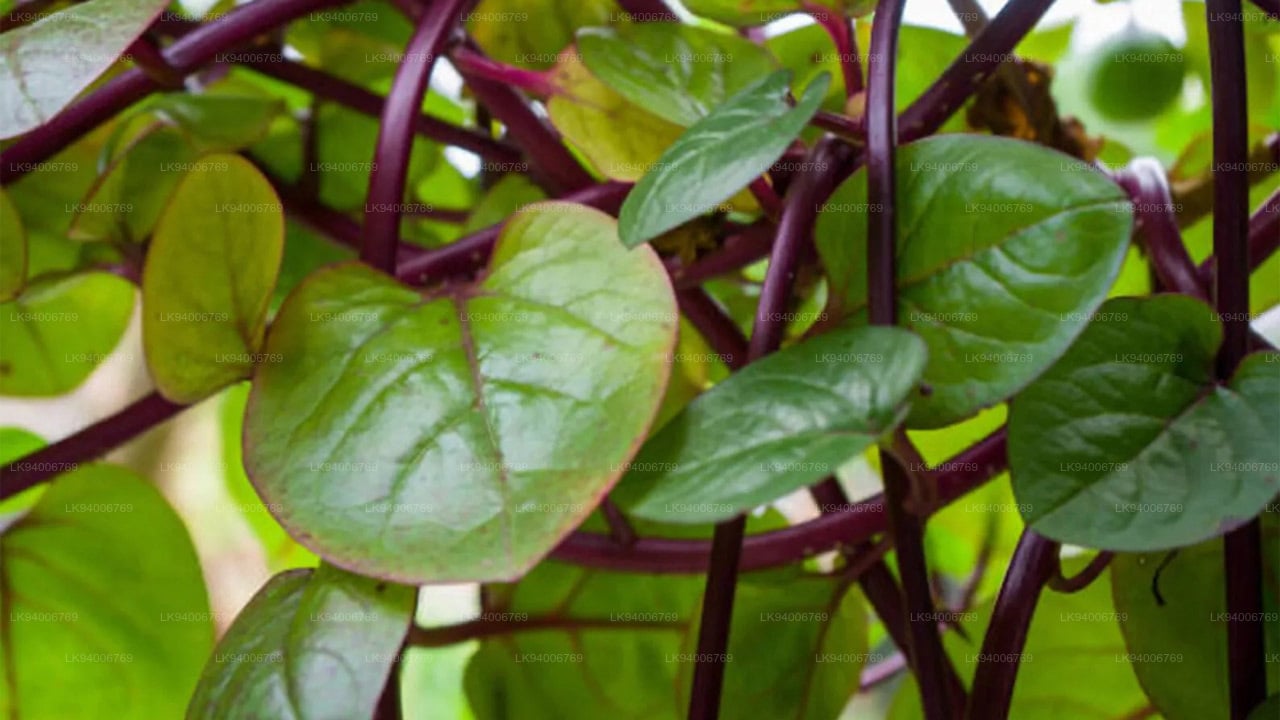
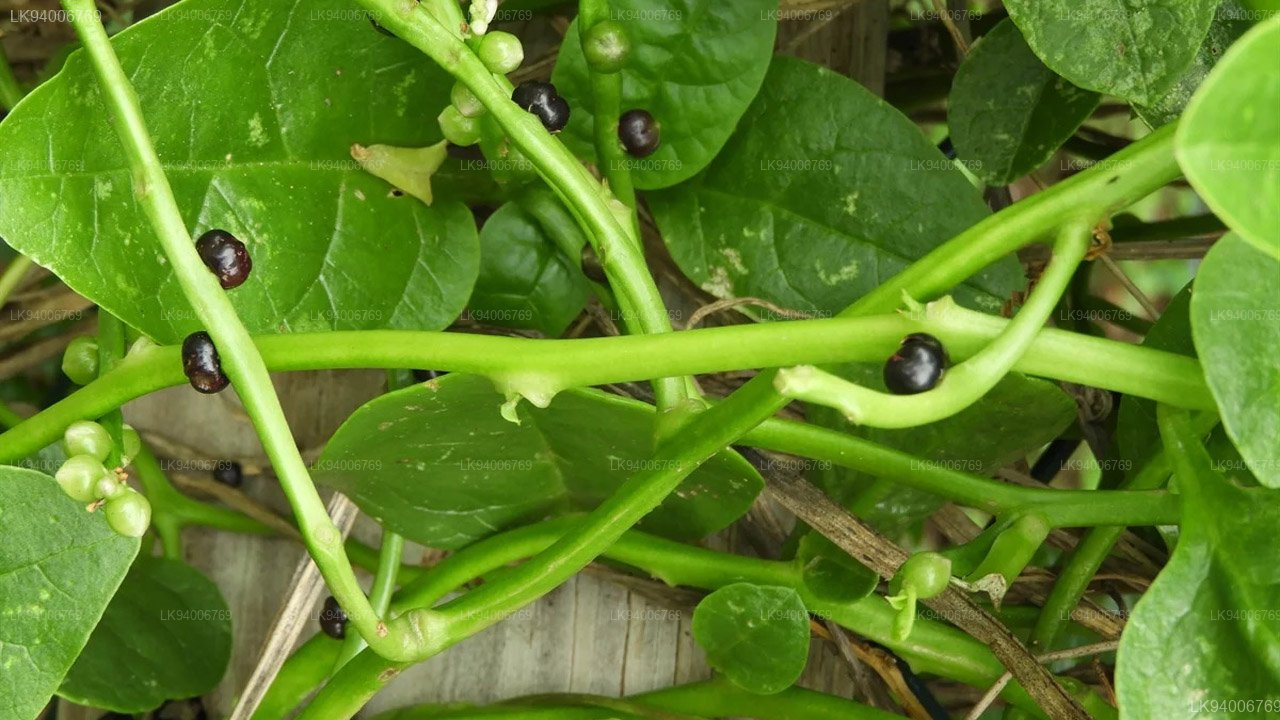
Leaves: The leaves of Basella alba are thick, succulent, and shiny, often with a deep green color, though they can sometimes appear reddish in certain varieties.Vines: It has climbing, fleshy stems that can grow quite long. The plant typically requires support like a trellis or fence to grow properly.Flowers and Fruit: Basella alba produces small, white or pinkish flowers, followed by berries that are initially white and turn dark purple when mature.Culinary Use
Edible Parts: The leaves and stems of the plant are edible. They have a mild, slightly mucilaginous texture when cooked, similar to okra.Culinary Uses: It is used in various dishes in Asian, African, and Caribbean cuisines, particularly in soups, stews, and stir-fries. The leaves are often boiled or sautéed and can be used as a substitute for spinach.Health Benefits
Nutritional Value: Basella alba is rich in vitamins A and C, iron, calcium, and antioxidants. It is also high in fiber, which can aid digestion.Medicinal Uses: In traditional medicine, it is used for its potential anti-inflammatory and antioxidant properties. It is sometimes used to treat digestive issues and promote skin health.Growing Conditions
Climate: Being a tropical plant, it thrives in warm, humid conditions and needs plenty of sunlight to grow well.Watering: It needs regular watering to keep the soil moist but not waterlogged. It is drought-tolerant once established.Varieties
Green Malabar Spinach: The most common variety, with green leaves.Red Malabar Spinach: A variant with reddish stems and sometimes purplish leaves.