
Sabaragamuwa is one of Sri Lanka's most distinctive tea-growing regions, stretching across the western, southwestern, and central foothills of the island. Unlike the famous high-grown teas of Nuwara Eliya or the mid-grown estates of Kandy, Sabaragamuwa is predominantly a low-grown region — and that elevation profile shapes every cup it produces. The region is sometimes grouped with Ruhuna under the broader low-grown category, though growers and buyers increasingly treat Sabaragamuwa as a character in its own right.
Where exactly is Sabaragamuwa tea grown?
Estates in Sabaragamuwa range from near sea level up to around 2,500 feet (roughly 760 metres). The region's key sub-districts include Ratnapura, Rakwana, Kalutara, and pockets that reach toward the Southern coast near Matara and Weligama. Ratnapura — the "City of Gems" — sits at the commercial heart of the province, and the rolling hills around it are blanketed in tea bushes interspersed with rubber and spice gardens.
At the upper end of the elevation range, estates push against the boundaries of protected natural areas. The highest Sabaragamuwa gardens sit just below the Sinharaja Forest Reserve, one of South Asia's last remaining lowland rainforests and a UNESCO World Heritage Site. That proximity to dense, ancient forest creates growing conditions — near-constant humidity, heavy cloud cover, and exceptional rainfall — that differ markedly from most of the island's plantation districts.
What climate and environment shape Sabaragamuwa tea?
The landscape here is layered: rainforest in the valleys, cloud forest on the ridges, and patches of high grassy plains where the terrain opens up. Rainfall is among the heaviest recorded anywhere in Sri Lanka's plantation belt, with some estates receiving close to 200 inches per year. That moisture drives vigorous, year-round growth.
Not all of Sabaragamuwa shares the same weather pattern. Upper estates toward the eastern margins of the region pick up weather influence from the nearby Horton Plains and the Uva climatic system — a distinct dry wind that periodically sweeps through and temporarily alters the chemistry of the leaf. These estates can produce teas with a markedly different profile depending on the season, making Sabaragamuwa one of the more varied and surprising origins on the Sri Lankan tea map.
What does Sabaragamuwa tea taste like?
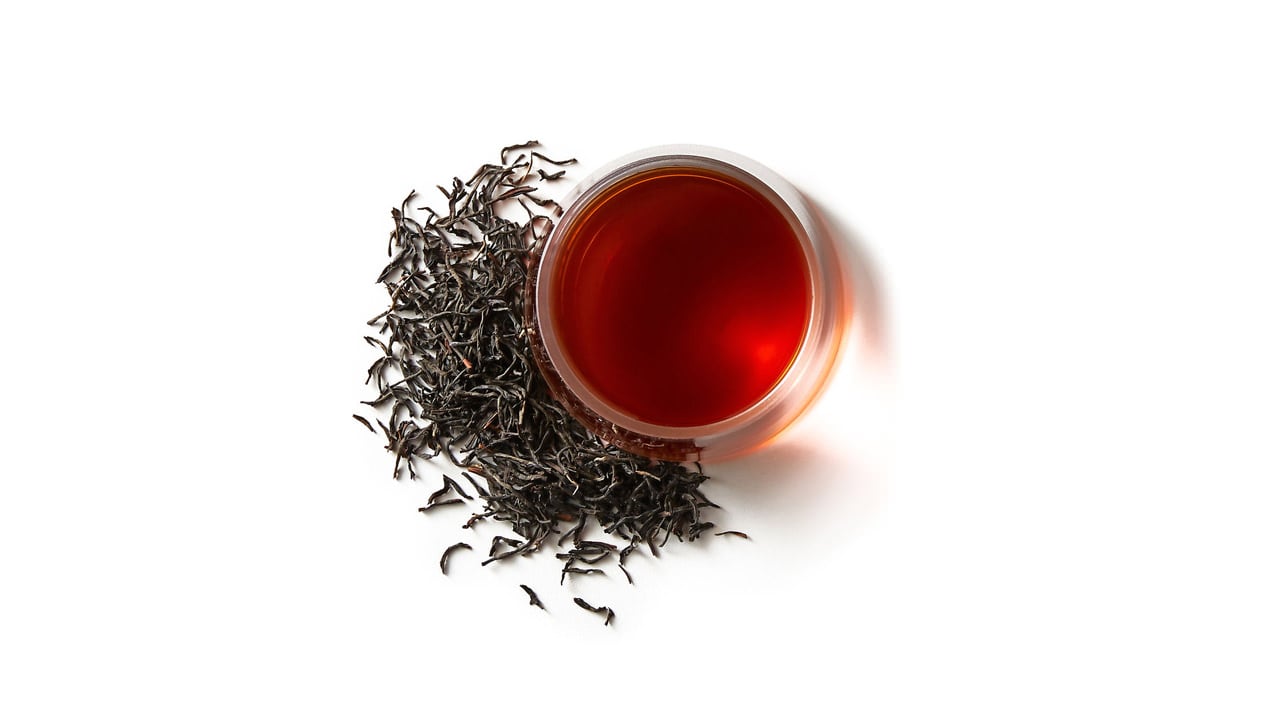
Sabaragamuwa produces a fast-growing bush with a notably long leaf. When withered and processed, the leaf turns a deep black — a visual marker of the high moisture content in the growing environment. The region is particularly well suited to orthodox rolling, which draws out its characteristic body and colour.
In the cup, Sabaragamuwa tea is bold. The liquor is typically a dark yellow-brown with a reddish tint, especially in drier months when the concentration of solids in the leaf increases. At higher elevations within the region, the colour lightens somewhat and the flavour becomes more nuanced.
What sets Sabaragamuwa apart from its close relative, Ruhuna tea, is the aroma. The nose carries a distinct hint of sweet caramel — less assertive than Ruhuna but unmistakably present. The flavour itself is full-bodied, particularly in low-grown examples, with a natural sweetness and minimal astringency. It is a tea that holds up well to milk, though single-estate versions are worth drinking plain to appreciate the regional character.
How is Sabaragamuwa tea graded and processed?
Like all Sri Lankan teas, Sabaragamuwa output is graded by leaf size and processing method. The most common grades from this region include:
- OP (Orange Pekoe) — long, wiry leaf; clean, bright cup ideal for appreciating terroir
- BOP (Broken Orange Pekoe) — smaller broken leaf; quicker brew, stronger liquor
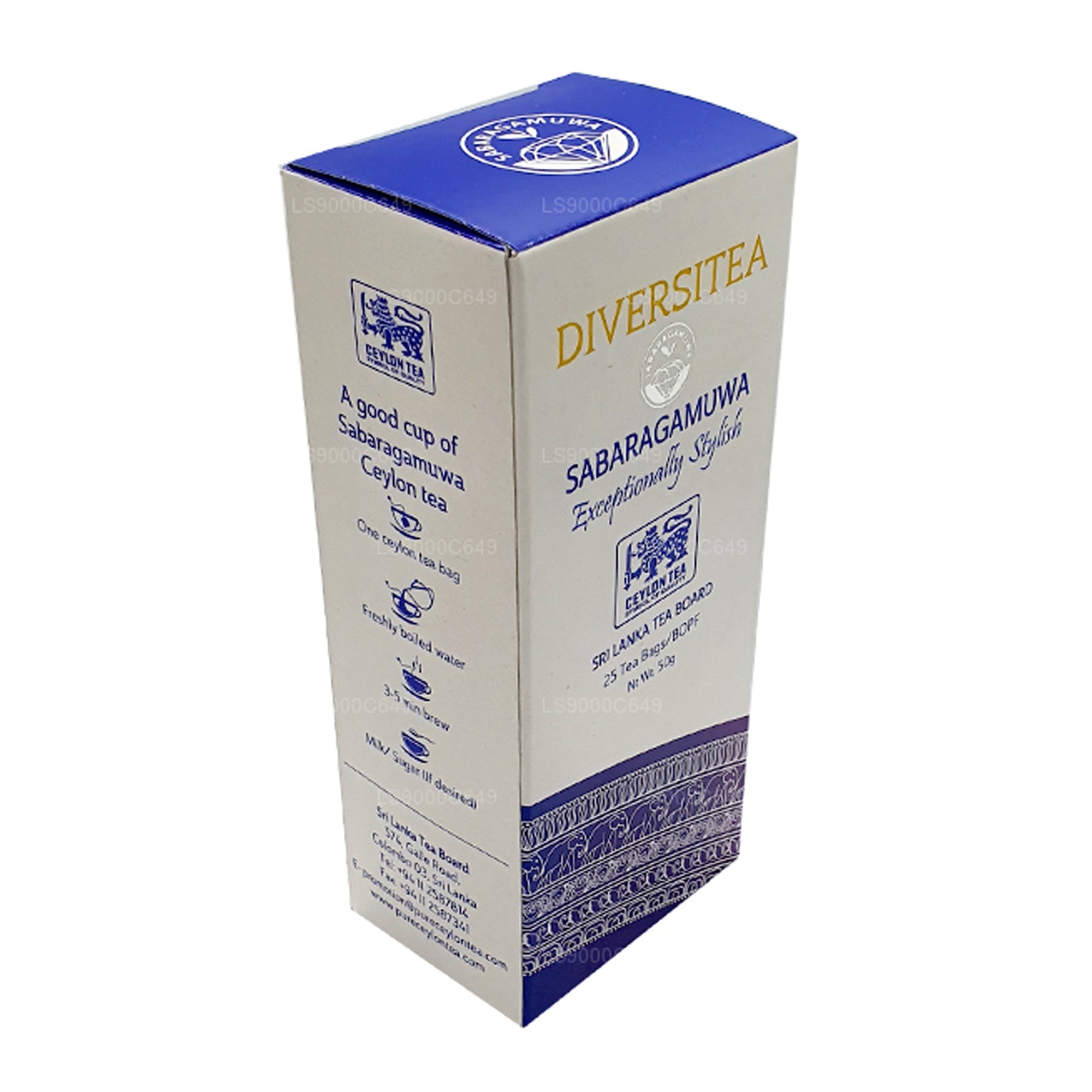
- BOPF (Broken Orange Pekoe Fannings) — fine particle used in tea bags; robust and fast-infusing
- PF1 / FBOP — specialty broken grades with a higher proportion of tips, often yielding a richer cup
The majority of production is orthodox-processed — meaning the leaf is withered, rolled, oxidised, and fired in stages rather than being CTC (cut, tear, curl) processed. Orthodox Sabaragamuwa teas command attention at the Colombo Tea Auction, where single-estate lots occasionally reach record prices.
How does Sabaragamuwa compare to other Sri Lankan tea regions?
| Region | Elevation | Liquor colour | Key flavour note |
|---|---|---|---|
| Sabaragamuwa | Sea level – 2,500 ft | Dark amber-brown | Caramel, full body |
| Ruhuna | Sea level – 2,000 ft | Dark reddish-brown | Bold, malty, earthy |
| Uva | 3,500 – 5,000 ft | Bright golden-orange | Menthol-like, astringent finish |
| Nuwara Eliya | 6,000 ft+ | Pale golden | Delicate, floral, light |
For anyone curious about the full spectrum of Ceylon tea, tasting across regions is the quickest way to understand why Sri Lanka's relatively compact geography produces such varied cup profiles.
Can visitors explore Sabaragamuwa tea estates?
Several estates in the Ratnapura and Rakwana areas welcome visitors, typically offering factory tours that cover withering, rolling, oxidation, and firing. Seeing the process in person — particularly the transformation of the leaf from fresh green to the deep black characteristic of Sabaragamuwa — gives a useful frame of reference when tasting the finished tea. The surrounding landscape, with its gem-mining pits, spice gardens, and rainforest views, makes the region worth a full day trip rather than a rushed stop.
The Bluefield Tea Gardens near Hatton offers a comparable estate experience and is a useful reference point for travellers building a tea-focused itinerary. For those travelling through the southwest, the Sinharaja buffer zone estates can be combined with a visit to the reserve itself.
What is the best time of year to buy Sabaragamuwa tea?
Sabaragamuwa's two main quality peaks are broadly associated with its dry seasons. The first-quality season typically falls in the early months of the year when reduced rainfall concentrates the flavour compounds in the leaf. A secondary quality period can occur mid-year, though the heavy southwest monsoon, which arrives around May or June and intensifies moisture across the region, moderates production and can soften the cup profile. For collectors and enthusiasts, asking vendors specifically for "first flush" or "dry-season" Sabaragamuwa lots is worthwhile.
Nearby places
9 places within about 25 km, nearest first.
- Gem Toursunder 1 km
- Maha Saman Devalayaunder 1 km
- Ratnapuraunder 1 km
- Ratnapura Districtunder 1 km
- Ratnapura Fortunder 1 km
- Sts. Peter and Paul Cathedralunder 1 km
- New Vithanakandeunder 1 km
- Martin's Simple Lodgeunder 1 km
- Sabaragamuwa Danceunder 1 km
Related reading
1 pages on closely related subjects.