


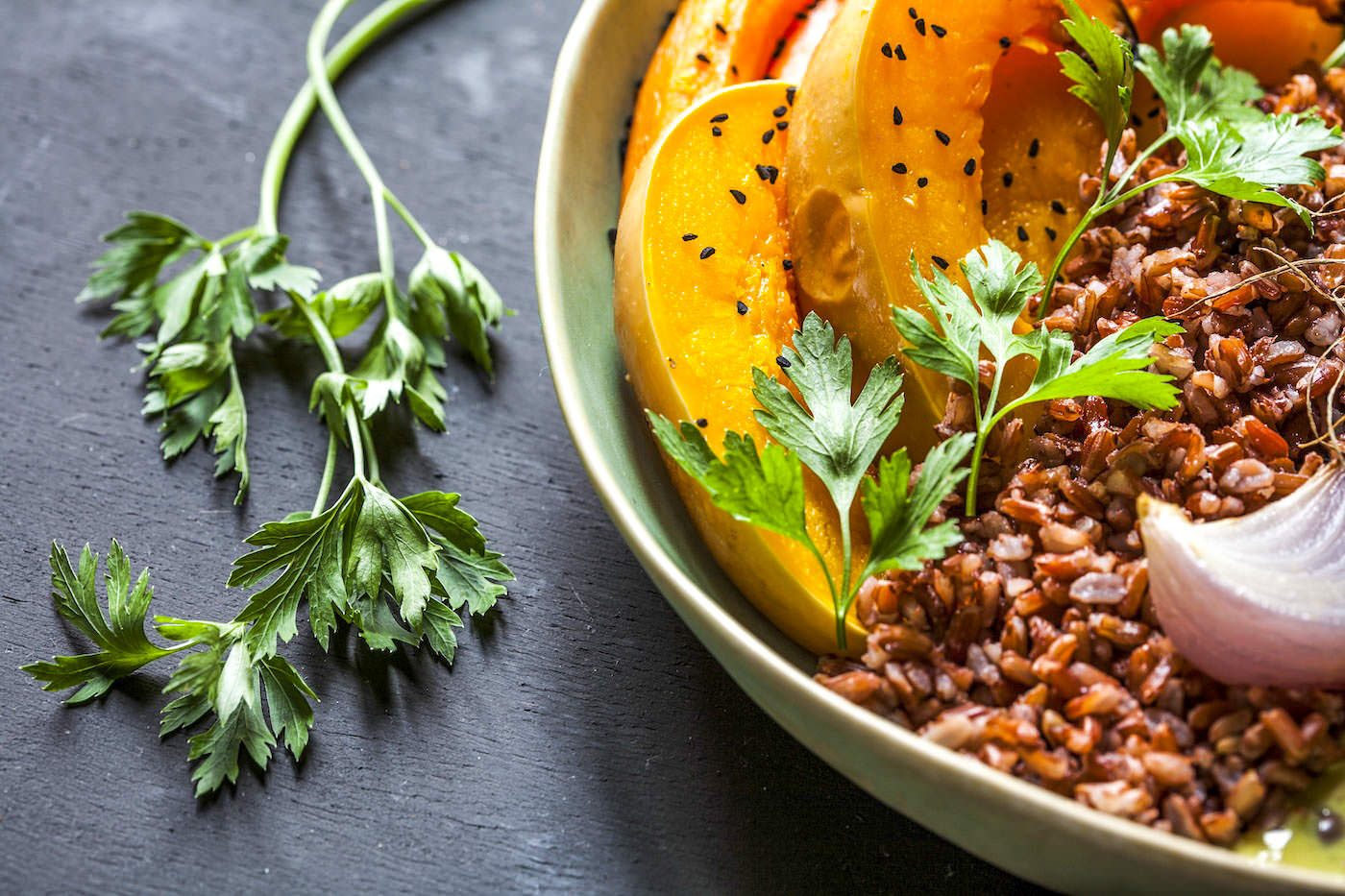


Parsley is one of the most widely used herbs in the world, appearing in everything from rustic Mediterranean stews to finely plated French cuisine. Despite its reputation as little more than a plate garnish, it is among the most nutritionally dense herbs in common culinary use, offering meaningful quantities of vitamins K, C, and A alongside a range of antioxidants. Understanding parsley — its varieties, origins, and cultivation — is worthwhile whether you grow your own herbs or simply reach for a bunch at the market.
What are the main varieties of parsley?
Two varieties dominate kitchens and gardens worldwide: curly parsley and flat-leaf parsley, the latter often called Italian parsley. Each has a distinct character.
- Curly parsley (Petroselinum crispum) has tightly ruffled leaves and a mild, grassy flavour. Its visual texture makes it the preferred choice for garnishing dishes, though it is perfectly edible and usable in cooking.
- Flat-leaf parsley (Petroselinum crispum var. neapolitanum) has broader, smoother leaves and a slightly more assertive, mildly bitter flavour. Professional cooks tend to favour it for cooked dishes — sauces, soups, and braised meats — because its flavour holds better under heat.
Both varieties are biennials, meaning the plant completes its full life cycle over two growing seasons. In the first year it produces the leafy growth used in cooking; in the second it flowers and sets seed before dying back.
What is the history of parsley?
Parsley has been cultivated and documented since at least the ancient Greek and Roman periods, and its use likely stretches further back than written records confirm. In ancient Greece it carried strong symbolic associations with honour and renewal. Wreaths made from parsley were awarded to winners at certain athletic games, much as laurel was used at others — a fact that underlines how highly the herb was regarded beyond its culinary value.
Roman writers including Pliny the Elder mentioned parsley as both a food plant and a medicinal herb. By the medieval period it had spread across Europe, and it travelled with European settlers to the Americas and, eventually, to every corner of the world where temperate growing conditions permit it.
In traditional herbal medicine, parsley root, seed, and leaf have all been used — though concentrated extracts, particularly from the seed, can be potent and should be approached with caution. As a culinary herb used in normal food quantities, parsley has an excellent safety profile.
What are the culinary uses of parsley?
Parsley's applications in the kitchen are broad. It appears as a foundational component of classic French bouquet garni and fines herbes, features in Italian gremolata (the bright condiment of parsley, lemon zest, and garlic that finishes osso buco), and forms the backbone of Middle Eastern tabbouleh. It pairs particularly well with garlic, lemon, olive oil, and most seafood and poultry.
Flat-leaf parsley is generally the better cooking herb because its oils are more volatile and expressive. Curly parsley is best added fresh at the end of a dish or used raw in salads, where its texture provides contrast. Both varieties lose much of their brightness when dried, so fresh parsley is almost always preferable when the herb's flavour is central to a dish.
Parsley also works well alongside other assertive spices. Much like Ceylon black pepper, it plays a supporting role that sharpens and lifts the overall flavour of a dish without dominating it.
How does parsley work as a companion plant?
Companion planting — the practice of deliberately growing certain plants in proximity to benefit one another — is well established in both traditional and modern organic gardening. Parsley is a useful companion for tomatoes specifically because it attracts parasitic wasps that prey on the tomato hornworm (Manduca quinquemaculata), a caterpillar that can cause serious damage to tomato plants.
Parsley flowers in its second year, and these small, flat-topped clusters of yellow-green blooms are particularly attractive to beneficial insects including hoverflies and predatory wasps. Allowing a small number of parsley plants to reach flowering stage can therefore benefit the broader garden ecosystem even if the leaves are no longer harvested from those individuals.
Parsley is generally considered compatible with tomatoes, roses, and asparagus, but is typically planted away from mint, which can be aggressively competitive.
How do you grow parsley successfully?
Parsley is not a difficult herb to grow, but it does require patience at the germination stage. Seed germination typically takes three to four weeks — considerably longer than many other common herbs — partly because the seed coat contains compounds that slow water absorption. Soaking seeds in warm water for several hours before planting can speed the process modestly.
Key growing conditions to keep in mind:
- Soil: Parsley grows in most reasonably fertile soils but performs best in a well-drained, slightly moist medium with a pH around 6.0–7.0. Waterlogged soil encourages root rot and should be avoided.
- Light: Full sun to partial shade. In hotter climates, some afternoon shade helps prevent the plant from bolting (going to seed prematurely).
- Watering: Regular, consistent watering is important, especially during dry periods, but drainage must be adequate. Allow the surface of the soil to dry slightly between waterings.
- Spacing: Once seedlings are established, thin them to around 15 cm (6 inches) apart. Thinning is best done by cutting unwanted seedlings at the base rather than pulling them, to avoid disturbing the roots of neighbouring plants.
- Containers: Parsley has a long taproot, so containers should be deep — at least 30 cm (12 inches) — rather than wide and shallow. Standard herb pots are often too shallow for it to thrive long-term.
Harvest by cutting stems from the outside of the plant, leaving the central growth intact. This encourages continued production. Regular harvesting also delays bolting, extending the useful life of a first-year plant.
What nutritional value does parsley offer?
Fresh parsley is a notably concentrated source of several micronutrients. Vitamin K content is particularly high — a small handful of fresh leaves can supply a significant portion of the recommended daily intake, which is relevant for those managing blood-thinning medications. It also provides vitamin C, folate, iron (in a form that benefits from pairing with vitamin C for absorption), and a range of flavonoid antioxidants including apigenin.
These nutritional qualities are most accessible when parsley is eaten raw or added at the end of cooking, since heat degrades both vitamin C and some of the volatile aromatic compounds that give fresh parsley its characteristic flavour.
