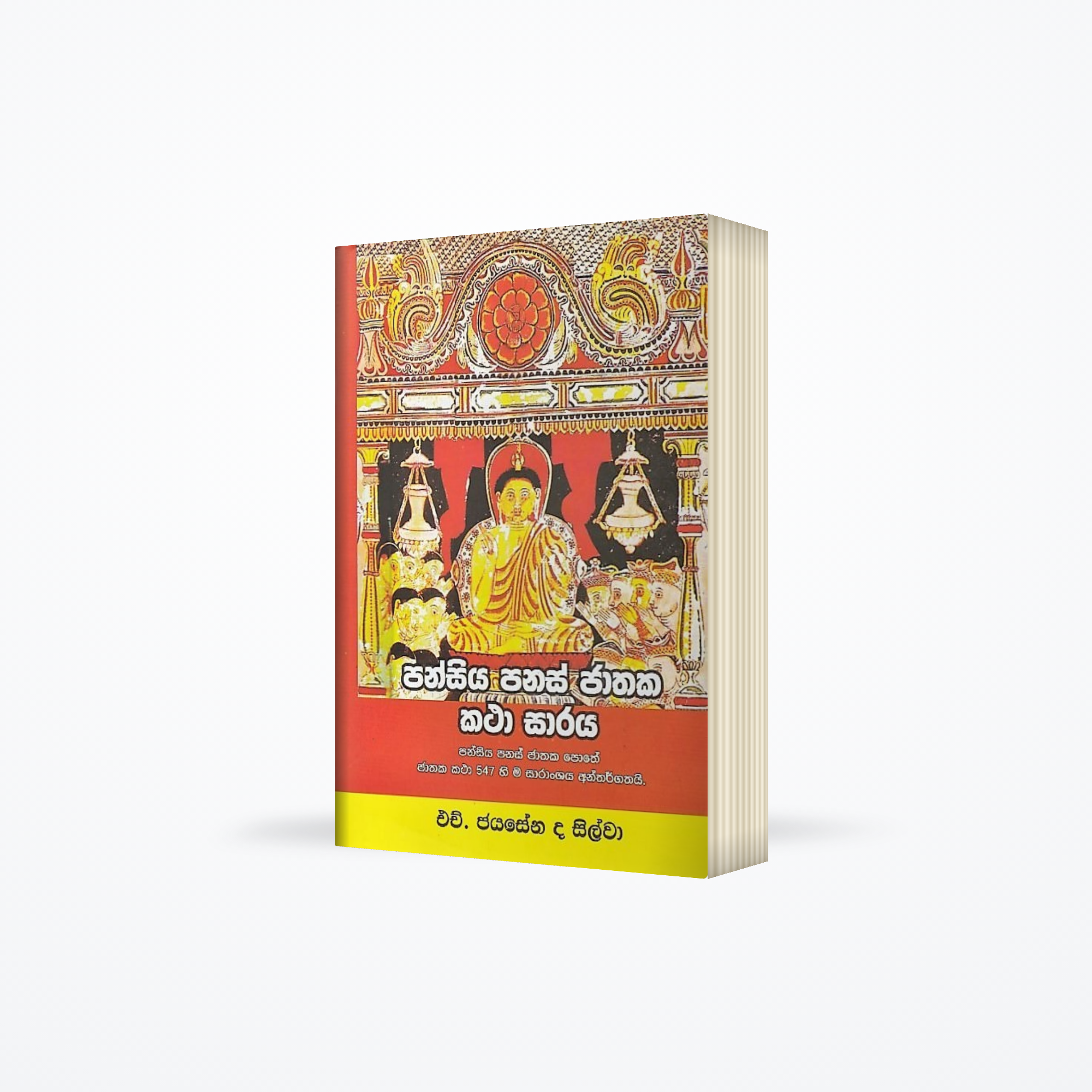


The Pansiya Panas Jathaka Katha (පන්සිය පනස් ජාතක කතා) is one of the most significant works in Sinhala Buddhist literature. Translated from the Pali Jataka Atthakatha during the Kurunegala period, this collection of approximately 550 birth stories narrates the previous lives of Siddhartha Gautama — the being who would eventually attain full Buddhahood. For centuries, these tales have shaped Buddhist ethics, oral tradition, and the visual arts across Sri Lanka and much of Southeast Asia.
What is the Pansiya Panas Jathaka Katha?
The title translates literally as "Five Hundred and Fifty Jataka Stories." Each story belongs to a cycle of narratives in which the future Buddha, referred to as the Bodhisatta (the aspirant for Buddhahood), is reborn in countless forms — as a human of various stations, an animal, a deity, or a spirit — and in each life demonstrates one or more of the qualities necessary for moral and spiritual perfection.
The Jataka tales are generally dated between 300 BC and 400 AD, while the traditional dates attributed to Gautama Buddha himself are around 563–483 BC. The Sinhala rendering produced during the Kurunegala era made this canon accessible to a broader audience and cemented its place in Sri Lankan religious and literary culture.
What is the significance of the Bodhisatta in these stories?
Central to the Jataka framework is the concept of the Bodhisatta — a being on the long path toward Buddhahood across innumerable lifetimes. In each birth, the Bodhisatta confronts adversity, overcomes obstacles, and embodies a particular virtue. These stories are not merely fables; they serve as a practical guide to the Buddhist understanding of kamma (intentional action) and the gradual purification of character over many lives.
The ten qualities the Bodhisatta must perfect are known as the Paramitas (perfections). The ten most celebrated Jatakas — sometimes called the Dasa Jataka or Ten Birth Stories — each illustrate one of these perfections to their fullest degree.
What are the ten most celebrated Jatakas?
The ten principal Jatakas correspond to the ten Paramitas and together trace the Bodhisatta's final approach to Buddhahood:
- Temiya Jataka — The Bodhisatta is born a prince who feigns muteness and paralysis to avoid kingship, perfecting the virtue of renunciation (nekkhamma).
- Janaka Jataka — Born in exile as the son of a king slain in fraternal conflict, he embodies persistence and effort (viriya).
- Suvabba Jataka — Born of blind parents and living an ascetic life, the Bodhisatta practices resolve (adhitthana).
- Nemi Jataka — As the teacher-king Nemiraja, he exemplifies right intention and equanimity (upekkha).
- Mahosadha Jataka — Born as a brilliant counselor and judge, he perfects wisdom (pañña).
- Bhuridatta Jataka — As a Naga king who leaves his underwater realm to practice precepts on earth, he embodies moral virtue (sila).
- Chandakumara Jataka — Born as the prince Chandakumara, son of a great king, he practices forbearance (khanti).
- Narada Jataka — As a hermit king who renounces his throne and retires to the forest after giving away all he possesses, he exemplifies truth (sacca).
- Vidhura Jataka — As Vidhurapandita, a wise counselor to royalty, he perfects loving-kindness (metta).
- Vessantara Jataka — The culminating story, in which the Bodhisatta reaches the zenith of generosity (dana), giving away everything including his children and wife, before his final rebirth in the Tusita heaven.
Why is the Vessantara Jataka so important?
The Vessantara Jataka is the longest and most revered of all 550 stories. It describes the Bodhisatta's last human birth before his rebirth in Tusita — the celestial realm from which he would descend as Siddhartha Gautama to attain final Buddhahood. In this life, Prince Vessantara gives away everything he values, including a magical white elephant, his kingdom, and eventually his own family, as the supreme expression of Dana Paramita — the perfection of generosity.
In Sri Lanka, the chanting and recitation of the Vessantara Jataka remains a living religious practice, particularly during the Bak and Vap full-moon days. Monasteries across the island still hold all-night recitation ceremonies known as Vesak Bana and Deshana events centered on this story.
How were the Jataka stories translated into Sinhala?
The original Pali source, the Jataka Atthakatha, is attributed to the commentary tradition preserved at the Mahavihara monastery in Anuradhapura and later systematized by the scholar-monk Buddhaghosa in the 5th century AD. The Sinhala translation that became the Pansiya Panas Jathaka Katha was produced during the Kurunegala period (approximately 13th–14th centuries AD), a time of considerable literary activity under the patronage of the Kurunegala kings.
This translation was not a literal rendering; it adapted the narratives for a Sinhala-speaking audience, enriching them with local idiom and cultural references. The result is a work that functions simultaneously as canonical scripture, moral instruction, and literary achievement.
How are the Jataka tales used in Sri Lankan culture today?
The influence of the Jataka stories extends far beyond monastic walls. Scenes from well-known Jatakas appear in the frescoes of cave temples such as those at Dambulla, in the carved stone panels of ancient stupas, and in the painted ceilings of the Kelaniya Raja Maha Vihara. They form a core part of the curriculum in Dhamma schools attached to temples and are among the first stories told to Buddhist children in Sri Lanka.
For scholars of Pali literature and South Asian religious history, the collection is equally important. The Khuddaka Nikaya, the division of the Pali Canon to which the Jatakas belong, is a primary source for understanding the development of early Buddhist narrative tradition.
What are the first Jatakas in the collection?
The collection is numbered sequentially. The opening stories are shorter, simpler tales that gradually increase in narrative complexity as the collection progresses:
- 001 — Apannaka Jathakaya: A story of a merchant caravan crossing a desert, illustrating the virtue of proceeding without superstition and with sound reasoning.
- 002 — Vannupatha Jathakaya: A tale of perseverance and right judgment in the face of deceit.
- 003 onwards: The stories multiply in variety, encompassing animal fables, court intrigues, philosophical dialogues, and accounts of supernatural encounters — all centered on the recurring figure of the Bodhisatta in different guises.
Each story follows a standard structure: a frame narrative set in the time of the Buddha that motivates the telling of a past-life story, the Jataka tale itself, and a brief verse (gatha) distilling its moral lesson.
How can I read or obtain the Pansiya Panas Jathaka Katha?
The complete collection has been published in multiple Sinhala editions over the decades, ranging from scholarly annotated versions to simplified retellings for younger readers and students. Abridged and retold versions in plain Sinhala prose are widely available and serve as accessible entry points for those approaching the canon for the first time. Lakpura offers a range of editions — from individual volumes to study aids and summaries — suited to devotional reading, academic research, and general interest.