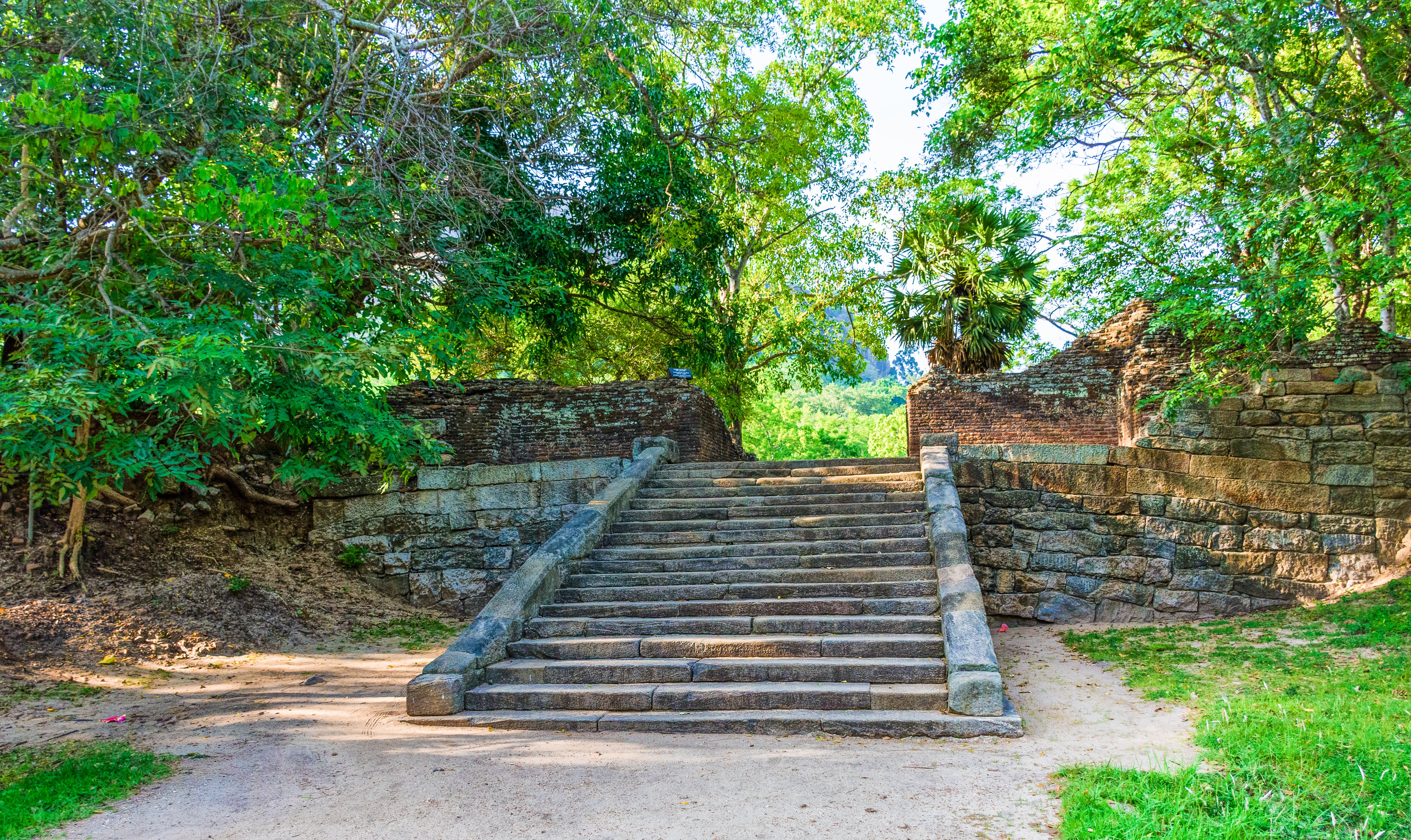
Panduwasnuwara Museum stands at the edge of one of Sri Lanka's most underappreciated archaeological zones, preserving objects and stories that most visitors to the island never encounter. Tucked within the ancient city of Panduwasnuwara in Kurunegala District, the museum acts as an interpretive anchor for a site that dates to the early Anuradhapura period — a time when the political geography of the island was still being drawn.
What is the historical significance of Panduwasnuwara?
Panduwasnuwara is widely associated with King Pandukabhaya, who is credited in the Mahavamsa with consolidating power across the island before establishing Anuradhapura as the capital around the 4th century BCE. Before that consolidation, Panduwasnuwara appears to have functioned as a royal seat — a place of governance, ritual, and early urban planning.
The archaeological record here is unusually rich for a site that receives relatively few visitors. Excavations have uncovered evidence of structured settlement, religious activity, and craft production, suggesting the city was a functioning administrative center rather than simply a royal residence. The museum contextualizes all of this, giving the surrounding ruins a chronological and cultural framework that is otherwise easy to miss.
What can you see inside Panduwasnuwara Museum?
The museum's collection is modest in scale but carefully selected. Key exhibits include:
- Pottery and ceramic ware — ranging from everyday storage vessels to more refined forms, reflecting both utilitarian and ceremonial use
- Metal objects — tools, personal ornaments, and fragments that hint at the metallurgical skills of the period
- Stone carvings — architectural fragments and decorative elements recovered from the palace and monastery ruins nearby
- Coins — among the most historically informative items in the collection, helping scholars date occupation layers
- Religious items — votive objects and ritual implements associated with the early Buddhist and pre-Buddhist practices of the region
Informative display panels accompany most exhibits, providing enough context for a general visitor to follow the chronology without specialist knowledge. The layout is compact and logical, which works in the museum's favor — you absorb the material without the fatigue that larger institutions can induce.
What archaeological ruins surround the museum?
The museum is best understood as a prelude to the open-air site itself. Among the most discussed structures in the immediate area is a circular foundation whose precise purpose has generated scholarly debate. Some researchers link it to Princess Unmada Chithra, a figure in the Mahavamsa narrative connected to King Pandukabhaya, though interpretations vary. What is clear is that the structure is architecturally unusual for the period and has no close parallel at better-known sites such as Polonnaruwa.
Elsewhere on the site, visitors can trace the outlines of a royal palace complex, monastic buildings, and what appear to be administrative structures. The stonework is weathered but legible, and because the site sees limited tourist traffic, there is a quietness to exploring it that more celebrated ruins rarely offer.
Who is the museum best suited for?
Panduwasnuwara Museum appeals most naturally to travelers with a serious interest in South Asian archaeology or Sri Lankan history. It is not a spectacle — there are no grand galleries, immersive displays, or reconstructed environments. What it offers instead is intellectual honesty: the artifacts are presented as they were found, the interpretations are measured, and the gaps in knowledge are acknowledged rather than papered over.
That said, curious generalist travelers who have already spent time at the major Cultural Triangle sites often find Panduwasnuwara a rewarding detour precisely because it is unpolished. The absence of crowds and the proximity of the ruins to the museum creates a more personal encounter with the past than is possible at heavily managed heritage zones.
The site is also genuinely accessible for families. The compact scale of both the museum and the surrounding ruins means visits rarely exceed two hours, and there is enough visual interest in the stonework to engage younger visitors.
How do you get to Panduwasnuwara from major cities?
Panduwasnuwara is located in the North Western Province of Sri Lanka, within Kurunegala District. The town of Chilaw serves as the nearest significant urban center, and the site lies roughly between Chilaw and Kurunegala town. From Colombo, the drive typically takes around two to three hours depending on the route and traffic conditions. From Kandy, the journey is somewhat shorter and passes through attractive agricultural country.
Public transport connections exist but are infrequent, and the final approach to the museum requires a local tuk-tuk or private vehicle. Most visitors arrive as part of a broader itinerary that combines Panduwasnuwara with nearby sites in the North Western and North Central provinces. A private driver remains the most practical option for reaching the museum comfortably and on a flexible schedule.
When is the best time to visit Panduwasnuwara Museum?
Because much of the broader site is outdoors, the dry season between roughly December and April generally offers the most comfortable conditions for exploring the ruins after visiting the museum. The site can become muddy and some pathways difficult after heavy rain during the southwest monsoon, which typically affects the area from May through September. Morning visits are advisable year-round, both for cooler temperatures and better light for viewing the stonework.
Is Panduwasnuwara worth combining with other sites?
Yes, and most itineraries that include Panduwasnuwara treat it as part of a longer day exploring the broader region. The site pairs naturally with Yapahuwa, a dramatic 13th-century rock fortress located roughly 50 kilometers to the north, which offers a striking visual contrast to the more earthbound ruins at Panduwasnuwara. Combining the two in a single day — particularly if departing from Kandy — is a well-established route that avoids backtracking and makes efficient use of travel time.
For travelers interested in Sri Lanka's ancient stupas and monastic complexes more broadly, Panduwasnuwara fits logically into an extended Cultural Triangle loop that can include Anuradhapura and Polonnaruwa over two or three days.
Nearby places
8 places within about 25 km, nearest first.
- Uduwara11 km
- Marawila11 km
- Panduwasnuwara15 km
- Kinigama15 km
- Arachchikattuwa Railway Station16 km
- Iranawila City16 km
- Urumale Light house16 km
- Dankotuwa Porcelain Ltd17 km
Related reading
2 pages on closely related subjects.