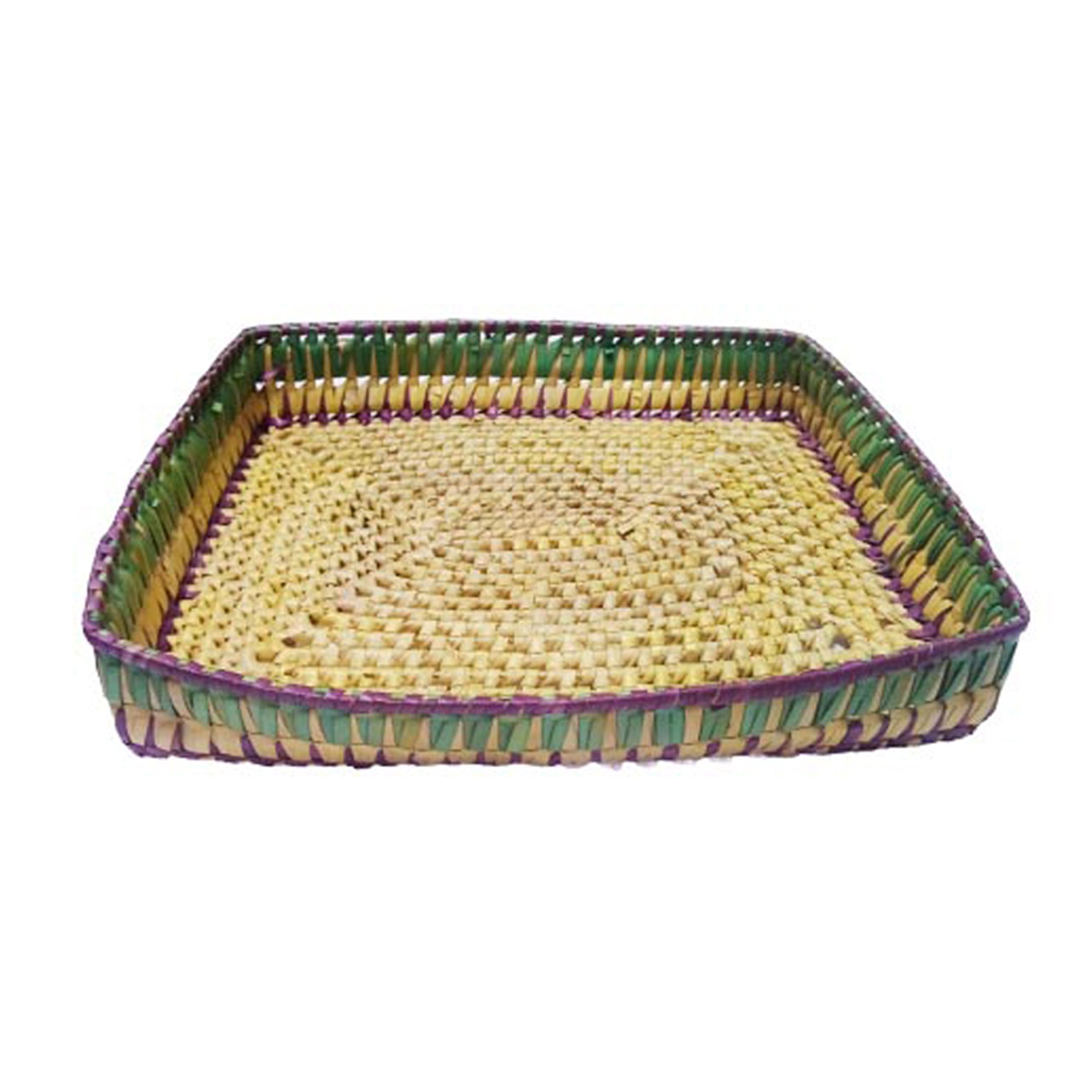
Palmyrah weaving is one of Sri Lanka's oldest living crafts, rooted in the dry-zone communities of the north and east where the palmyrah palm (Borassus flabellifer) has long shaped daily life. Every part of the leaf — from the ivory-white tender fronds to the stiff mature lamina — finds a use, and the traditions surrounding its harvest, preparation, and weaving have been passed down across generations largely unchanged.
What is the palmyrah palm and why is it used for weaving?
The palmyrah is a tall, slow-growing fan palm that thrives in the sandy, low-rainfall soils of northern Sri Lanka, particularly around Jaffna and Mannar. Unlike many tropical palms, it produces leaves at different growth stages that have dramatically different properties — a quality weavers have learned to exploit with great precision. Young whitish leaves are soft and pliable, ideal for fine handicrafts. Older green leaves are tougher and better suited to load-bearing items like baskets and packaging. Dead brown leaves serve as domestic fuel or field manure, meaning almost nothing is wasted.
For comparison, the coconut palm is widely used in Sri Lanka's south and west for a similarly broad range of crafts and construction, but palmyrah leaf weaving is distinctly northern in character — tighter, more geometric, and historically tied to Tamil artisan communities.
How are palmyrah leaves harvested and prepared for weaving?
Harvesting follows a careful sequence. Only the first two tender, unexpanded whitish leaves and the next twelve young green leaves from a single palm are typically used for handicraft purposes. Removing too many would stress the tree, so the standard practice is to take no more than two tender leaves per year from any one palm.
Once cut, the leaves go through a multi-stage preparation process before they can be woven:
- Air drying: Freshly cut leaves are left to dry for one to two days in the open air.
- Stretching: The fronds are trampled underfoot to flatten and stretch the leaf lamina, then laid out in closely overlapping rows on the ground.
- Pressing (for thatching-grade leaves): Leaves intended for thatching are stacked in circular layers with heavy weights placed on top, and left for around two weeks until fully flat.
- Storage: Tender leaves for fine weaving are sun-dried and then wrapped in gunny bags stored in a warm, dry room to prevent discolouration and mould.
In India, artisans sometimes fumigate finished leaf products overnight by burning turmeric powder, which helps preserve the natural white colour. Sri Lankan craftspeople have developed their own storage techniques suited to the local climate, though discolouration over time remains a known challenge with all leaf-based products.
A technique developed at the Department of Botany, University of Jaffna, offers one solution: covering young leaves with a bag or cardboard to block out light causes them to grow pale, almost white (a process known as etiolation). Leaves treated this way for two or more months yield a lighter, more workable material — and in greater quantity than the conventional harvest allows.
What products are made from woven palmyrah leaves?
The range is wider than most visitors expect. Tender whitish leaves go into soft, finely textured items, while the tougher green leaves produce sturdier utility goods. Common palmyrah-woven products include:
- Mats and table mats
- Baskets — square, oval, and round — often with coloured stripe patterns
- Trays and decorative boxes
- Hats and ladies' purses
- Jewellery boxes
- Gift bags and gift boxes in multiple sizes and patterns
- Packaging material for fish, fruit, and dried goods
- Fencing panels and thatching for rural buildings
The craft is not merely decorative. In India and parts of Sri Lanka, mature leaf strips are still woven into heavy-duty containers used to transport dried fish, fresh fish, tamarind, yams, and other produce — a practical application that predates modern packaging by centuries.
How is palmyrah fencing made?
Fencing from palmyrah leaves follows its own distinct technique. In Jaffna, partly stretched leaves (after two days of ground-drying) are placed at alternating angles — one leaf angled, the next placed vertically over it at roughly 30 cm spacing. The leaves are secured by binding with petioles and tied using strips of 'naar' (a fibre extracted from the base of the leaf). The result is a compact, breathable fence that provides privacy while allowing air circulation — well suited to the hot, dry conditions of the north.
A more solid variation uses leaf petioles arranged vertically in a tight row. In the Indonesian island of Timor, a related technique places petioles horizontally, interlocking them like a woven screen — a reminder that palmyrah-based construction traditions span the tropical belt from South Asia to Southeast Asia.
Where can you see palmyrah weaving in Sri Lanka today?
The craft remains most active in Jaffna District and the surrounding dry-zone communities, where palmyrah palms are a defining feature of the landscape. Small workshops and home-based artisans across the Jaffna peninsula produce woven goods both for local markets and for export. Mannar, to the southwest, is another area with strong palmyrah traditions — the town sits within the dry northern plain where the palms grow densely along roadsides and farmland boundaries.
Visitors travelling to the north will find palmyrah products sold in local markets, though the best quality pieces tend to come from artisan cooperatives and specialist producers rather than tourist stalls. Lakpura sources authenticated palmyrah-woven items directly from northern craft communities, making them available as gifts and souvenirs without the need to travel north.
Is palmyrah weaving sustainable?
When practised traditionally, palmyrah weaving is among the more sustainable craft forms in Sri Lanka. The palm itself is extraordinarily long-lived — individual trees can survive for well over a century — and the leaf harvest, when limited to the recommended two tender leaves per year, does not harm the tree's health or productivity. The material is fully biodegradable, requires no chemical treatment in its traditional form, and the weaving process uses no machinery.
The main sustainability pressure comes from demand: as palmyrah products gain popularity as eco-friendly gifts and packaging alternatives, there is an incentive to harvest more aggressively. The etiolation technique developed at the University of Jaffna offers a promising way to increase yield without increasing the number of trees harvested, which could support both artisan livelihoods and forest health in the long term.
How does palmyrah weaving compare to other Sri Lankan craft traditions?
Sri Lanka has a rich tradition of plant-based crafts. Kitul tapping, for example, draws on the kitul palm in the wet zone for both food products and fibre, while cane and reed weaving is practised across the island. Palmyrah weaving is distinctive in its geographic concentration, its dual role as both a fine-craft and utilitarian tradition, and its deep connection to the Tamil cultural identity of the north and east. The geometric patterns woven into trays, boxes, and mats often carry regional design vocabularies that differ noticeably from Sinhalese weaving styles found further south.
Related reading
1 pages on closely related subjects.