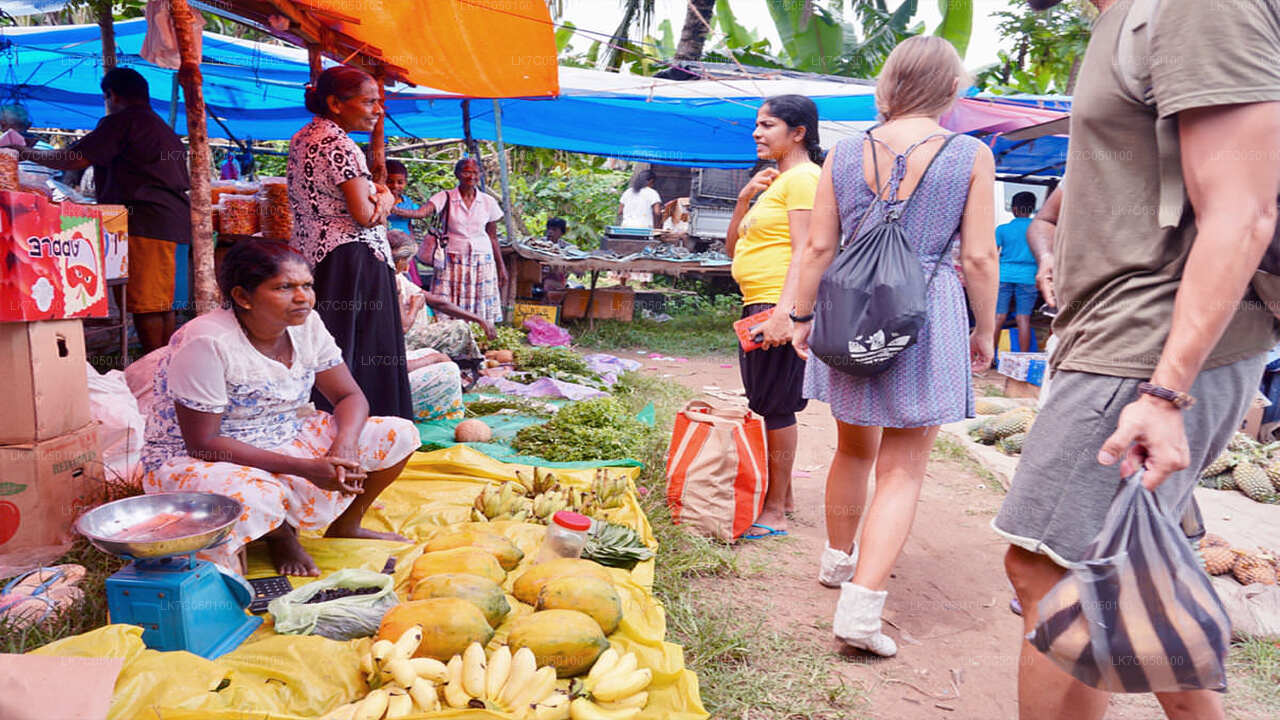
Walking through a Sri Lankan market is one of the most direct ways to understand the island's food culture, daily rhythms, and agricultural heritage. Stalls overflow with jackfruit, bitter gourd, rambutan, and dried Maldive fish. Spice vendors weigh out Ceylon black pepper, cinnamon bark, and cardamom by the gram. Fishmongers ice down the morning's catch beside pyramids of king coconuts. No itinerary or guided commentary captures this as vividly as simply moving through a market on a busy morning.
What types of markets can you visit in Sri Lanka?
Sri Lanka has several distinct market formats, each worth understanding before you choose where to go.
- Municipal markets (pola): Weekly open-air markets held in towns and villages across the country. Farmers sell produce directly, prices are low, and crowds are local. The atmosphere is unhurried and genuinely rural.
- Colombo wholesale markets: Manning Market in Pettah is one of the largest wholesale produce markets in South Asia. Early-morning visits — typically before 7 am — reveal the scale of the island's agricultural output in one chaotic, colourful location.
- Fish markets: The Negombo fish market is among the most visited in the country, active from around 5 am when trawlers return. Catches typically include squid, tuna, and a range of reef fish. The Negombo city tour often pairs the fish market with a visit to the Dutch canal system.
- Spice markets: Towns such as Matara and Galle have dedicated spice traders. Buying directly from a market often yields better quality and fresher stock than tourist-facing shops.
- Herb and Ayurvedic markets: Found mainly in Colombo's Pettah district and in Kandy, these stalls sell dried roots, medicinal bark, and proprietary Ayurvedic preparations used in everyday Sri Lankan households.
What can you buy at a Sri Lankan market?
Produce varies by season and region, but a few categories are reliably present. Tropical fruits — including mangosteen, woodapple, and soursop — sit alongside everyday staples such as red onions, drumstick pods, and green chilies. Coconut in every form — fresh, scraped, pressed into oil, or dried into copra — appears at virtually every market stall in the low country.
Spices are a consistent highlight. Cinnamon, nutmeg, cloves (Syzygium aromaticum), and turmeric are all commercially grown in Sri Lanka and widely available at competitive prices. Dried fish (Maldive fish) is used as a base flavouring in most Sri Lankan curries and makes a durable, flavourful souvenir.
Ceylon tea is sold in loose-leaf form at most market towns in the hill country. Buying from a market rather than an airport shop often means fresher stock, though vacuum-sealed packaging matters for preservation.
How does a guided market tour work?
A guided market tour typically lasts two to three hours and is usually scheduled for the morning when stalls are fully stocked and most active. A local guide navigates the layout, introduces vendors, and explains what unfamiliar produce is used for in Sri Lankan cooking. For travellers with dietary interests or a curiosity about local food systems, this kind of commentary changes the experience significantly.
Many market tours are combined with a cooking class, where ingredients bought in the market are used to prepare a Sri Lankan meal later the same morning. This format is particularly popular in Colombo, Negombo, and along the southern coast near Unawatuna and Galle.
Lakpura operates market tours from several base cities. Each itinerary is tailored to the market type and location — a Colombo tour focuses on the scale and variety of Pettah, while a coastal tour might centre on a fish market combined with a Galle city tour.
When is the best time to visit a Sri Lankan market?
Most markets peak between 6 am and 9 am. Arriving after 10 am means thinner crowds and less produce, as stallholders begin packing up. Fish markets are even earlier — the action at Negombo fish market typically winds down by 8 am.
Weekly pola markets follow a fixed day per town, so it is worth checking the local schedule before planning your visit. The day varies by location, and arriving on the wrong day means an empty or skeletal market.
Avoid visiting markets on public holidays and major religious observances, when trading may be suspended or significantly reduced.
Which markets are best for first-time visitors?
The Negombo fish market is accessible from the international airport and works well as an introduction to Sri Lankan market culture on an arrival or departure morning. It is compact, safe, and visually striking without being overwhelming.
Manning Market in Colombo is larger and more chaotic, but more representative of the island's agricultural diversity. It suits travellers who want immersion over comfort and is most rewarding with a knowledgeable guide.
The Kandy municipal market is a good option for visitors based in the hill country. The Kandy city tour frequently includes the market as a standalone stop rather than a full guided experience. Hill-country produce — including highland vegetables not found in the south — makes it distinctly different from coastal markets.
Can a market tour be combined with other experiences?
Yes, and this is increasingly how travellers approach them. A morning market visit pairs naturally with a cooking class, a visit to a local home kitchen, or a tuk-tuk ride through a neighbourhood. A tuk-tuk safari through Colombo's market districts, for example, lets you cover several different trading areas in a single outing without spending the whole morning on foot.
For visitors staying on the southern coast, a market visit combined with a session at the Midigama Fruit Farm makes for a cohesive half-day centred on local food production.
What should you carry on a market tour?
- Cash in small denominations — most market vendors do not accept cards.
- A reusable cloth bag, since plastic bags are increasingly restricted in Sri Lanka.
- Comfortable, closed-toe shoes — market floors are uneven and can be wet from produce washing.
- A small bottle of hand sanitiser for handling produce samples.
- A wide-brimmed hat or light scarf if visiting during the warmer morning hours.
Photographing market vendors is generally welcomed, but it is courteous to ask before photographing individuals directly. Many vendors appreciate the gesture and will often invite closer inspection of their produce in return.
Related reading
5 pages on closely related subjects.