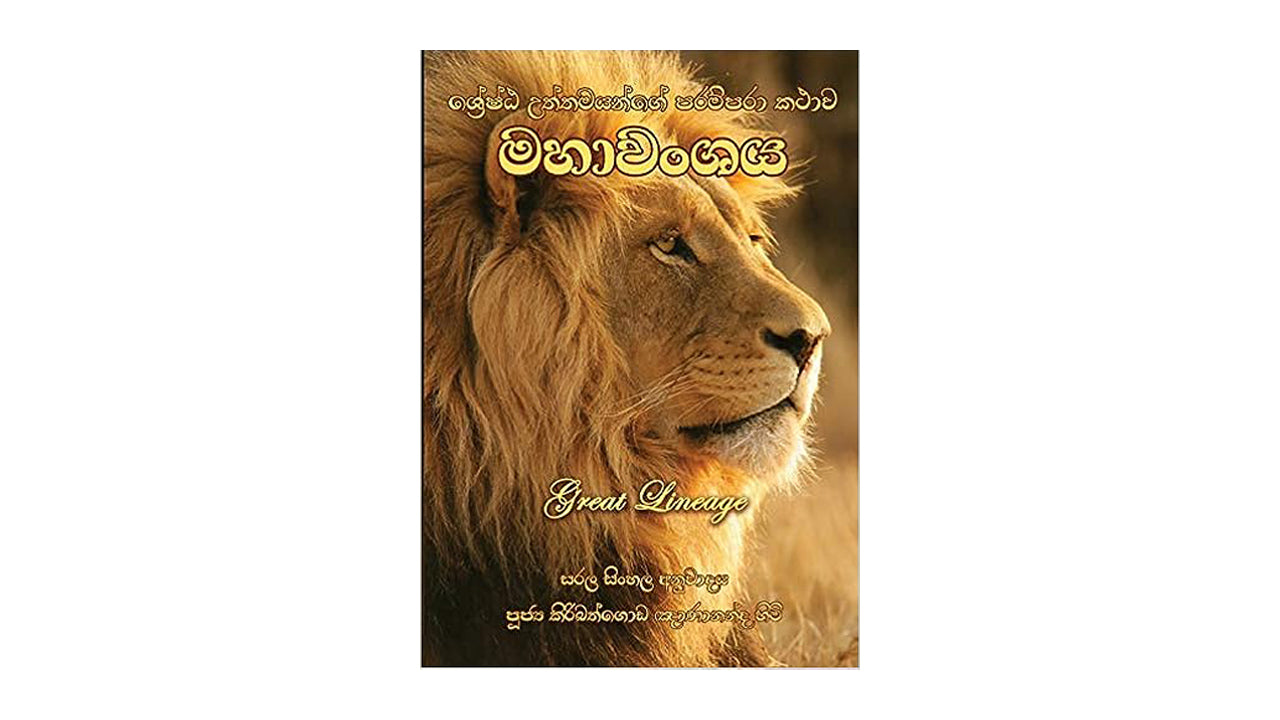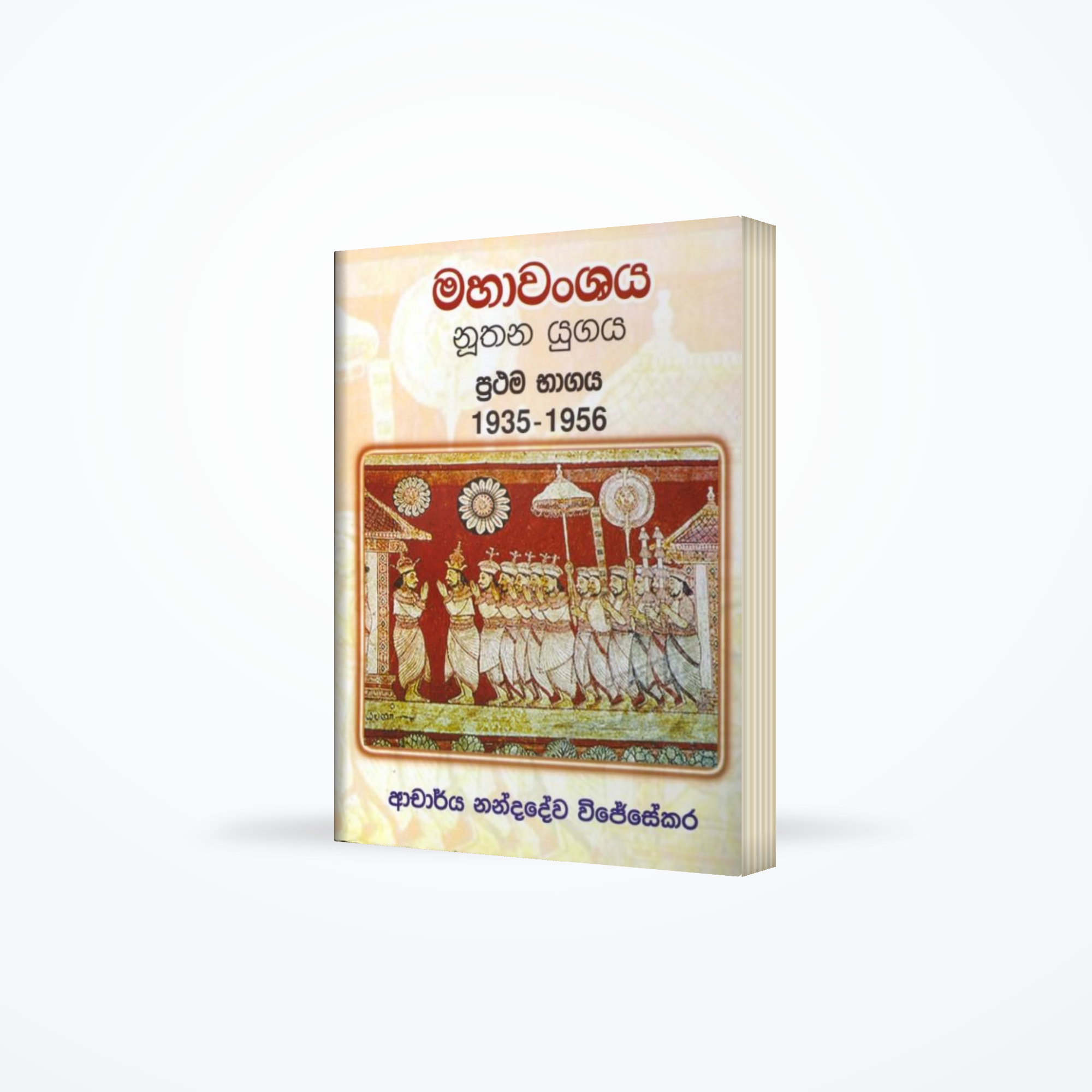
The Mahawanshaya — more commonly rendered in Pali scholarship as the Mahavamsa — is one of the most remarkable historical documents to survive from the ancient world. Maintained by Buddhist monks of the Mahavihara monastery in Anuradhapura, it began as a series of records tracking Sri Lankan royal history from around the 3rd century BCE, functioning much like a systematic institutional diary. Those individual records were eventually compiled into a single authoritative text in the 5th century CE by the Buddhist monk Mahathera Mahanama.
What exactly is the Mahawanshaya?
The Mahawanshaya is a Pali-language verse chronicle covering the history of Sri Lanka across roughly 2,500 years. Scholars estimate the text runs to over 200,000 words across approximately 960 printed pages, organised into 101 chapters. It is widely regarded as the oldest and most continuous historical chronicle of its kind in existence.
The chronicle divides naturally into three parts:
- The Mahavamsa proper (Chapters 1–37): Written in the 5th–6th century CE by Ven. Mahanama Maha Thera, an uncle of King Dhatusena (ruled c. 460–478 CE). This section opens with the founding of the Sri Lankan monarchy under King Vijaya and closes at the end of King Mahasena's reign in the 4th century CE.
- The Culavamsa, Part 1 (Chapters 38–79): Composed in the 13th century CE, generally attributed to the monk Dhammakitti, though many historians believe multiple authors contributed. It covers the period from the arrival of the Tooth Relic of the Buddha in the 4th century CE through to the reign of King Parakramabahu the Great.
- The Culavamsa, Part 2 (Chapters 80–101): Written over an extended period by successive monk-scholars, concluding in 1815 — the year British forces completed their military occupation of the entire island.
What were the earlier sources the Mahawanshaya drew upon?
Ven. Mahanama did not compose the chronicle from nothing. The German Indologist Wilhelm Geiger identified evidence of an earlier compilation known as the Mahavamsa Atthakatha, a commentary text on which Mahanama appears to have relied heavily. A still earlier document, the Dipavamsa — simpler in structure and shorter in scope — also survives and is believed to have been drawn from the same source material as the Atthakatha. The Mahavamsa, when it appeared, so thoroughly superseded the Dipavamsa that it effectively became the definitive version of the island's ancient record.
How was the Mahawanshaya translated and published?
The first printed edition and English translation appeared in 1837, prepared by George Turnour, a historian and officer of the Ceylon Civil Service. His work made the chronicle accessible to the wider world for the first time. The official German translation was completed by Wilhelm Geiger in 1912, followed by his translation of the Culavamsa in 1930. Geiger's German text was subsequently rendered into English by Mabel Haynes Bode, with revisions by Geiger himself — a version that remains a standard scholarly reference.
Why is the Mahawanshaya important to historians?
Beyond its significance to Sri Lanka, the Mahawanshaya carries considerable weight in the broader study of South Asian history. Because it frequently references the royal dynasties of the Indian subcontinent alongside Sri Lankan events, it provides chronological anchor points that help historians date parallel dynasties. Its account of the Mauryan emperor Ashoka's consecration, cross-referenced with Seleucid records, has been central to establishing the absolute chronology of early Indian history — a point on which scholars had long disagreed.
For Sri Lankan studies specifically, the chronicle is irreplaceable. Without it, the builders of major monuments at Anuradhapura — including the Ruwanwelisaya (Mahathupa), the Jetavanaramaya, and the Abhayagiri Dagoba — would be nameless. The Mahawanshaya preserves the names, reigns, motivations, and in some cases the engineering context of the kings who commissioned these structures, giving archaeology a documentary framework it would otherwise lack.
Is the Mahawanshaya a religious or a historical text?
The Mahawanshaya occupies an interesting position: it is not a canonical Buddhist scripture, yet it is deeply shaped by a Buddhist worldview. Its authors were monks writing within a monastic tradition, and the chronicle frames Sri Lankan history as the story of a land chosen to preserve the Buddha's teachings. At the same time, it records secular events — wars, royal successions, famines, and diplomatic relations — with a level of specificity that historians treat as genuine evidence rather than hagiography. Readers encounter both dimensions throughout the text.
What later chronicles did the Mahawanshaya inspire?
The success of the Mahavamsa encouraged later monk-scholars to produce supplementary works tracing the histories of specific religious objects, monasteries, and dynasties. These include:
- Attanagalu Vihara Vamsa — history of the Attanagala temple
- Dhatuvamsa — chronicle of the Sacred Tooth Relic
- Elu-Attanagaluvamsa and Elu-Bodhivamsa — Sinhala-language reworkings
- Maha Bodhivamsa — history of the Sri Maha Bodhi tree
- Thupavamsa — history of the great dagobas
- Daladavamsa — dedicated to the Tooth Relic
- Viharavamsa — monastic histories
Together, these derivative chronicles form a substantial body of literary and historical work that traces its intellectual lineage directly to the Mahawanshaya.
Where can I read the Mahawanshaya today?
Printed editions of the Mahavamsa remain in publication in Sri Lanka, available in Sinhala, Pali, and English. Geiger's English translation is the most widely cited scholarly edition in the English-speaking world. For readers with a serious interest in Sri Lankan history, Buddhism, or ancient South Asian civilisation, the text rewards careful reading even in translation — the verse structure of the original Pali gives the narrative a rhythm that survives into good translations. The University of Peradeniya and the Postgraduate Institute of Pali and Buddhist Studies in Kelaniya both maintain academic programmes where the Mahavamsa is a core text.