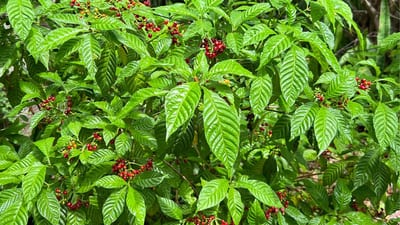
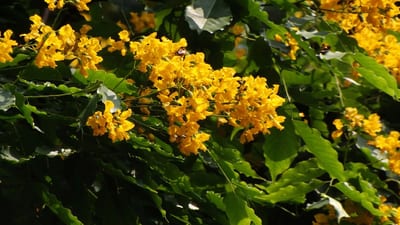
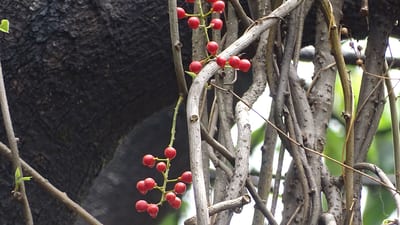
Jasminum auriculatum is a flowering shrub native to Sri Lanka, known in English as Juhi and locally as Wal pichcha or Wekanda. It belongs to the Oleaceae family, the botanical family that also includes olives and the true jasmines, many of which are valued for their fragrant white or pale flowers.
What does Jasminum auriculatum look like?
As a member of the jasmine group within Oleaceae, Jasminum auriculatum grows as a shrub, often with a sprawling or climbing habit typical of many jasmine species. Plants in this family generally bear simple or pinnate leaves arranged opposite one another along the stem, with small, tubular flowers that flare into star-shaped lobes, a form shared across most cultivated and wild jasmines.
Where does Jasminum auriculatum grow in Sri Lanka?
The species is recorded as native to Sri Lanka, meaning it occurs naturally on the island as part of its indigenous flora, though it is not restricted to Sri Lanka alone in the way an endemic species would be. Many Oleaceae shrubs of this kind favour open scrub, forest margins, or lowland vegetation across South Asia and Sri Lanka's broader landscape.
What is it called in Sinhala?
In Sinhala, Jasminum auriculatum is known as Wal pichcha, also recorded as Wekanda. These local names sit alongside the English common name Juhi, reflecting the plant's recognition across different language traditions on the island.
Can you eat Jasminum auriculatum?
No part of this plant is recorded as edible. It should not be regarded as a food plant, and no edible parts are noted for the species.
Sri Lanka's native flora spans forests, wetlands, and scrubland across the island; readers exploring the island's nature more broadly can find related plant and habitat profiles across Lakpura's flora series.
| Attribute | Recorded detail |
|---|---|
| Scientific name | Jasminum auriculatum |
| Family | Oleaceae |
| English name | Juhi |
| Sinhala / local name | Wal pichcha / Wekanda |
| Status in Sri Lanka | Native |
| Edible parts | None |
Other species in this genus
5 more, sharing the same genus.