Few names in the history of exploration carry the weight of Ibn Battuta. Born in 1304 in Tangier, Morocco, this scholar and jurist spent nearly three decades traversing the medieval world — crossing deserts, sailing open seas, and moving through courts and caravanserais from West Africa to the eastern edges of China. His accumulated journey covered an estimated 75,000 miles, a distance that would not be surpassed by any single traveller for centuries.
Who was Ibn Battuta?
Ibn Battuta was a Moroccan Berber scholar trained in Islamic law. He came from a family of legal scholars and received a traditional education in Tangier before setting out on his first journey in 1325, at the age of 21. What began as a Hajj — the Muslim pilgrimage to Mecca — evolved into a lifelong compulsion to see the world. By the time he returned permanently to Morocco around 1354, he had visited territories spanning nearly 40 modern countries.
Unlike many travellers of his era, Ibn Battuta was not a merchant or a military envoy. He moved through the world primarily as a scholar, a judge, and occasionally a diplomatic emissary. This gave him access to rulers, religious scholars, and ordinary communities alike, and his observations reflect all three levels of society.
What route did Ibn Battuta take during his travels?
His journeys did not follow a single arc. After completing the Hajj in Mecca, he travelled extensively through the Middle East, Persia, and Anatolia before heading north into the steppes of Central Asia. From there he moved into the Indian subcontinent, arriving at the Sultanate of Delhi where he served as a qadi (judge) under Sultan Muhammad bin Tughluq for several years.
He then sailed to the Malabar Coast of India, passing through the island of Ceylon — present-day Sri Lanka — on his way to the Maldives, where he again served briefly as a judge. He continued onward to Bengal, Southeast Asia, and eventually China. On his return westward he visited the Byzantine Empire and, in one of his final major journeys, crossed the Sahara to reach the Mali Empire in West Africa.
- North Africa and the Middle East: Egypt, Syria, Arabia, Iraq, Persia
- East Africa: The Swahili coast as far south as Kilwa (modern Tanzania)
- Central Asia and the Golden Horde: The Crimea, the Volga steppes
- South Asia: The Delhi Sultanate, the Malabar Coast, Ceylon, the Maldives, Bengal
- Southeast Asia and China: Sumatra, Quanzhou, reportedly Beijing
- West Africa: The Mali Empire, crossing the Sahara
Did Ibn Battuta visit Sri Lanka?
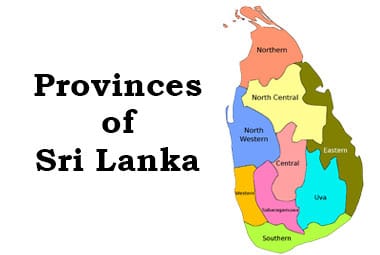
Yes. Ibn Battuta visited Ceylon — as Sri Lanka was then known to Arabic-speaking travellers — on at least one occasion during the 14th century, most likely in the 1340s. He described the island in terms that reflected both its natural abundance and its reputation as a sacred destination. He wrote about Adam's Peak (Sri Pada), the mountain in the central highlands that was — and remains — a site of pilgrimage for Buddhists, Hindus, Muslims, and Christians alike, each tradition associating the famous footprint at its summit with a different figure.
His account of Ceylon also touched on the island's trade goods, among them the spices and aromatics for which it was famous across the medieval Islamic world. Ceylon black pepper was among the commodities that drew Arab merchants to these shores centuries before European powers arrived. Ibn Battuta's description of the island aligns broadly with other medieval Islamic geographical writing, which portrayed Ceylon as a place of extraordinary fertility and religious significance.
The ancient city of Polonnaruwa, though no longer the island's capital in Ibn Battuta's time, had been the seat of a great medieval kingdom whose influence shaped the Buddhist culture he would have encountered. The religious and political landscape he observed in the 14th century was the inheritance of that earlier civilisation.
What is the Rihla and why does it matter?
The Rihla — literally "The Journey" in Arabic — is the account of Ibn Battuta's travels dictated to the scholar Ibn Juzayy at the command of the Marinid Sultan of Morocco around 1355. Its full title translates roughly as A Gift to Those Who Contemplate the Wonders of Cities and the Marvels of Travelling. Ibn Juzayy shaped the raw dictation into literary form, which means the text is both a personal memoir and a work of medieval Arabic prose.
The Rihla is now considered one of the most important primary sources for 14th-century history across multiple continents. Historians of the Mali Empire, the Delhi Sultanate, the Byzantine court, and the Swahili city-states all draw on it. Its value lies not just in its geographic range but in its sociological detail: Ibn Battuta described food, dress, legal customs, religious practice, architecture, and the manners of rulers with the eye of a trained jurist and an insatiably curious observer.
Unlike many ancient texts, the Rihla was not widely circulated in Europe until the 19th century, when portions were translated into French from manuscripts held in North Africa. Today, full translations exist in numerous languages, and scholarship on Ibn Battuta's accuracy — which is sometimes questioned for his more distant journeys — remains an active field.
How does Ibn Battuta compare to other great travellers of his era?
The most common comparison is with Marco Polo, the Venetian merchant who travelled to China roughly half a century earlier, around 1271–1295. Both men dictated their accounts while in captivity or under patronage rather than writing them in the field, and both have faced questions about the reliability of portions of their narratives.
In terms of sheer distance and geographic diversity, Ibn Battuta's journeys were considerably broader. Marco Polo's route was essentially a single arc eastward to China and back; Ibn Battuta's journeys zigzagged across three continents over nearly three decades. Where Marco Polo travelled primarily as a merchant and envoy, Ibn Battuta moved in the roles of pilgrim, scholar, judge, and occasionally ambassador — giving him a different and arguably richer vantage point on the societies he encountered.
| Traveller | Era | Distance (approx.) | Regions covered |
|---|---|---|---|
| Ibn Battuta | 1325–1354 | ~75,000 miles | Africa, Middle East, Asia, Europe |
| Marco Polo | 1271–1295 | ~15,000 miles | Central Asia, China |
| Zheng He | 1405–1433 | ~30,000 miles (fleet voyages) | Southeast Asia, Indian Ocean, East Africa |
What is Ibn Battuta's legacy today?
Ibn Battuta's significance has grown rather than diminished with time. For historians, the Rihla offers a rare non-European perspective on the medieval world — a reminder that the 14th century was characterised by dense networks of trade, scholarship, and diplomacy that connected West Africa to East Asia long before European maritime expansion. The Islamic world of his era was not a monolith but a set of overlapping cultures, and Ibn Battuta's account captures that diversity with uncommon precision.
His name has been attached to a crater on the Moon, a shopping mall in Dubai, and an asteroid — a range of honours that reflects his cross-cultural resonance. In Morocco, he remains a figure of national pride, and Tangier, his birthplace, commemorates him in its public spaces. For travellers generally, his life raises a question that remains compelling: what does it mean to move through the world not in pursuit of profit or conquest, but out of a genuine desire to understand?
For those drawn to the places Ibn Battuta described, Sri Lanka remains a rewarding destination. The island he visited in the 14th century still holds the sacred mountain he wrote about, the spice gardens that sustained its trade, and a richness of culture and landscape that medieval geographers struggled to adequately describe. The Sinharaja Forest Reserve, the ancient irrigation works of the north-central plains, and the layered religious architecture of the hill country all speak to a civilisation with deep roots — one that Ibn Battuta glimpsed during his brief passage through.