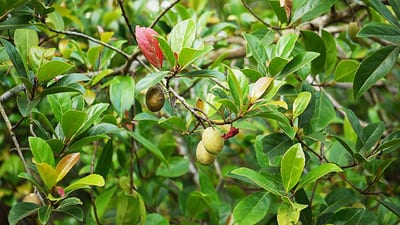
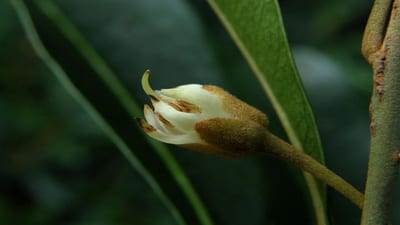
Elaeocarpus amoenus is a plant endemic to Sri Lanka, meaning it grows naturally nowhere else on earth. It belongs to the family Elaeocarpaceae, a group of flowering trees and shrubs found across the tropics and subtropics of Asia, Australasia and South America. In Sri Lanka it is known by its Sinhala name, Thiththa weralu.
What family does Elaeocarpus amoenus belong to?
Elaeocarpus amoenus is classified in the family Elaeocarpaceae. Members of this family are typically woody trees and shrubs, and the genus Elaeocarpus is best known for species bearing hard, ridged stone fruits. Sri Lanka's forests host a number of endemic species in this genus, of which Elaeocarpus amoenus is one.
Where does Elaeocarpus amoenus grow?
As an endemic species, Elaeocarpus amoenus is native exclusively to Sri Lanka, part of the island's distinctive flora shaped by its isolation and varied climate zones. Endemic plants of this kind contribute to Sri Lanka's standing as a global biodiversity hotspot, alongside the Western Ghats of India.
What is its conservation status?
The National Conservation Status list of Sri Lanka (2012) classifies Elaeocarpus amoenus as Vulnerable. This designation indicates the species faces a meaningful risk of extinction in the wild, generally due to a combination of restricted range, habitat loss, or small population size. Conservation status listings like this one help guide forest protection priorities on the island.
Can you eat Elaeocarpus amoenus?
No edible parts are recorded for this species. It should not be treated as a food plant.
What is Elaeocarpus amoenus called in Sinhala?
The species is known in Sinhala as Thiththa weralu (තිත්ත වෙරළු), a name reflected only in the local Sri Lankan vernacular rather than in any wider regional usage.
| Attribute | Recorded detail |
|---|---|
| Scientific name | Elaeocarpus amoenus |
| Family | Elaeocarpaceae |
| Sinhala / local name | Thiththa weralu (තිත්ත වෙරළු) |
| Status in Sri Lanka | Endemic |
| Conservation status | Vulnerable (NCS 2012) |
| Edible parts | None |
Other species in this genus
1 more, sharing the same genus.