
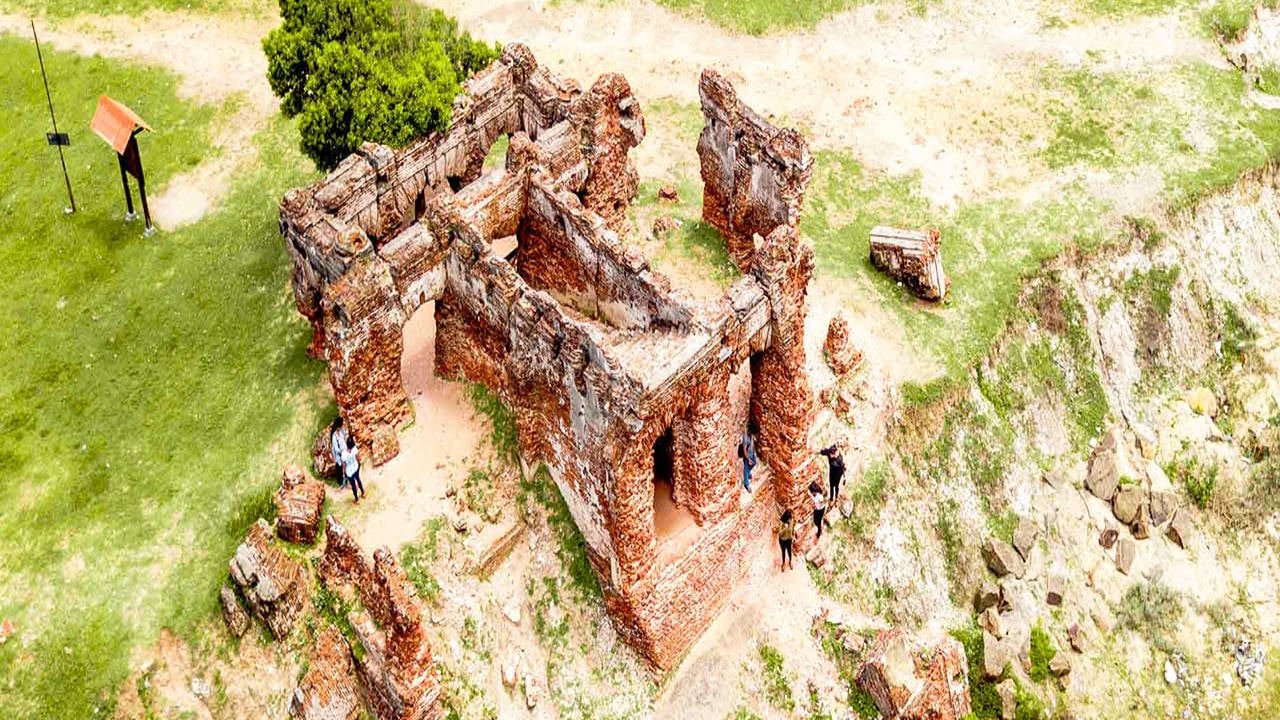


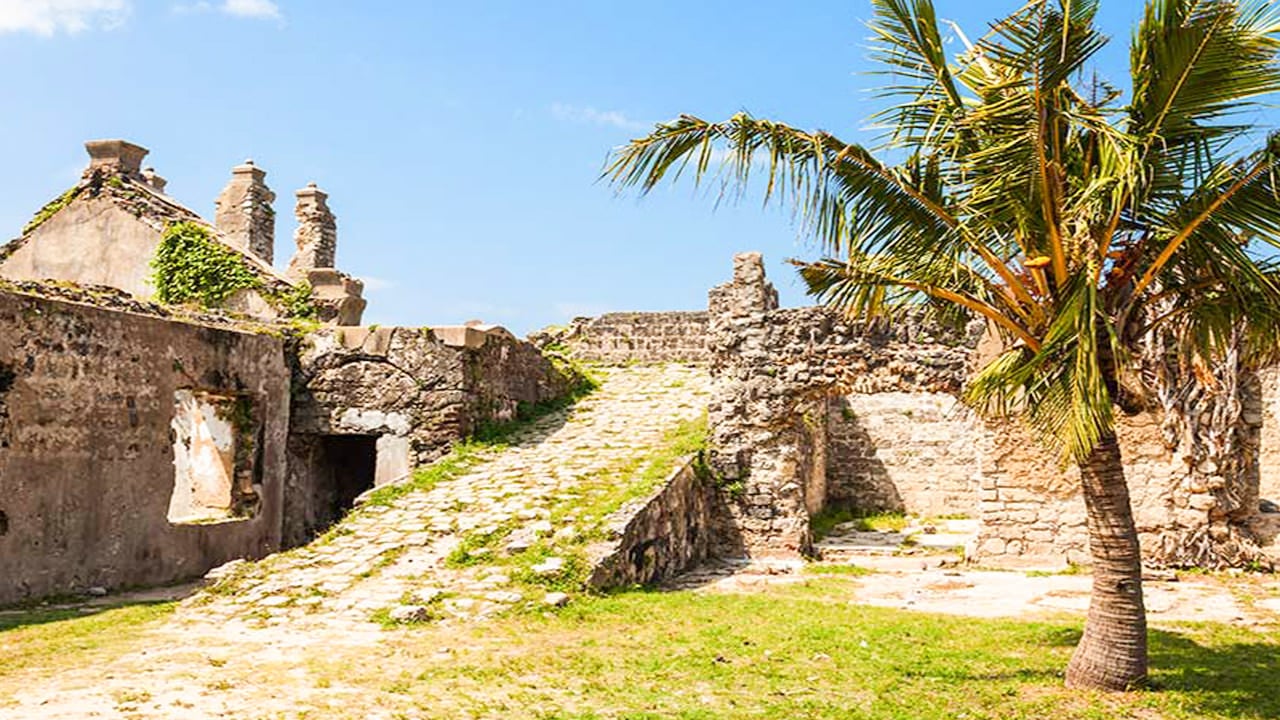
Perched on a low cliff along the Arippu coast in northwestern Sri Lanka, the Doric Bungalow is one of the island's more quietly compelling colonial relics. Built in the 19th century, the structure was once the seaside residence of Frederick North — the 5th Earl of Guilford and the first British Governor of Ceylon. Today it stands largely in ruins, shaped as much by sea air and neglect as by the passage of time. Despite that, it draws historians, heritage enthusiasts, and curious travellers who make the detour through Mannar district.
Who built the Doric Bungalow?
The bungalow was built for Frederick North, who served as Ceylon's first British Governor from 1798 to 1805. He was the son of Frederick North, 2nd Earl of Guilford — himself a British Prime Minister under King George III — making the family one of considerable political standing in the era. The building takes its name from the classical Doric architectural style, which influenced many British colonial structures of the period.
After North's tenure, the property was handed over for use by other colonial officials, particularly those overseeing the pearl fisheries along the Gulf of Mannar — an industry that once made this stretch of coastline internationally significant.
What does the Doric Bungalow look like today?
The original two-storey structure was built on a modest but well-considered plan. The ground floor contained four small bedrooms, each positioned at a corner of the building, with a large central staircase dominating the interior space. The upper floor held two rooms: a dining room large enough to seat around twenty guests, and a private bedchamber reserved for the governor.
Exposure to coastal weather — salt winds, monsoon rains, and sea spray — along with decades of insufficient maintenance have taken a heavy toll. Much of the structure has collapsed or deteriorated beyond safe entry. What remains are partial walls, eroded stonework, and the general outline of what was once a dignified colonial residence. The setting itself — a low clifftop above a quiet beach — gives the site a melancholy atmosphere that many visitors find more affecting than a fully restored monument might.
What is the heritage status of the site?
The Doric Bungalow has been declared a protected archaeological monument under Sri Lanka's Antiquities Ordinance, which means any alteration, excavation, or interference with the structure is legally restricted. Despite this designation and several proposals for restoration over the years, no substantive conservation work has been carried out. The site remains unguarded and largely uninterpreted, with no on-site visitor infrastructure.
Preservationists have flagged the ongoing deterioration as a concern, given the building's historical significance as the residence of Ceylon's first Governor and its association with the colonial pearl fishery administration.
What folklore surrounds the Doric Bungalow?
The site carries a layered history that blurs into local legend in interesting ways. One tradition holds that a palace belonging to Alli Raani — a legendary queen of the Sangam period — once stood on or near this clifftop. The Sangam period refers to an era of Tamil literary culture dating roughly to the early centuries of the Common Era, and Alli Raani figures in several folk narratives from the region.
A separate, less-substantiated claim links the site to the Portuguese colonial period, suggesting the structure (or an earlier one on the same foundations) was used around 1580 to shelter Dona Catherina, a Kandyan princess who became a significant figure in the late Kotte period. Historians treat these accounts with caution, but they add a dimension to the site that purely colonial-era buildings rarely possess.
Where exactly is the Doric Bungalow, and how do I get there?
The bungalow sits in the Arippu coastal area, on the northwestern coast of Mannar district in Sri Lanka's Northern Province. The nearest town of significance is Mannar, roughly accessible from Colombo via the A14 road — a journey of around five to six hours by road depending on conditions and the route taken. The Mannar causeway connects the mainland to Mannar Island, but Arippu itself lies on the mainland coast, south of the island.
- The site is not served by public transport directly — a private vehicle or hired car is the practical option.
- The road to the coastal area may require a four-wheel-drive vehicle in wet conditions.
- There are no formal parking facilities, entry gates, or ticketing at the site.
- Visit during the morning to avoid the strong afternoon coastal winds common in this area.
What else is worth seeing near the Doric Bungalow?
Mannar district rewards travellers who make the effort to reach it. The area around Arippu and the Gulf of Mannar is historically associated with the pearl oyster fisheries that brought Arab, Portuguese, Dutch, and British merchants and administrators to this coastline over several centuries.
- Mannar Fort: A Portuguese-built fort later extended by the Dutch and British, located on Mannar Island. One of the better-preserved coastal fortifications in the north.
- Adam's Bridge (Rama's Bridge): A chain of limestone shoals linking Sri Lanka to India, visible from the northern coast near Talaimannar and steeped in both geological interest and mythological significance.
- Wilpattu National Park: Sri Lanka's largest national park by area lies to the south of Mannar district and is known for its leopard population and natural villus (water-filled basins).
- Baobab trees of Mannar: An unusual grove of ancient baobab trees — not native to Sri Lanka — thought to have been brought by Arab traders centuries ago.
Is the Doric Bungalow worth visiting?
For travellers with a genuine interest in colonial history, archaeological heritage, or the layered cultural narratives of Sri Lanka's northwestern coast, the Doric Bungalow is worth including in a broader Mannar itinerary. It is not a polished visitor attraction — there are no guides, no interpretive panels, and the ruins require some imagination to read. But that very rawness is part of its character. The clifftop position, the sound of the sea below, and the knowledge that this crumbling stonework once housed Ceylon's first Governor give the place a quiet weight that more maintained sites can lack.
If you are combining the site with Wilpattu National Park or a wider Northern Province circuit, the detour adds relatively little distance and considerably enriches the historical texture of the journey.
Nearby places
8 places within about 25 km, nearest first.
- Arippu Fort15 km
- Thoddaveli Railway Station16 km
- Thekkama Anicut16 km
- Mannar District20 km
- Baobab Tree21 km
- Thiruketheeswaram Railway Station21 km
- Mannar Salt Pans21 km
- Neriyakulam Railway Station21 km
