Hidden in the quiet village of Dedigama in Kegalle District, Sabaragamuwa Province, the Suthighara Stupa — also known locally as Dedigama Kota Vehera — stands as one of Sri Lanka's more intimate but historically significant religious monuments. Commissioned by King Parakramabahu the Great (1153–1186), it marks the very spot where he was born, making it a site of personal royal devotion rather than imperial display.
What is the history of the Dedigama Suthighara Stupa?
The name Suthikagaraya derives from Pali and Sinhala roots meaning "place of birth." Queen Rathnavali gave birth to a son at this location — a boy who would go on to become one of the most celebrated rulers in Sri Lankan history. Parakramabahu the Great is remembered for unifying the island under a single kingdom and for his vast irrigation projects, and his birthplace accordingly became a site of veneration.
After ascending the throne, Parakramabahu commissioned the stupa here, enshrining the memory of his origins in stone and brick. The site belongs to the broader tradition of stupas built during the Polonnaruwa period, a golden age of architecture and Buddhist patronage across the island.
What are the architectural features of the stupa?
The Suthighara Stupa is notable both for its scale and for the archaeological discovery concealed within it. Excavations revealed that the main stupa was constructed directly over a smaller, earlier stupa — suggesting a layered act of commemoration. The inner stupa, located closer to the eastern side near the pesa walalu (boundary wall), measures approximately 36 feet in diameter. Archaeologists believe this smaller structure was erected precisely on the spot of the royal birth, with the larger stupa built around it shortly afterward.
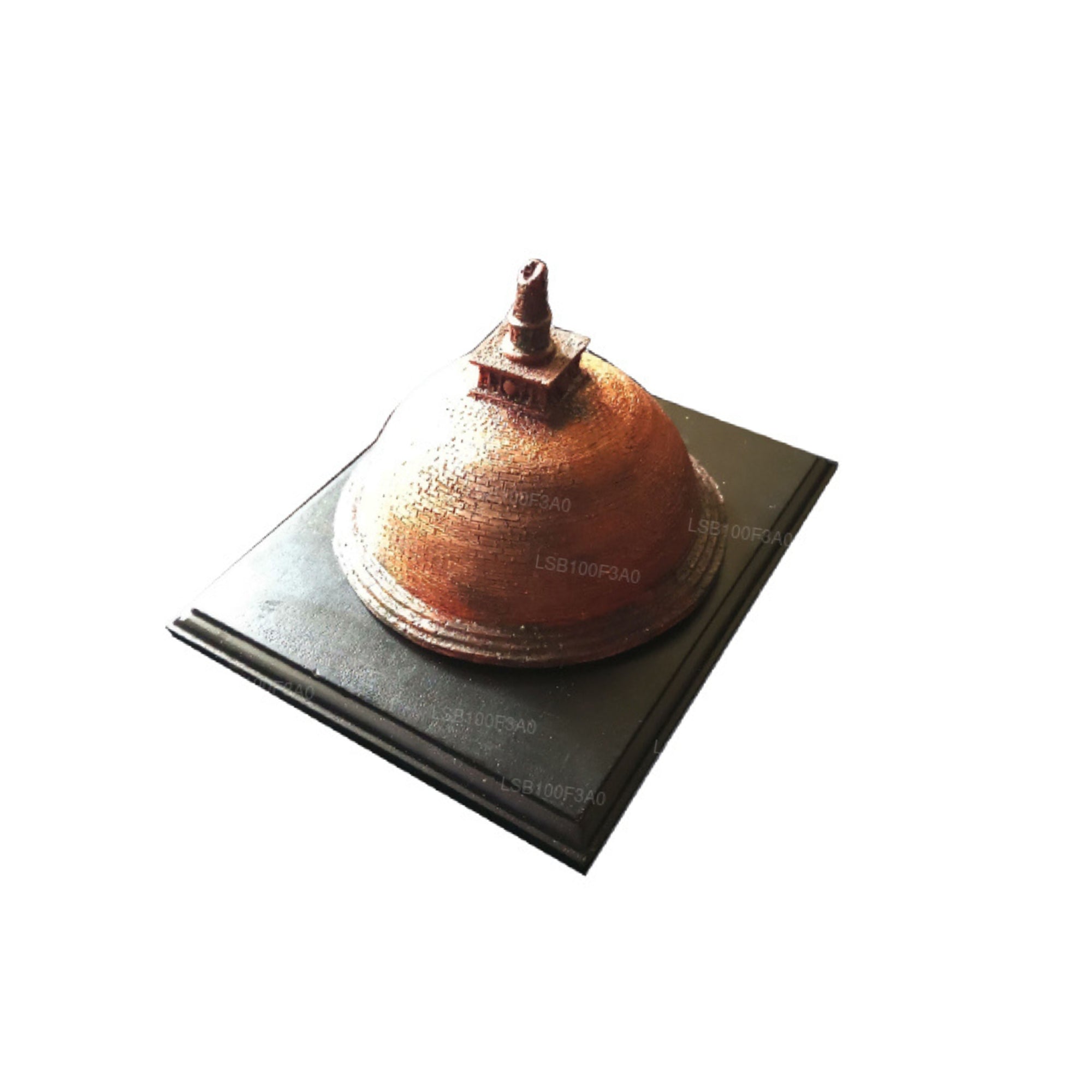
The outer stupa has a diameter of around 256 feet and stands approximately 47 feet high. Its flattened summit platform covers roughly 26,000 square feet — an unusual design that distinguishes it from the more conventional pointed or bell-shaped stupa forms found elsewhere in Sri Lanka. Both structures are understood to have been built within a similar timeframe, reinforcing the deliberate, concentric intention behind the design.
The stupa has not undergone major restoration, which means much of what visitors see reflects its aged, unrestored state — a quality that many find more evocative than heavily renovated monuments.
What relics have been discovered at the Suthighara Stupa?
Excavations uncovered ten relic chambers within the stupa, yielding a significant collection of objects. The most celebrated of these finds is the metal Elephant Oil Lamp, an intricate artifact now preserved and made available for study through the National Heritage and Research Commission. The exact religious relic originally enshrined in the stupa remains unknown, but the abundance of chamber finds confirms the site's importance to its builders.
The elephant lamp itself — a sculptural object combining practical function with symbolic imagery — reflects the craftsmanship typical of the Polonnaruwa-era court. It has since become one of the most identifiable artifacts associated with Dedigama.
How do I get to the Dedigama Suthighara Stupa from Colombo?
The stupa is accessible via the Nelundeniya–Galapitamada road (B540). From the Nelundeniya junction, the site is roughly 4 km along this route, making it a straightforward detour for travellers heading through Kegalle District. Dedigama is located in the hill-country foothills, and the drive from Colombo typically takes around two to two-and-a-half hours depending on traffic. The road passes through rubber and spice-growing country, offering a gentle introduction to the Sabaragamuwa landscape.
There is no large visitor infrastructure at the site — no ticketing office or organised tour guides — so arriving with prior knowledge of the monument's history makes the visit more rewarding. Early morning visits are quieter and the light on the old brick surface is particularly clear.
When is the best time to visit Dedigama?
Sabaragamuwa Province receives rainfall from both monsoon systems, so the site is accessible year-round. The drier months from December to April generally offer more comfortable travel conditions in this region. If you plan to combine the visit with time in Kandy or the cultural heartland, the same seasonal window applies. The stupa grounds are modest in size, so most visitors spend between 30 and 60 minutes at the site itself.
What else is worth seeing near Dedigama?
The Kegalle District sits conveniently between Colombo and the hill country, making it easy to combine a Dedigama visit with nearby attractions. The Makandawa Rainforest in Kitulgala is within reasonable driving distance and offers a very different natural experience. Those tracing the arc of Sri Lanka's Buddhist heritage might pair the stupa with the ancient city of Polonnaruwa, where the scale and ambition of Parakramabahu the Great's reign is expressed most fully in its surviving monuments.
Is the Dedigama Suthighara Stupa suitable for all visitors?
The site is open ground with no significant accessibility barriers, though the surface around the stupa is uneven in places. Visitors are expected to remove footwear before approaching the stupa, as is standard practice at Buddhist sites in Sri Lanka. Modest dress (covered shoulders and knees) is respectful and expected. There are no entry fees reported at this site, though this is subject to change. Facilities are minimal, so carry water and any essentials from the nearest town.
Nearby places
10 places within about 25 km, nearest first.
Related reading
1 pages on closely related subjects.