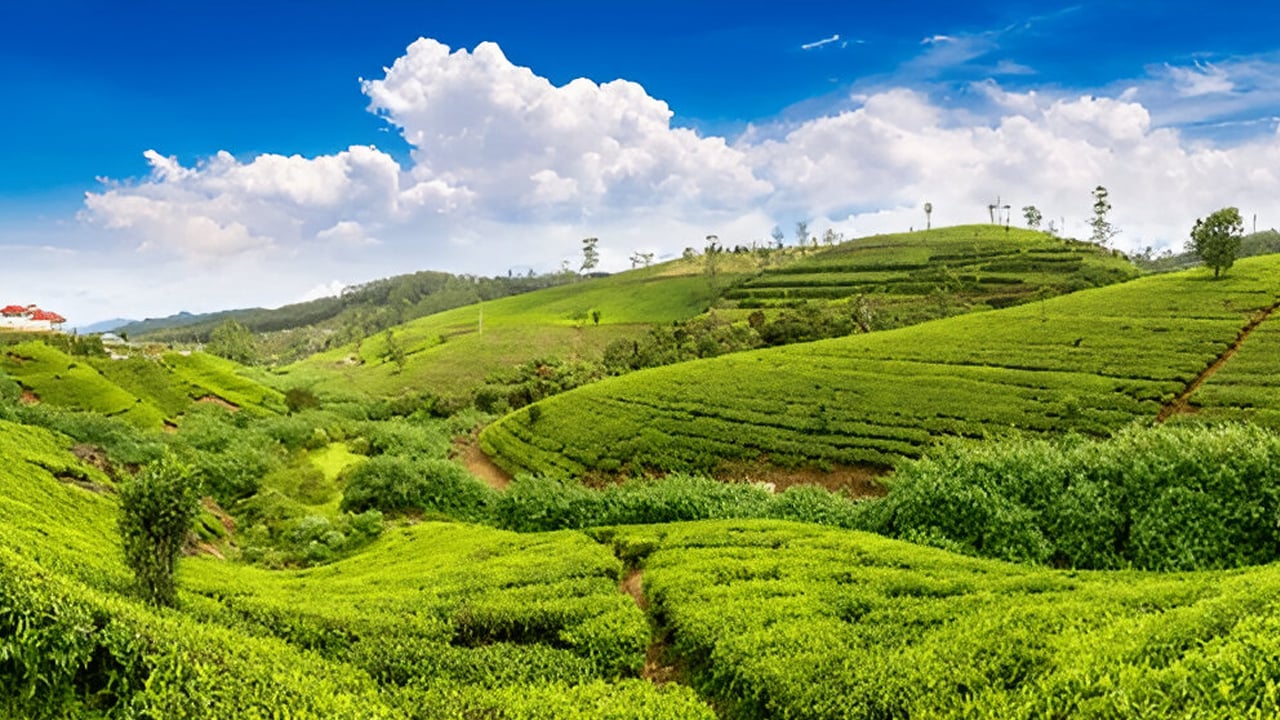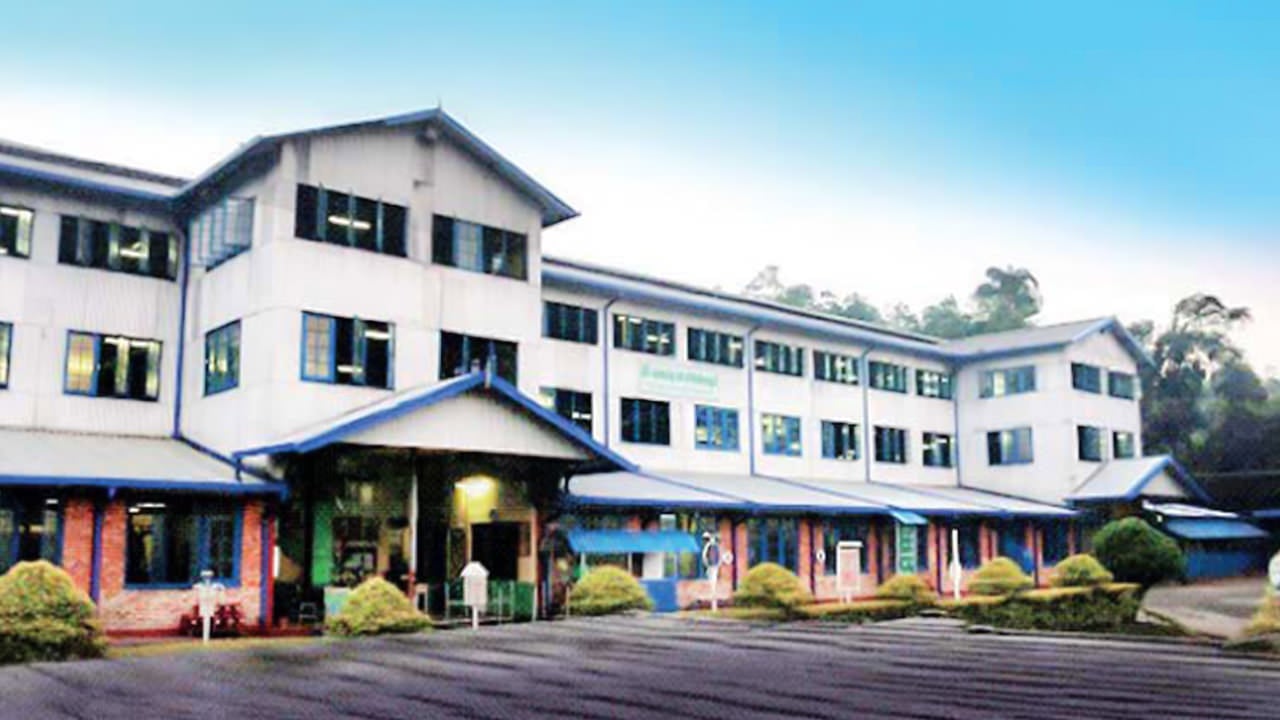

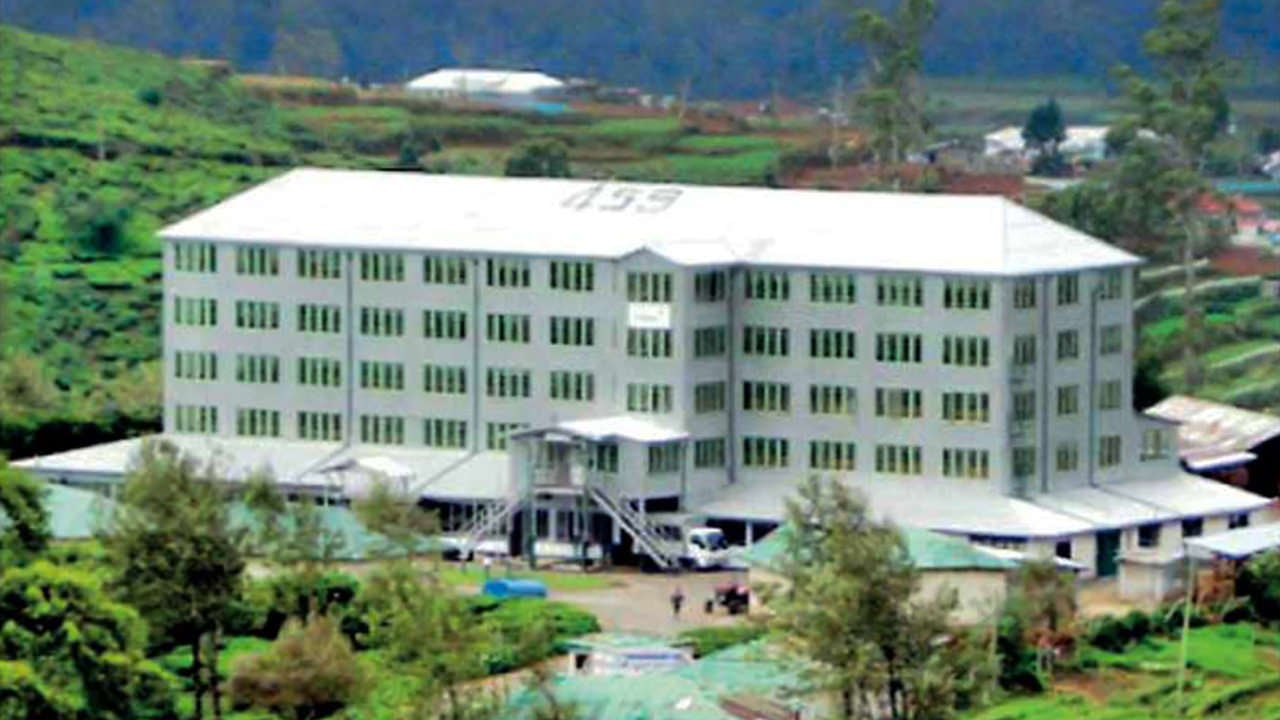


Perched at around 2,012 metres above sea level in the Kandapola highlands of Nuwara Eliya, Court Lodge Tea Estate is one of Sri Lanka's most consistently respected high-grown tea gardens. Established in 1890, it has spent well over a century refining the art of producing the cool-climate teas that have made the Nuwara Eliya region famous among buyers and connoisseurs worldwide.
What makes Court Lodge Tea Estate significant?
Altitude is the defining factor at Court Lodge. At roughly 2,012 metres, the estate sits near the upper limit of viable tea cultivation in Sri Lanka. The combination of cool temperatures, frequent mist, and well-distributed rainfall slows the growth of the tea plant, concentrating flavour compounds in each leaf. The result is a tea with a noticeably lighter liquor, a clean floral character, and a brightness in the cup that lower-elevation estates find difficult to replicate.
Covering 264 hectares and employing around 349 workers, the estate is a meaningful employer in a district where plantation work has shaped communities for generations. Its scale is large enough to invest in quality infrastructure, yet focused enough to maintain careful oversight of every stage from field to factory.
What grades of tea does Court Lodge produce?
Court Lodge specialises primarily in Ceylon tea graded as Flowery Broken Orange Pekoe (FBOP), a classification that signals a broken-leaf tea containing a meaningful proportion of golden tip — the youngest, most tender growth on the bush. FBOP from this altitude typically brews to a pale amber liquor with a delicate, almost honeyed aroma and a lively, low-astringency finish.
Beyond FBOP, the estate also produces several related grades:
- FBOP1 — a slightly finer selection within the FBOP family, prized for a higher tip content
- OPA (Orange Pekoe A) — a long, wiry whole-leaf grade that brews slowly and yields a refined, nuanced cup
- OP (Orange Pekoe) — the classic whole-leaf standard, consistent and clean
- PEKOE / PEK1 — shorter, bolder leaf cuts suited to those who prefer a fuller body without sacrificing the estate's characteristic brightness
Each grade reflects a distinct style of manufacture, and buying single-estate Court Lodge tea in any of these grades gives a clearer sense of the estate's terroir than blended Nuwara Eliya teas can offer.
What certifications does Court Lodge hold?
Quality assurance at Court Lodge extends beyond the cup. The estate holds certification under Rainforest Alliance and UTZ standards, both of which assess environmental management, worker welfare, and responsible agricultural practices. ISO 22000:2005 food safety certification governs the factory's handling and processing procedures, while membership of the Ethical Tea Partnership adds an independent layer of social accountability. Together these credentials matter to buyers — particularly in export markets — who require traceable, responsibly produced tea.
How does Court Lodge support its workers and community?
Plantation estates in Sri Lanka's hill country carry a complex social history, and Court Lodge has in recent years directed investment toward the well-being of its workforce. Initiatives have focused on housing quality, access to healthcare, and educational opportunities for workers' children. These efforts align with the requirements of its Ethical Tea Partnership membership and reflect a broader shift across the industry toward treating worker welfare as central to quality assurance rather than separate from it.
For visitors to the region, understanding this social dimension adds depth to any tea estate visit. The roughly 349 people who work at Court Lodge are custodians of a tradition that stretches back to the colonial era, though the estate today operates under Sri Lankan management focused on sustainable, certified production.
Where exactly is Court Lodge Tea Estate?
The estate lies within the Kandapola area of Nuwara Eliya district, in Sri Lanka's Central Province. Kandapola sits roughly 15 kilometres east of Nuwara Eliya town along a mountain road, at an elevation that keeps temperatures noticeably cooler than the lowlands for most of the year. The surrounding landscape is a patchwork of tea rows, eucalyptus windbreaks, and patches of montane forest — characteristic of the upper reaches of the island's central highlands.
Nearby, the Horton Plains National Park protects a cloud-forest plateau at comparable altitude and is a natural addition to any itinerary that includes the Kandapola area. The two sites together give visitors a sense of how dramatically the central highlands differ from Sri Lanka's coastal zones.
How does Court Lodge connect to the Pekoe Trail?
The Pekoe Trail is a long-distance walking route threading through Sri Lanka's tea country, designed to link estates, villages, and viewpoints across the hill region. Court Lodge lies in territory covered by the trail's northern Nuwara Eliya sections, making it a natural landmark for walkers passing through Kandapola. Even visitors not walking the full route will find that the roads and footpaths around the estate offer accessible views of high-altitude tea cultivation in an authentic working context — without the organised tourist infrastructure of some better-known gardens.
When is the best time to visit Nuwara Eliya and Court Lodge?
Nuwara Eliya's climate is cooler and wetter than most of Sri Lanka, with two monsoon periods affecting the region at different intensities. January to March tends to bring the driest, clearest weather, with crisp mornings ideal for walking through the estate rows. April sees the town at its most festive, with Sinhala and Tamil New Year celebrations drawing crowds. The southwest monsoon (May to August) brings heavier rainfall and mist that, while atmospheric, can limit visibility on the drives in and out. The inter-monsoon period of September to November is generally mild.
For tea production, "quality seasons" — the periods when slow growth produces the most flavourful leaf — typically coincide with drier, cooler months. Teas plucked during these windows command premium prices at the Colombo auction.
Can visitors tour Court Lodge Tea Estate?
Court Lodge is primarily a working commercial estate rather than a dedicated tourist attraction, so visits are best arranged in advance rather than as an unannounced drop-in. The estate's proximity to Nuwara Eliya town means it can be combined with a broader highland itinerary that includes other tea gardens and viewpoints. Guided factory tours — where available — typically walk visitors through the key stages of orthodox manufacture: withering, rolling, oxidation, firing, and grading. Seeing the grading process in person gives immediate context for understanding why the FBOP and OP grades produced here differ in appearance and character.
For visitors interested in comparing estates, Bluefield Tea Gardens in the Nuwara Eliya area offers a more visitor-oriented experience with structured tours and a tasting room.
Nearby places
9 places within about 25 km, nearest first.
Related reading
1 pages on closely related subjects.