


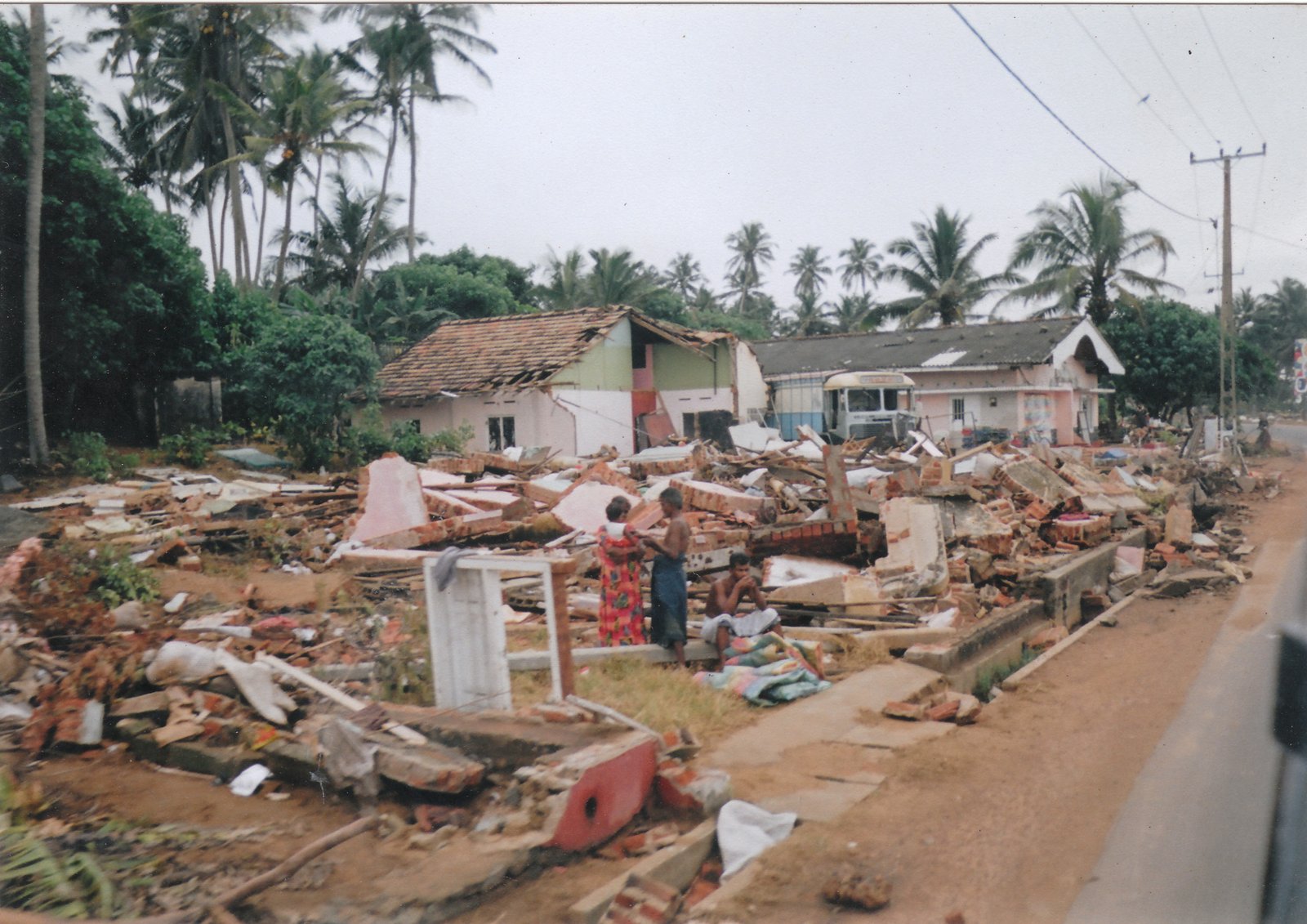

On 26 December 2004, a tsunami triggered by a magnitude 9.1 earthquake off the coast of Sumatra swept across the Indian Ocean, killing more than 35,000 people in Sri Lanka alone. The Community Tsunami Museum in Hikkaduwa was established in direct response to that catastrophe — not only to honour those who were lost, but to ensure the lessons of the disaster are never forgotten. For visitors travelling the southern coastal road, it offers one of the most honest and moving stops on the entire route.
What can you see and experience at the Community Tsunami Museum?
The museum's collection is built around the lived experience of the people who were here when the waves arrived. Exhibits include photographs taken in the immediate aftermath, personal testimonies gathered from survivors, and physical objects recovered from the debris — everyday items that communicate the scale of the destruction more immediately than any statistic can.
A dedicated memorial section displays the names of those who perished in and around Hikkaduwa, giving visitors a space for quiet reflection. This area forms the emotional heart of the museum, and many visitors — including those with no personal connection to Sri Lanka — find it unexpectedly affecting.
Beyond personal testimony, the museum explains the geophysics of tsunamis: how they form, how they propagate across ocean basins, and why coastal communities are uniquely vulnerable. This scientific strand of the exhibition is aimed partly at younger visitors and school groups, grounding the human story in the natural processes behind it.
How does the museum support disaster preparedness?
The Community Tsunami Museum goes beyond archiving the past. It actively hosts workshops and seminars on disaster risk reduction, drawing participants from local schools, community organisations, and occasionally from international development bodies. The curriculum covers early-warning systems, evacuation procedures, and the kind of community-level planning that can reduce casualties when future events occur.
This commitment to practical education reflects a broader shift in how Sri Lankan coastal communities have approached disaster resilience since 2004. The museum is part of that shift rather than merely a monument to it.
Where is the Community Tsunami Museum, and how do I get there?
The museum is located in Hikkaduwa, a coastal town on Sri Lanka's southwestern shoreline roughly 100 km south of Colombo along the Galle Road. Hikkaduwa is well served by the coastal railway line — trains run regularly from Colombo Fort station, and the journey takes around two to two-and-a-half hours depending on the service. Tuk-tuks and three-wheelers are readily available from Hikkaduwa station for the short onward transfer.
If you are driving from Colombo, the Southern Expressway (E01) to Pinnaduwa followed by the coastal road brings you to Hikkaduwa in roughly 90 minutes under normal traffic conditions. The town also sits conveniently between Galle and the wider southern coast, making it a natural stop on a Galle city tour itinerary.
Is the Community Tsunami Museum suitable for families and children?
The museum is appropriate for older children and teenagers, particularly those with an interest in history, geography, or environmental science. Some of the photographic content is graphic and may not be suitable for younger children — parents should exercise their own judgement. Staff at the museum are generally accustomed to guiding school groups and can adapt the experience for different age ranges on request.
For families, the museum works well when paired with other Hikkaduwa attractions. The town is well known for its coral reef, and the Hikkaduwa Turtle Hatchery nearby offers a gentler, nature-focused experience that contrasts usefully with the museum's more sombre tone.
What else is worth visiting near Hikkaduwa?
Hikkaduwa and the surrounding coastline offer a range of experiences that complement a visit to the museum.
- Hikkaduwa Coral Reef: One of Sri Lanka's most accessible reef snorkelling sites, with glass-bottomed boats available for non-swimmers.
- Hikkaduwa Turtle Hatchery: A conservation project protecting five species of sea turtle that nest on the southern coast.
- Madu Ganga: A short drive north brings you to the Madu River Safari, a mangrove estuary system rich in birdlife and cinnamon island plantations.
- Galle Fort: Roughly 20 km south, the Dutch-colonial Galle Fort is a UNESCO World Heritage Site and one of the best-preserved fortifications in Asia.
- Kosgoda Sea Turtle Conservation Project: Further north along the coast, the Kosgoda Sea Turtle Conservation Project offers a deeper look at marine conservation efforts on the southern coast.
What is the broader significance of the museum for Sri Lanka?
The 2004 tsunami reshaped Sri Lanka's southern and eastern coastlines and left an imprint on an entire generation. In Hikkaduwa, where the waves caused widespread destruction to homes, guesthouses, and the railway line, the recovery was long and uneven. The museum emerged partly from community need — a local desire to process collective trauma and to assert that what happened here would be remembered with dignity.
In that sense, the Community Tsunami Museum belongs to a tradition of community-led memorialisation that gives local people agency over how their history is told. It also serves as a reminder that natural disasters in the Indian Ocean region carry a risk that remains very real: the geological conditions that produced the 2004 event have not changed, and preparedness remains an ongoing necessity rather than a historical footnote.
For international visitors, the museum offers a perspective on Sri Lanka that goes beyond the country's temples, wildlife, and coastline — a glimpse into resilience, community, and the ongoing work of rebuilding meaning after catastrophic loss.
Nearby places
12 places within about 25 km, nearest first.
- Hikka Festunder 1 km
- Hikkaduwa Boat Rideunder 1 km
- Hikkaduwa Railway Stationunder 1 km
- Kumarakandaunder 1 km
- Hikkaduwa Turtle Hatcheryunder 1 km
- Hikkaduwa Cityunder 1 km
- Coral Sanctuaryunder 1 km
- Hikkaduwa National Parkunder 1 km
- Kumarakanda Railway Station1 km
- Dodanduwa Railway Station3 km
- Gonapinuwala City4 km
- Moragalla Estate6 km


