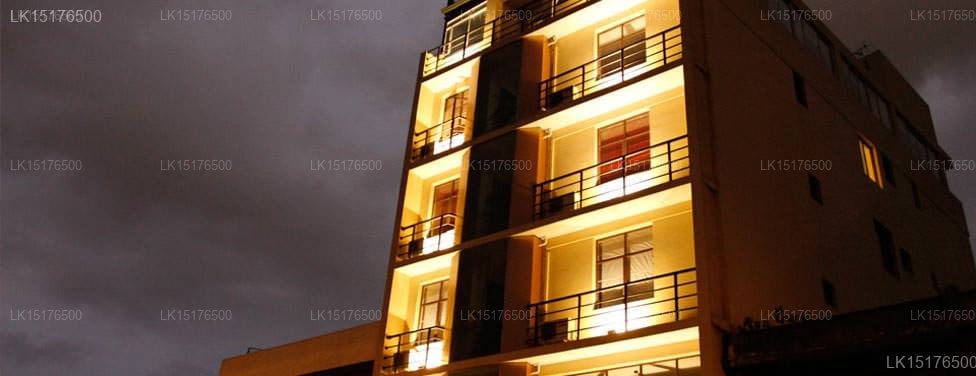
Colombo Port Cruise Terminal sits at the edge of one of South Asia's busiest deep-water harbours, placing arriving cruise passengers within easy reach of a capital city that rewards even a few hours of exploration. The terminal is operated under the authority of the Sri Lanka Ports Authority (SLPA) and is equipped to receive large international cruise liners on both transit and turnaround calls. From the moment you step ashore, the combination of efficient port infrastructure and the city's compact layout makes Colombo an unusually approachable port of call.
What facilities does Colombo Port Cruise Terminal offer?
The terminal building provides a comfortable environment for disembarkation and re-embarkation. Key amenities include air-conditioned waiting lounges, baggage handling and storage services, customs and immigration desks, and duty-free retail. Currency exchange counters and information desks staffed with English-speaking officers are typically available on arrival days. Wi-Fi connectivity is available within the terminal building.
Security at the terminal operates in accordance with the International Ship and Port Facility Security (ISPS) Code. Colombo Port holds a current ISPS Statement of Compliance covering all cargo-handling terminals, ship-repair facilities, and ancillary service areas — a requirement that applies to all passenger vessels calling at the port.
Where exactly is the terminal located?
The cruise terminal is positioned within the main Colombo Port complex on the western seafront of the city, close to the Fort district. The port's two-way navigation channel runs at a maintained depth of around 20 metres, making it accessible to modern large-class cruise ships without lightering. The broader port covers roughly 184 hectares in its original area, with a further 285-hectare South Harbour development that added significant capacity from 2008 onward.
Fort and Pettah — Colombo's commercial and historic core — are only a short drive from the terminal gates, and the broader city spreads inland from there. Traffic in central Colombo can be dense during morning and evening rush hours, so timing shore excursions to avoid those windows is worthwhile.
What can cruise passengers do in Colombo on a port day?
A single day in Colombo is enough time to cover the highlights if you plan efficiently. The Colombo City Tour typically takes in the Dutch-era architecture of Fort, the bustling Pettah market, the Gangaramaya Temple, and the Galle Face Green promenade overlooking the Indian Ocean. The Colombo Lotus Tower, the tallest self-supported structure in South Asia, is a worthwhile addition for those with more time.
- History and architecture: Fort district colonial buildings, Wolvendaal Church, Old Parliament
- Religion and culture: Gangaramaya Temple, Kelaniya Raja Maha Viharaya, Jami Ul-Alfar Mosque
- Shopping: Pettah market for spices and textiles; Colombo 3 and 7 for modern retail
- Food: Sri Lankan rice-and-curry, kottu roti, and fresh seafood are available across all price ranges
- Waterfront: Galle Face Green for a leisurely walk and street food
Passengers with a full day and an interest in wildlife sometimes arrange a round-trip to Wilpattu National Park, roughly two hours north of the city, though this works better as part of a multi-day itinerary than a single port day.
How do I get from the cruise terminal into the city?
Several transport options are available immediately outside the terminal gates.
| Option | Approx. journey to Fort/Pettah | Notes |
|---|---|---|
| Pre-booked private car | 10–20 min | Recommended for groups or families; driver waits during the day |
| Metered taxi / ride-hailing | 10–25 min | PickMe and Uber operate in Colombo |
| Tuk-tuk | 15–30 min | Agree fare before departure; best for short hops in Fort/Pettah |
| Shore-excursion coach | Varies | Organised through cruise line or a local DMC |
Private car hire through a local driver or DMC offers the most flexibility, particularly if you want to combine city sightseeing with a stop at a suburb or satellite attraction.
Can I take a day trip from Colombo to other parts of Sri Lanka?
Yes, though realistic distance matters. Destinations within roughly 100 km of the port are comfortably doable on a port day with an early start.
- Negombo (around 35 km north) — colonial canal town, fish market, Dutch Fort, and beach strip. A Negombo City Tour pairs well with a port call.
- Galle (around 120 km south) — the Dutch-era fortified city on the southern coast is a stretch for a single port day but possible with a pre-arranged private car. A Galle City Tour covers the fort walls, lighthouse, and old-town lanes.
- Madu River / Bentota (around 65 km south) — the Madu River Safari through mangrove-island waterways is a popular half-day excursion accessible from the coastal highway.
- Kandy (around 115 km inland) — feasible as a long day trip; a Kandy City Tour covers the Temple of the Tooth and the Kandy Lake.
For turnaround passengers who are beginning or ending a cruise in Colombo, the port's location also makes it easy to continue into a longer Sri Lanka itinerary covering the cultural triangle, the hill country, or the southern coast.
What should I know about the port's maritime infrastructure?
Colombo Port is the primary maritime gateway for Sri Lanka and one of the leading transshipment hubs in South Asia. Its main container terminals include the Jaya Container Terminal, East Container Terminal, South Asia Gateway Terminal, Colombo International Container Terminal (CICT), West Container Terminal, and Unity Container Terminal. The CICT, in the South Harbour, was developed on a Build-Operate-Transfer basis and significantly expanded the port's annual throughput capacity. For cruise passengers, these commercial operations run parallel to passenger movements and do not affect the terminal experience.
The port's UN/LOCODE is LKTRR, and it operates on UTC +5:30 — the same time zone as the rest of Sri Lanka.
Is Colombo a good starting or ending point for a Sri Lanka tour?
For turnaround cruise passengers, Colombo's position on the western coast and its international airport (Bandaranaike International Airport, approximately 30 km north in Katunayake) make it a logical hub. Those arriving by sea and departing by air — or vice versa — can cover a meaningful slice of the island between embarkation and disembarkation. The Sinharaja Forest Reserve, the hill-country town of Ella, and the ancient city of Polonnaruwa are all accessible within a multi-day post-cruise extension.
Lakpura specialises in planning these pre- and post-cruise land programmes, combining private transfers, guided tours, and curated accommodation to make the most of the time between your ship's schedule and your flight home.
Nearby places
10 places within about 25 km, nearest first.
- Colombo Seaport Entrancesunder 1 km
- Colombo Seaportunder 1 km
- Colombo Harbourunder 1 km
- St Anthony's Church1 km
- Sambodhi Chaithya1 km
- Pettah Bazaar2 km
- Pettah Floating Market2 km
- Red Mosque2 km
- Crow Island2 km
- Alawathupitiya City11 km
Related reading
4 pages on closely related subjects.