


Chundikulam National Park sits at the northeastern tip of Sri Lanka's Jaffna Peninsula, approximately 12 km north-east of Kilinochchi. Declared a national park in 2010, it encompasses a mosaic of lagoons, scrub forest, sand dunes, and coastal wetlands that together form one of the island's most ecologically significant yet least-visited protected areas. Because the region was largely inaccessible during the civil conflict years, its landscapes have remained remarkably intact — a quality that makes Chundikulam especially rewarding for travellers willing to venture beyond the well-trodden circuit.
What makes Chundikulam National Park special?
The park's defining feature is the Chundikkulam Lagoon, a broad, shallow body of water edged by mangroves and tidal mudflats. These habitats attract an exceptional variety of waterbirds, and the park has earned a reputation as one of Sri Lanka's premier birdwatching destinations — comparable in avian richness to better-known sites like Wilpattu National Park, though far quieter and less commercialised.
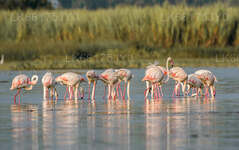
Flamingos gather here in notable numbers during the northern winter, alongside painted storks, spot-billed pelicans, spoonbills, and dozens of wader species that migrate from Central Asia and Europe. The park's relative isolation means wildlife encounters feel unhurried and genuinely wild.
What birds can you see at Chundikulam?
Chundikulam is estimated to host well over 150 bird species across resident and migratory populations. Key species include:
- Greater and Lesser Flamingo — present in large flocks during the northern winter months
- Painted Stork and Asian Openbill
- Spot-billed Pelican
- Eurasian Spoonbill
- Black-tailed Godwit, Curlew Sandpiper, and other Palearctic waders
- Lesser Adjutant Stork — a globally vulnerable species
- Indian Cormorant and Little Cormorant
- Various kingfisher, heron, and egret species year-round
Resident species include the endemic Sri Lanka Junglefowl, Grey-headed Fish Eagle, and Sirkeer Malkoha. The dry scrub forest patches within the park also harbour Indian Peafowl and several species of bee-eater.
When is the best time to visit Chundikulam?
The peak season for birdwatching runs from November through March, when migratory species from the Palearctic region are present alongside resident birds. Flamingo numbers tend to peak between December and February. The weather during this period is generally dry and manageable in the north, though the inter-monsoon months of October and April can bring sporadic rain.
Visiting between May and September remains possible and allows sightings of resident species without the more popular winter crowds, though migratory bird numbers are lower. Early morning visits to the lagoon edges consistently produce the best sightings regardless of season.
What wildlife besides birds lives in Chundikulam?
The park supports a broader range of wildlife beyond its celebrated birdlife. Sri Lankan Spotted Deer and Wild Boar are commonly seen at forest margins. Saltwater Crocodiles inhabit the lagoon channels — quiet observation from a boat or the bank is the recommended approach. The coastal strips occasionally shelter Indian Ocean marine life, and the scrub forest provides habitat for various reptile species including monitor lizards and land monitors.
While elephant sightings are not guaranteed at Chundikulam as they might be further south, the Northern Province's wildlife corridors do allow occasional movement of elephants into the region.
How do I get to Chundikulam from Colombo?
Chundikulam lies in the Kilinochchi District of the Northern Province, roughly 320–340 km north of Colombo by road. The most practical route follows the A9 highway — commonly known as the Kandy Road — northward through Vavuniya and Kilinochchi before continuing toward the park boundary. Expect a drive of around six to seven hours from Colombo, depending on road conditions and stops.
Alternatively, domestic flights connect Colombo's Ratmalana Airport to Palaly Airport near Jaffna, reducing travel time considerably. From Jaffna, the park is accessible in under two hours by road heading south-east. Given the remoteness of the area, hiring a private vehicle with a driver-guide familiar with the Northern Province is strongly advisable.
Where is Chundikulam located within the Northern Province?
The Northern Province occupies the island's northernmost tip and is the closest part of Sri Lanka to India — just around 35 km from the Indian coastline at its nearest point. The province is flanked by the Palk Strait to the north, the Gulf of Mannar to the west, and the Bay of Bengal to the east. Chundikulam sits within Kilinochchi District, which neighbours Mullaitivu District to the east and Vavuniya District to the south.
The province's landscape is characterised by flat terrain, extensive lagoon systems, and dry-zone vegetation. The capital, Jaffna, is the largest city and the logical base for exploring the northern reaches including Chundikulam. Kilinochchi itself — the nearest significant town to the park — serves as the administrative centre for the district and sits on the A9 road, around 100 km south-east of Jaffna.
Is Chundikulam suitable for independent travel?
The park's remote location and limited infrastructure mean independent travel requires careful planning. There are no formal visitor centres or well-signed entry points comparable to more established national parks in the south and centre of the island. Accommodation options near the park itself are sparse; most visitors base themselves in Jaffna or Kilinochchi and travel to the park for day visits.
A local guide with knowledge of the lagoon access points and bird behaviour patterns makes a significant difference to the quality of the experience. Boat access to the lagoon edges often yields far better sightings than land-based observation alone. Carrying drinking water, sun protection, and insect repellent is essential given the exposed coastal terrain.
What is the wider context of the Kilinochchi region?
Kilinochchi District has a predominantly Sri Lankan Tamil population and carries deep historical significance from the decades-long civil conflict that ended in 2009. Visiting the region today offers travellers a chance to engage with a part of Sri Lanka that is rebuilding and reopening — culturally distinct, historically layered, and genuinely welcoming to respectful visitors.
The district's agricultural heritage is evident in its major irrigation tanks, including the Iranamadu Tank, which has supported paddy cultivation and other farming for centuries. The Northern Province as a whole is home to important lagoon ecosystems, with Chundikkulam Lagoon among the largest alongside Jaffna Lagoon, Nanthi Kadal, and Kokkilai Lagoon. These interconnected wetlands form part of a broader ecological network of national importance.
Nearby places
8 places within about 25 km, nearest first.
