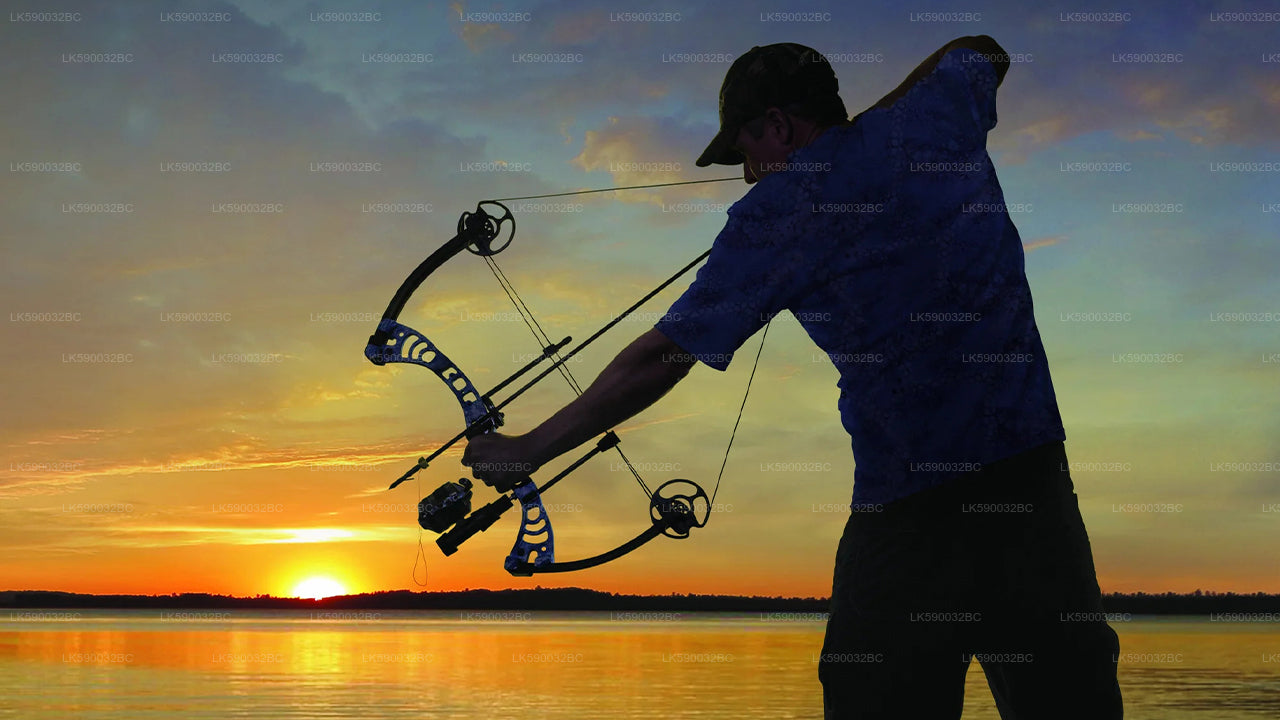
Bowfishing sits at the crossroads of archery and angling — a fast-moving, skill-intensive activity that replaces the patient wait of conventional fishing with quick reflexes and sharp aim. Practitioners use purpose-built bows fitted with heavy-duty reels and barbed arrows to target fish in shallow, visible water. The moment a fish breaks the surface or drifts within range, the window to shoot is brief, which is precisely what draws enthusiasts back again and again.
How does bowfishing work?
The setup differs substantially from rod-and-reel fishing. A bowfishing bow — often a recurve or a compound adapted for wet conditions — is rigged with a specialised reel mounted near the grip. The reel holds heavy braided line attached to a barbed arrow; once the arrow strikes a fish, the barbs hold it in place while the angler retrieves the line. Because light refracts as it passes through water, bowfishers must aim lower than the apparent position of the fish — a counterintuitive skill that takes practice to internalise.
Shots are generally taken at close range in water no deeper than a few metres. Clear, calm conditions make fish easier to spot, so many participants use boats fitted with powerful LED lights to work after dark, when fish move into the shallows and the illuminated water offers excellent visibility.
What fish species are typically targeted?
Bowfishing is most commonly directed at species that are either invasive, over-abundant, or commercially undervalued — categories that make the activity ecologically defensible. Common targets worldwide include:
- Common carp — an invasive species in many freshwater systems that displaces native fish and degrades water quality
- Asian carp (bighead and silver carp) — fast-breeding species whose populations can overwhelm native aquatic communities
- Gar — a prehistoric-looking predator targeted in North American rivers
- Tilapia — widespread in tropical and subtropical waters, including Sri Lanka's reservoirs and lagoons
In Sri Lanka's freshwater environments — tanks, rivers, and lagoons — tilapia and common carp are the species most likely to be encountered on a bowfishing outing. Both are non-native, and their removal contributes to healthier native fish communities.
Where can you try bowfishing in Sri Lanka?
Sri Lanka's geography makes it a workable destination for bowfishing. Shallow coastal lagoons, ancient irrigation tanks in the dry zone, and slow-moving lowland rivers all hold fish at accessible depths. Bolgoda Lake, a large brackish-water lagoon south of Colombo, is among the more accessible venues — calm water, good fish density, and road connections to the capital make it a practical starting point for visitors. Participants there can typically combine conventional deep sea fishing with a bowfishing session in the same day, making the most of a single coastal outing.
The mangrove-fringed waterways of the southwest coast also offer suitable habitat. The tidal channels around Balapitiya and Bentota remain shallow enough at low tide to spot fish from a flat-bottomed boat, and the biodiversity of these estuaries — also home to monitor lizards and water birds — adds a wildlife dimension to the experience.
Is bowfishing good for the environment?
When conducted on invasive or over-abundant species, bowfishing provides a measurable conservation benefit. Invasive carp, for example, uproot aquatic vegetation, increase turbidity, and reduce oxygen levels — changes that hurt native fish and waterbirds that depend on clear water. Selective removal through bowfishing addresses this pressure without the use of chemicals or nets that can cause broader ecological disturbance.
Responsible practitioners follow a straightforward principle: nothing goes to waste. Fish that are unsuitable for direct human consumption can be used as agricultural fertiliser or composted. Some species — tilapia in particular — are perfectly edible and are used in local cuisine when harvested in clean water.
What equipment do beginners need?
First-time participants do not need to arrive with their own gear. Guided outings typically supply a bowfishing-specific bow, arrows, a retrieval reel, and any necessary safety equipment. That said, understanding the basics before you go helps:
- Bow type: recurve bows are simpler to handle for newcomers; compound bows offer more consistent draw weight and are preferred by regular bowfishers
- Polarised sunglasses: essential for cutting surface glare during daytime sessions
- Footwear: closed-toe shoes or water shoes if wading is involved
- Light clothing: Sri Lanka's humidity makes breathable fabrics important on any outdoor activity
Archery experience is helpful but not required. Guides on structured outings spend time on refraction compensation before you take your first shot at a live target.
How does bowfishing compare to conventional fishing?
| Aspect | Bowfishing | Rod & Reel Fishing |
|---|---|---|
| Pace | Fast — spot, aim, shoot | Slower — bait, wait, retrieve |
| Primary skill | Marksmanship + refraction adjustment | Patience + knowledge of fish behaviour |
| Water depth | Shallow (typically under 2 m) | Any depth |
| Species targeted | Usually invasive or rough fish | Wide range including sport and game fish |
| Entry barrier | Low with guided instruction | Very low |
| Physical activity | Moderate — constant scanning, drawing, wading | Generally low |
When is the best time to go bowfishing in Sri Lanka?
Bowfishing is a year-round activity in Sri Lanka, but conditions vary by region and season. The southwest monsoon (roughly May to September) brings heavy rain and reduced visibility to the western and southern coasts, which can make it harder to spot fish in stirred-up water. The dry season from December through April typically offers the clearest conditions on the southwest coast — calm lagoons, low winds, and good light penetration. On the east coast, the seasons are reversed, with clear conditions more likely from May to September.
Nighttime sessions are possible throughout the year and are often preferred during hotter months, when fish become more active in the shallows after dark. Guides coordinate timing around tidal patterns, which significantly affect fish movement in coastal lagoons.
Is bowfishing suitable for children and first-timers?
Structured guided outings are generally suitable for teenagers and adults who are comfortable on a boat. Younger children can sometimes observe from the vessel, but active participation requires enough upper-body strength to draw a bow repeatedly and sufficient coordination to aim under time pressure. Most operators set a minimum age — typically around 12 years — so it is worth confirming when booking. No prior archery experience is necessary, and briefing sessions are included in guided packages to cover both safety and technique before the session begins.
Related reading
2 pages on closely related subjects.