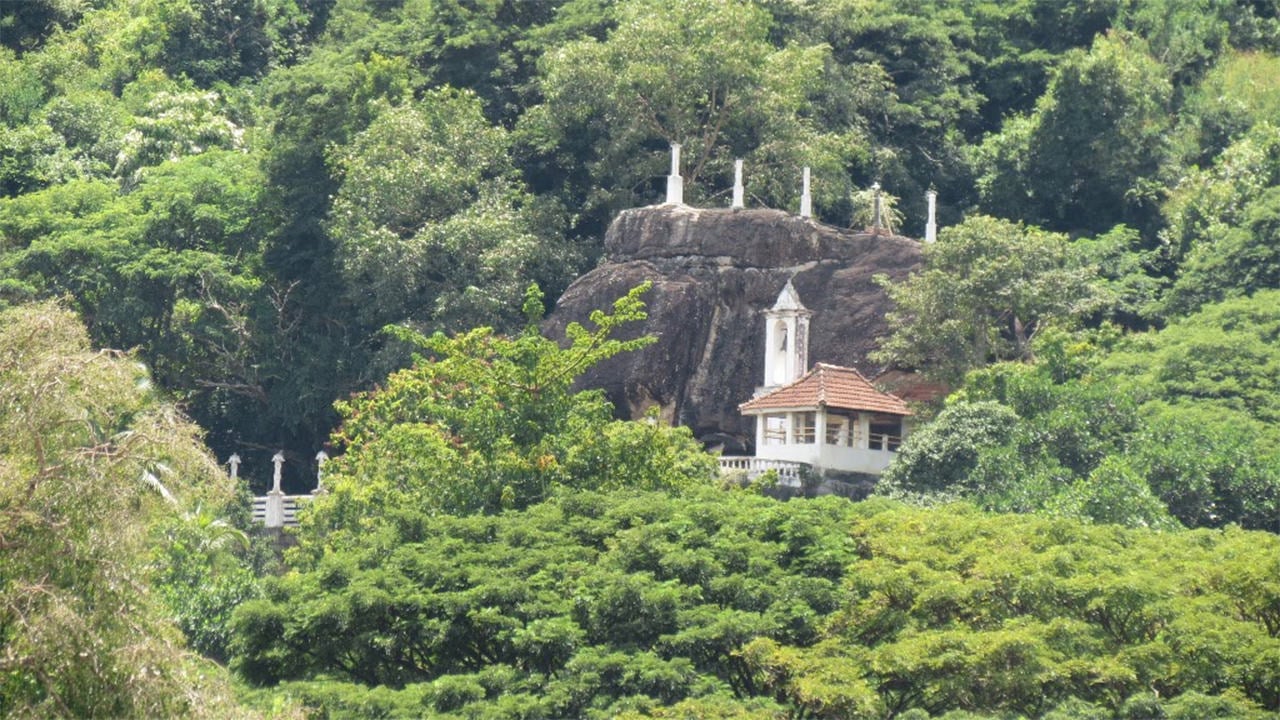

Tucked into the forested hills of Henagahawela village in Teldeniya, the Bambaragala Purana Rajamaha Viharaya sits in the Dumbara valley of central Sri Lanka — cradled between the Victoria reservoir and the Knuckles mountain range. It lacks the visitor numbers of the Sigiriya rock fortress or the Dambulla cave temple, but it rewards those who seek it out with rock-hewn caves, centuries-old murals and a sense of undisturbed antiquity that is increasingly rare.
What makes the Dumbara valley historically significant?
In ancient Sri Lanka, the Dumbara valley was a thriving centre of Buddhist religious life. The landscape was once scattered with Raja Maha Viharas, rock cave hermitages known as Aranne, and countless shrines housing Buddha statues. Many of those sites have been reclaimed by forest or lost to the encroachment of the Victoria reservoir, making the survivors — Bambaragala among them — all the more precious.
Much of what is known about the monastery in the early 19th century comes from the memoirs of Dr John Davy, a British physician who travelled the island around 1817. Davy documented the site in considerable detail during his palanquin tours, and while many of the features he described are still visible, treasure hunters, looters and the passage of time have altered others significantly.
What can you see at Bambaragala Rajamaha Viharaya?
The defining features of the temple are the ancient rock caves — called Lenas — that crown the summit of the rock. Reaching them requires climbing a steep flight of stone steps, a short but demanding ascent that most moderately fit visitors manage without difficulty. Halfway up, you pass the priests' residential quarters (Avasa), which are still in use by the resident monks.
At the top, the Lenas reveal a detail of ancient engineering that is easy to overlook: drip ledges carved precisely into the overhanging rock face. These shallow channels were cut to divert rainwater away from the cave interiors — channelling it, most likely, into collection vessels that supplied the resident monks with drinking water. The care and precision of the carving speak to the long-term planning of the communities that once lived here.
The cave walls carry painted murals that have fared well over centuries. While they do not rival the frescoes of Sigiriya in scale or royal commission, they are historically compelling on their own terms. Many panels depict scenes from the Jataka stories — the previous-life tales of the Bodhisattva — rendered with Buddhist iconographic motifs and decorative cultural details that repay close inspection. The imagery offers a window into the artistic conventions and spiritual preoccupations of the monastic communities that inhabited these caves.
How do I get to Bambaragala Viharaya from Kandy or Colombo?
The temple is approximately 135 kilometres from Colombo. The most practical approach by road is via the Mahiyangana Road: pass through Tennekumbura, continue toward the Victoria Dam, and look for the turn-off near the Victoria Golf Club before heading down the relevant by-roads toward Henagahawela. An older route through the village itself was submerged when the Victoria reservoir was created.
From Kandy, the drive passes through Thalathuoya and Digana — a scenic journey of roughly an hour or more depending on traffic and road conditions. A train to Kandy is a pleasant alternative for the first leg of the journey, though rail does not extend to Teldeniya itself. Budget around 4.5 to 5.5 hours from Colombo if travelling by public bus, or less with a private vehicle. Hiring a car with a driver is the most comfortable option, as the final approach involves narrow by-roads.
Is a guide necessary for the climb?
The final section of the ascent can be disorienting for first-time visitors — the path branches, and the steps are steep and uneven in places. Local guidance is recommended if you are unfamiliar with the route. Resident monks at the temple are generally approachable, and local villagers can point you in the right direction. The climb itself is manageable for most adults, but footwear with grip is advisable. There are no formal visitor facilities or ticketed entry at the site.
When is the best time to visit Bambaragala Viharaya?
The Dumbara valley falls within Sri Lanka's central highlands climate zone. The dry season from roughly January to April tends to offer the most reliable weather for the climb, with clear skies and drier underfoot conditions on the stone steps. The monsoon months — particularly May to September — bring heavier rain, which can make the steep ascent slippery. Early morning visits are worthwhile year-round: the light is better for viewing the cave murals and the temperature is cooler for the climb.
What else is near the temple?
The broader area around Teldeniya and the Victoria reservoir offers several points of interest for travellers who want to extend their visit. The Randenigala Dam is a short drive away, and the Knuckles mountain range — visible from the temple itself — is one of Sri Lanka's UNESCO-listed biodiversity hotspots, with hiking trails and cloud forest ecosystems worth exploring in their own right. The Dumbara valley's traditional paddy terraces (kumbura) are a distinctive feature of the local agricultural landscape and can be seen along the approach roads.
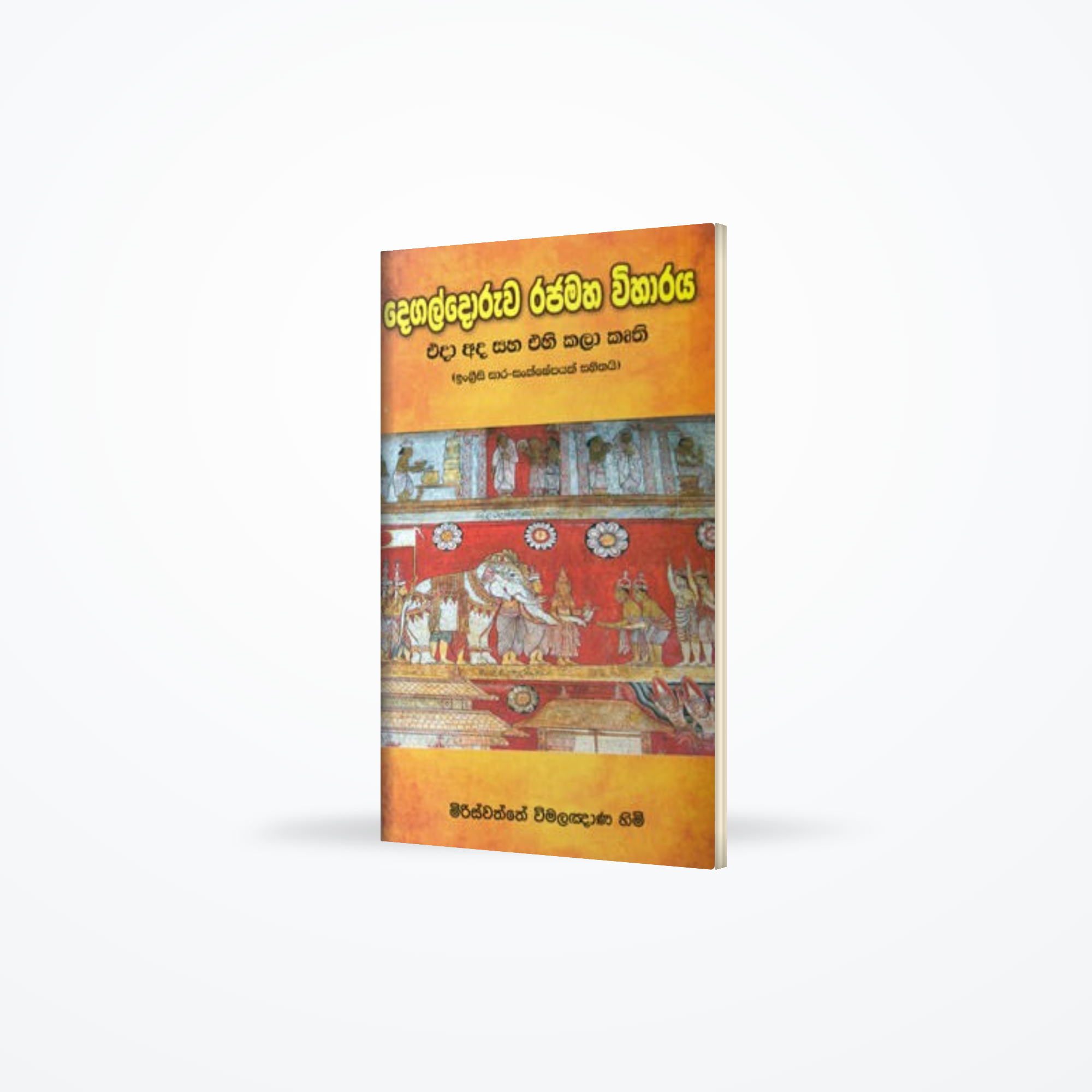
Travellers combining this site with a wider Kandy region itinerary may also consider the Degaldoruwa Rajamaha Viharaya, another cave temple in the area known for its 18th-century Kandyan-style paintings, which makes a natural companion visit before or after Bambaragala.
Practical information at a glance
| Detail | Notes |
|---|---|
| Location | Henagahawela, Teldeniya, Kandy District |
| Distance from Colombo | Around 135 km |
| Distance from Kandy | Typically 30–40 km by road |
| Access route | Via Tennekumbura on the Mahiyangana Road toward Victoria Dam |
| Entry fee | No ticketed entry (donations to the temple are customary) |
| Best visited | January to April (dry season); early morning preferred |
| Dress code | Modest clothing required; remove footwear at the shrine |
Nearby places
9 places within about 25 km, nearest first.
- Pettigala Mountainunder 1 km
- Digana2 km
- Watagoda2 km
- Ulapane3 km
- Daha Ata Wanguwa (18 Bends Road)3 km
- Victoria Golf Resort4 km
- Gonawala City6 km
- Hanguranketha Raja maha viharaya7 km
- Hingula Village7 km