
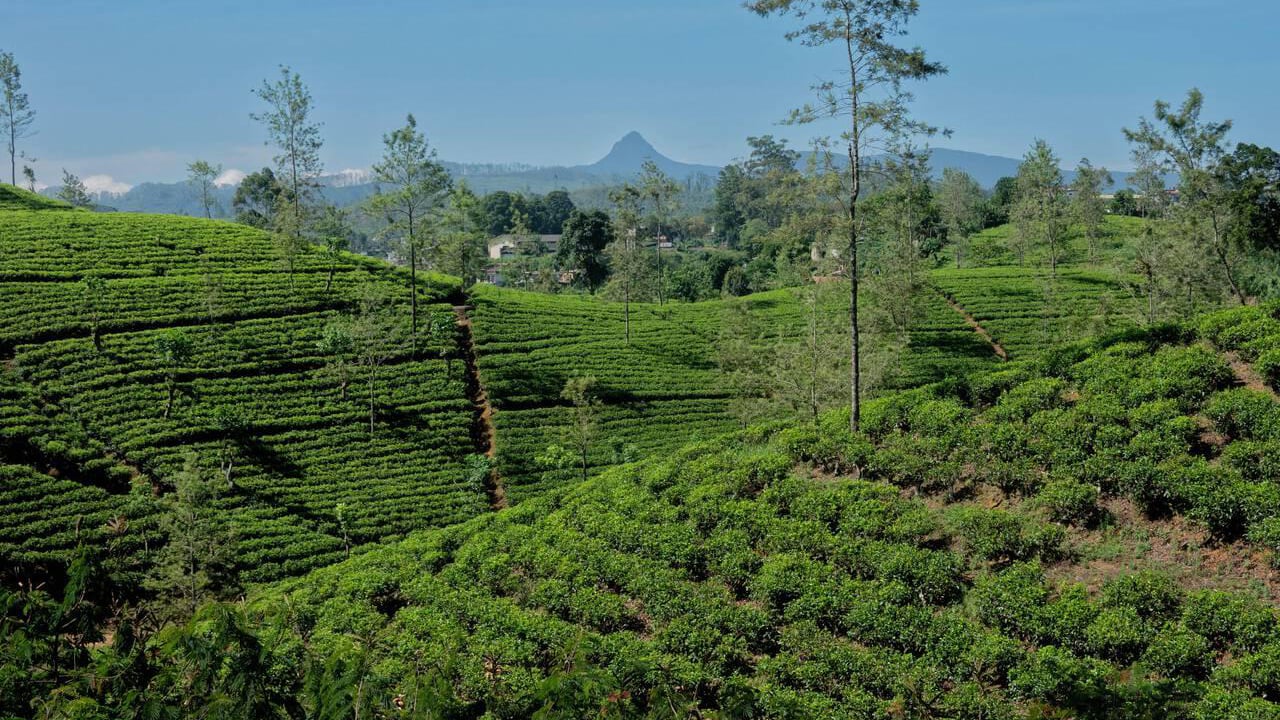

Norwood sits quietly in the Central Highlands of Sri Lanka, tucked between Hatton and Maskeliya in the Nuwara Eliya District. At around 1,000 metres above sea level, the air is cool, the mornings are misty, and almost every hillside is carpeted in the neat rows of tea bushes that have defined this landscape for well over a century. For travellers who want something slower and more contemplative than the mainstream tourist circuit, Norwood rewards the detour.
What makes Norwood worth visiting?
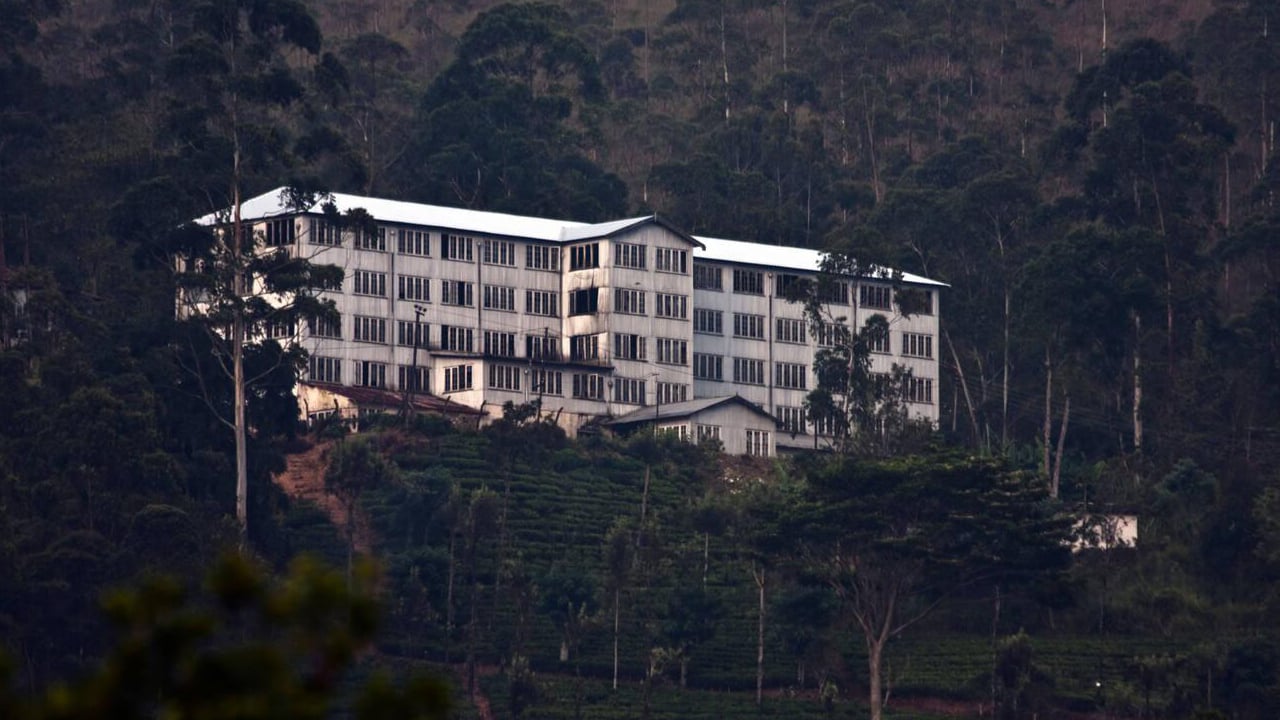
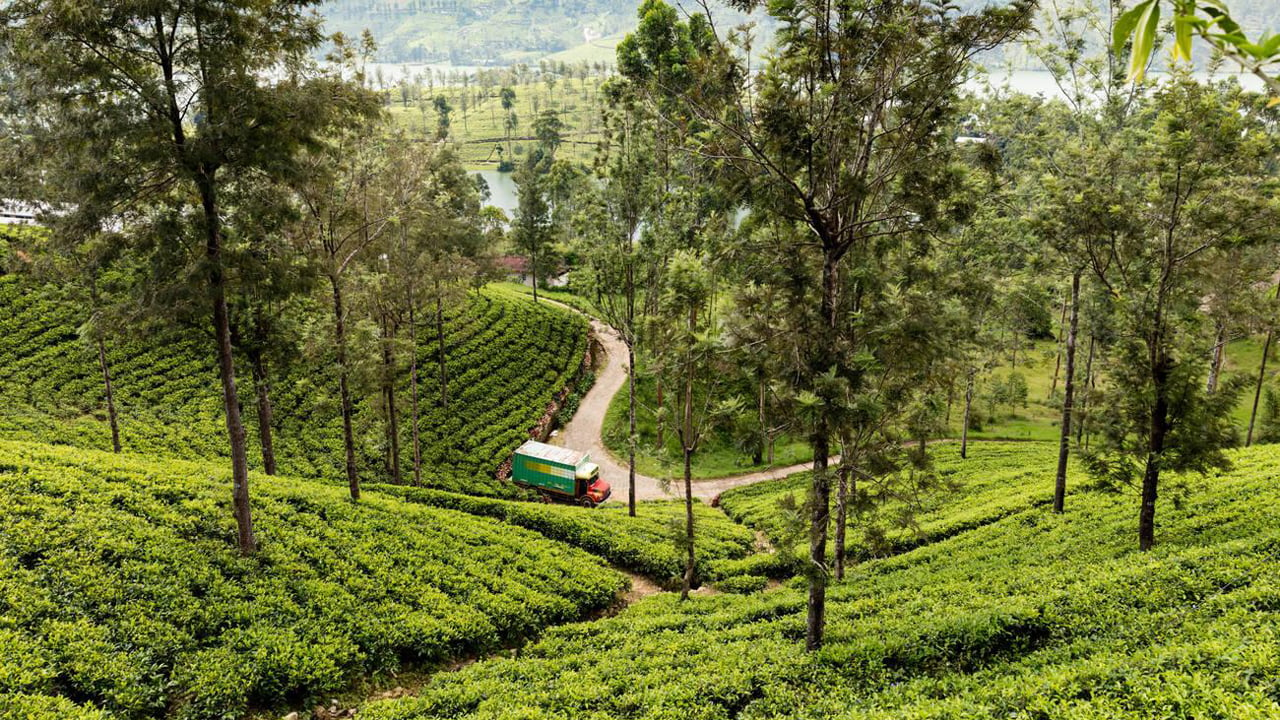
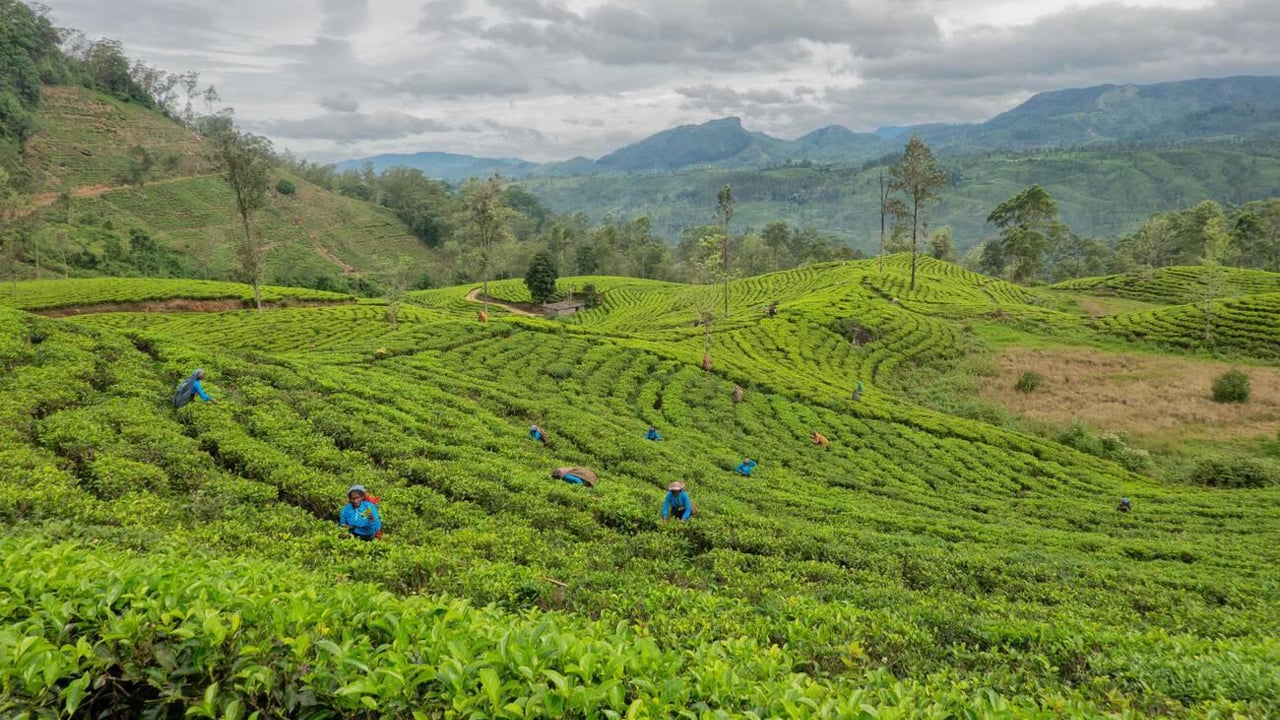
The town is embedded in Sri Lanka's tea heartland, and that is its greatest draw. The estates here operate as working plantations — not heritage museums — so visitors can observe the full arc of Ceylon tea production: Tamil tea-pluckers moving methodically through the bushes at dawn, green leaf arriving at the factory weighing station, and the familiar smell of oxidising leaf drifting from the rolling and drying rooms. Many estate bungalows and small hotels are former colonial plantation manors, which adds a particular atmosphere that larger hill-country towns have largely lost.
Beyond tea, the surrounding countryside offers genuine countryside walking, birdwatching along stream valleys, and uninterrupted views across a horizon of ridges that seem to fold one behind the other into the cloud.
Which tea estates and factories can I visit near Norwood?
The Norwood area falls within the Dimbula tea-growing district, one of the two high-grown appellations recognised by the Sri Lanka Tea Board. Elevations here produce teas with a brisk, light character that is prized in European markets. Several estates in the vicinity offer guided factory visits where visitors can follow Ceylon Tea from the plucking table through withering, rolling, fermentation, and firing. Visits are best arranged in the morning when factories are in full production; most operations slow down or stop entirely by early afternoon.
Some estates also maintain their original colonial-era bungalows as guest accommodation, a quieter alternative to the busier hotel scene in Nuwara Eliya town. Advance booking is essential as room counts are small.
What natural attractions are close to Norwood?
Norwood functions well as a base for several of the Central Highlands' most visited natural sites:
- Castlereagh Reservoir: A large reservoir bordered by tea estates and eucalyptus forest, roughly 15 kilometres from Norwood. It is popular for early-morning walks along the bund and for watching waterbirds. The light on the water just after sunrise is particularly good for photography.
- Devon Falls: One of Sri Lanka's tallest waterfalls, situated near Dickoya on the road towards Hatton. A short path leads to a viewpoint overlooking the single-drop cascade as it falls into the valley below. Access is straightforward by vehicle.
- Adam's Peak (Sri Pada): The sacred mountain that draws pilgrims and hikers from across the world lies roughly 30 kilometres south of Norwood. Most people ascend overnight from Dalhousie to reach the summit at dawn; the trail from Norwood's side of the hills gives good approach views of the peak rising above the plantation ridges. The pilgrimage season runs from December to May.
- Horton Plains National Park: The high plateau of Horton Plains is around 40 kilometres east of Norwood. The park protects montane cloud forest and is home to sambar deer, leopard, and a wide range of endemic birds. The World's End cliff and Baker's Falls are the two most visited features within the park.
How do I get to Norwood from Colombo?
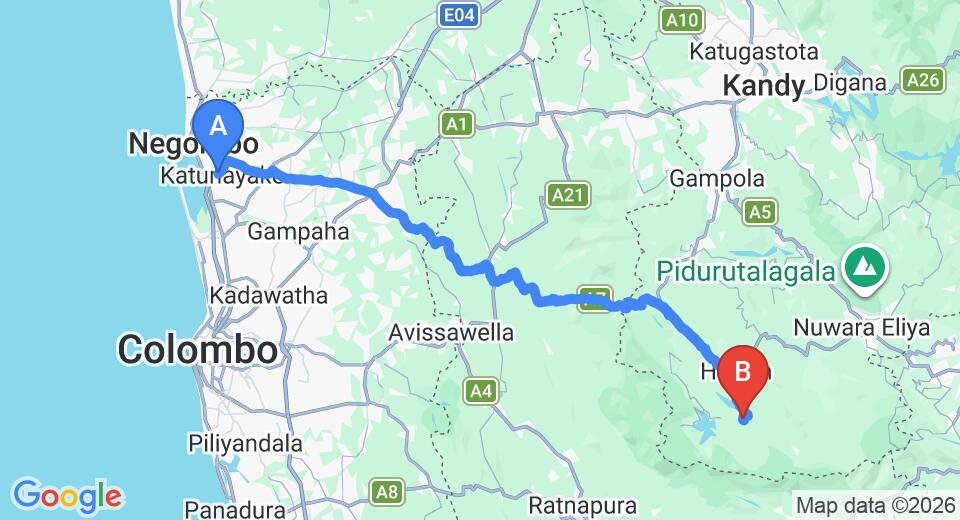
The most comfortable option is a private transfer or self-drive along the A7 highway through Avissawella and Hatton. The drive from Colombo takes around four to five hours depending on traffic, and the road climbs steadily into the highlands after Hatton, offering progressively better scenery. The last stretch from Hatton to Norwood winds through estates and can be narrow in places — a vehicle with reasonable ground clearance is preferable.
By rail, the Colombo to Badulla line stops at Hatton, from where Norwood is about 12 kilometres by road. The hill-country train journey itself is widely considered one of the finest rail routes in Asia, particularly the section between Hatton and Haputale. Seats in the observation saloon (Class 1) should be booked well in advance, especially during school holidays and the December–January peak season.
When is the best time to visit Norwood?
The Central Highlands experience two monsoon seasons, and Norwood sits in a position that receives rainfall from both. The driest and most settled weather tends to fall between January and April, when skies clear enough to give long views across the hills and the risk of prolonged rain is lowest. December can be cool and clear at the start of the month before the northeast monsoon influence increases.
The tea bushes flush most vigorously after periods of rain, so visitors interested in seeing active plucking will find the estates particularly busy in the wetter months. The trade-off is that mountain views and walking conditions are less reliable. For a balance of walkable weather and active factories, late January through March is generally the most dependable window.
What should I know about accommodation in Norwood?
The accommodation landscape in Norwood is intentionally small-scale. Estate bungalows converted into boutique properties are the most characterful option, typically offering a handful of rooms, all-inclusive meal plans using produce from the estate kitchen gardens, and a level of quiet that is genuinely hard to find elsewhere in the hill country. There are also smaller guesthouses in and around the town itself for travellers on tighter budgets.
The larger hotel infrastructure of Nuwara Eliya — including grand colonial-era properties such as The Grand Hotel — is around 30 kilometres away and can serve as an alternative base if a wider range of facilities is needed.
What wildlife can I see around Norwood?
The tea estates and the forest patches between them support a reasonable range of highland wildlife. The Sri Lanka leopard is present in the surrounding hills, though sightings in plantation areas are uncommon. More reliably seen are sambar deer at dusk on estate roads, giant squirrels in the taller trees, and a variety of endemic birds including the Sri Lanka white-eye, dull-blue flycatcher, and yellow-eared bulbul. The stream valleys that cut through the estates are worth checking for kingfishers and various warblers.
For more concentrated wildlife viewing, Sinharaja Forest Reserve — Sri Lanka's largest remaining lowland rainforest and a UNESCO World Heritage Site — lies roughly 50 kilometres south of the Norwood area and is reachable as a day trip with an early start.
Are there walking and hiking routes from Norwood?
Walking in the Norwood area is largely informal rather than trail-mapped. Estate roads provide safe, traffic-light routes through the plantations, and the management of most estates does not object to guests walking through the bushes during plucking hours. Some properties arrange guided walks with estate staff who can explain the cultivation cycle, identify birds, and point out the medicinal plants that grow along the estate margins.
More serious hikers can combine a Norwood base with the Adam's Peak ascent (best done independently with a local guide) or with sections of the hiking routes in and around Horton Plains. Both require an early start and appropriate footwear; the paths can be muddy after rain at any time of year.