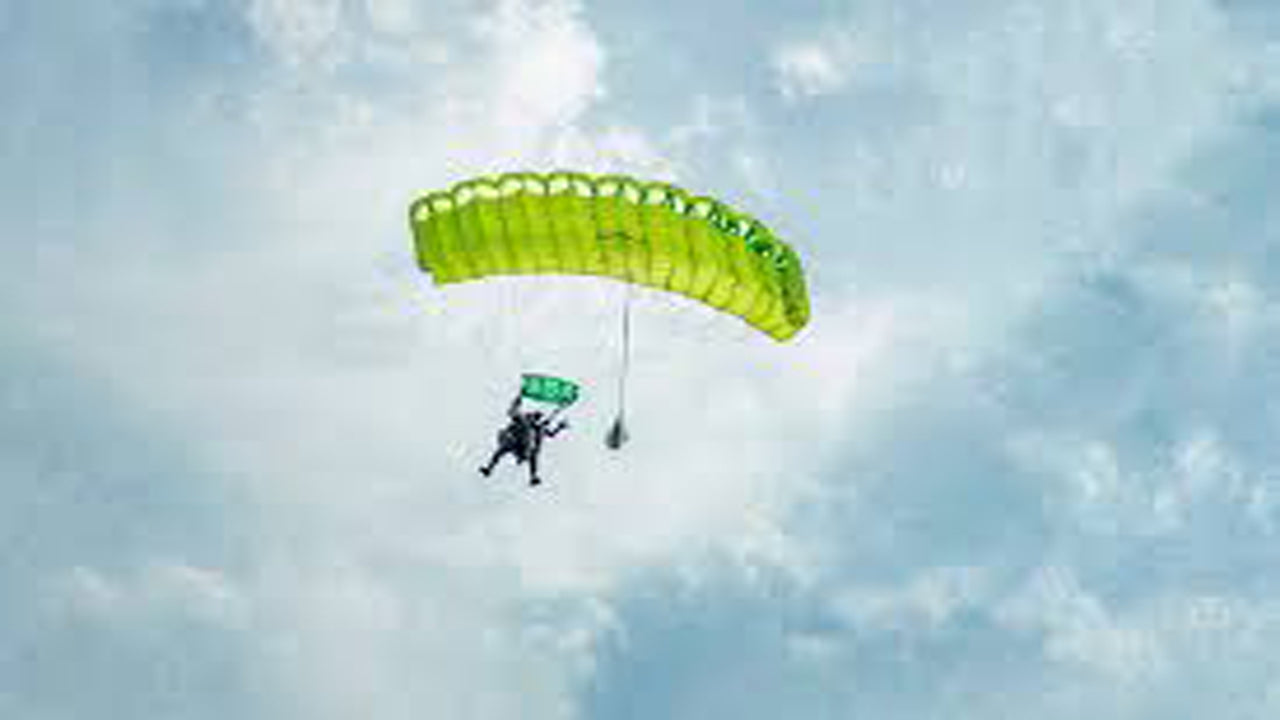
Skydiving is one of the few travel experiences that genuinely defies description until you have done it. You exit an aircraft at altitude, freefall at around 120 mph, and then drift under canopy over a landscape that — depending on where you jump — might include coastline, lagoons, paddy fields, or jungle. In Sri Lanka, that view is particularly rewarding, and the country has become an increasingly credible destination for first-time jumpers as well as experienced skydivers seeking a tropical setting.
What exactly happens during a skydive?
A standard recreational skydive unfolds in three stages: the aircraft ascent, the freefall, and the canopy ride to landing.
- Ascent: You board a light aircraft and climb to a jump altitude that typically ranges from around 10,000 to 14,000 feet above ground level. The ride up takes around 15–20 minutes and is a good moment to take in the terrain below and settle your nerves.
- Freefall: After exiting the aircraft, gravity accelerates you to roughly 120 mph (around 193 km/h) within the first ten seconds. Freefall from 14,000 feet lasts approximately 60 seconds — long enough to feel genuinely weightless rather than simply alarmed.
- Canopy ride: The parachute deploys at around 2,000–3,000 feet (roughly 600–900 metres). The transition from freefall to canopy is immediate: the noise drops away, your descent slows dramatically, and you have several quiet minutes to steer toward the landing zone and appreciate the view.
- Landing: A standard landing involves lifting your legs slightly and letting the parachute bleed off the remaining speed as you touch down. On a tandem jump, the instructor handles the flare and landing technique.
What is the difference between tandem and solo skydiving?
The two main formats available to recreational jumpers are tandem skydiving and solo skydiving, and the distinction matters when you are planning your first jump.
Tandem skydiving is the standard entry point for beginners. You are connected via a harness to a qualified instructor who manages every technical element of the jump — aircraft exit, body position during freefall, parachute deployment, and landing. You require no prior training beyond a ground briefing that typically lasts around 30 minutes. The instructor guides you through the entire sequence, which means the jump is as much a sensory experience as a technical one.
Solo skydiving requires completing a structured training programme before you jump independently. The most widely used pathway is the Accelerated Freefall (AFF) course, an eight-level programme in which you progressively take on more responsibility for your own body position, altitude awareness, and parachute deployment, while qualified instructors jump alongside you in the early levels. Solo certification typically requires a minimum number of successful jumps and a written knowledge assessment.
How safe is skydiving?
Skydiving is a regulated sport with a well-documented safety record when operations follow established standards. Reputable drop zones inspect equipment on a rigorous schedule, and all gear used in tandem operations carries a reserve parachute and an Automatic Activation Device (AAD) — a computer that deploys the reserve if it detects the jumper is still in freefall below a set altitude threshold.
Tandem instructors are certified through national or internationally recognised bodies and are required to maintain current qualifications and a minimum jump count. First-time jumpers are not required to make any decisions during the jump itself — the instructor retains control throughout. As with any adventure sport, the residual risk cannot be reduced to zero, but adherence to safety protocols keeps the statistical risk low.
For solo jumpers, the AFF training programme specifically focuses on emergency procedures: practising reserve deployment, recovering from unstable body positions, and responding correctly to equipment malfunctions. Competency in these areas must be demonstrated before a student progresses to the next level.
What should I expect on the day of my first jump?
Most drop zones follow a broadly similar sequence for tandem first-timers. You arrive at the facility, complete a registration and medical declaration form, and attend a ground briefing with your instructor. The briefing covers the aircraft exit position, how to arch your body correctly during freefall, and what to expect during parachute deployment and landing.
After gearing up — harness, goggles, and sometimes an altimeter — you board the aircraft with your instructor and any other jumpers in the group. The ascent is a good time to ask any remaining questions. At altitude, the door opens and the sequence moves quickly. Most first-time jumpers report that the seconds before exit feel more nerve-wracking than the freefall itself.
After landing, instructors typically debrief you on how the jump went. Many drop zones offer the option of a helmet-mounted camera or a dedicated videographer jumping alongside, so you can review — and share — footage of the experience.
When is the best time to skydive in Sri Lanka?
Weather is the primary variable in any skydiving operation. Jumps are suspended in low cloud, heavy rain, or strong surface winds, so the drier months at a given location offer the most reliable conditions. Sri Lanka has two main monsoon seasons affecting different parts of the island, so the optimal window depends on where your chosen drop zone is located. For the southwest coast — including the area around Bentota — the dry season typically runs from around November through to April, making those months the most consistent for jump operations. Always check current conditions with the operator when booking, as forecasts can shift.
Skydiving at Bentota, Sri Lanka
The coastal setting around Bentota offers one of the more visually rewarding jump locations in the region. Exiting at altitude over the southwest coast, jumpers have a clear aerial view of the Indian Ocean, the Bentota lagoon, and the tree line of the coastal lowlands. The landing zone is typically positioned near the beach, which gives the canopy ride a particularly clear visual reference and a memorable final approach.
Bentota is accessible from Colombo in roughly two hours by road, making it a feasible day trip or a natural extension of a broader itinerary along the southwest coast. The combination of reliable dry-season weather, coastal scenery, and established facilities makes it the primary skydiving hub in Sri Lanka for both local and international visitors.
What fitness level do I need to skydive?
Tandem skydiving does not require a high level of fitness. Most drop zones set an upper weight limit — typically around 100 kg for tandem operations, though this varies by operator — and ask participants to disclose any cardiovascular, respiratory, or musculoskeletal conditions that might be relevant. Age requirements differ by country and operator; in many jurisdictions, jumpers must be at least 18 years old. If you have any doubt about whether a specific medical condition is compatible with jumping, consult both your physician and the operator before booking.