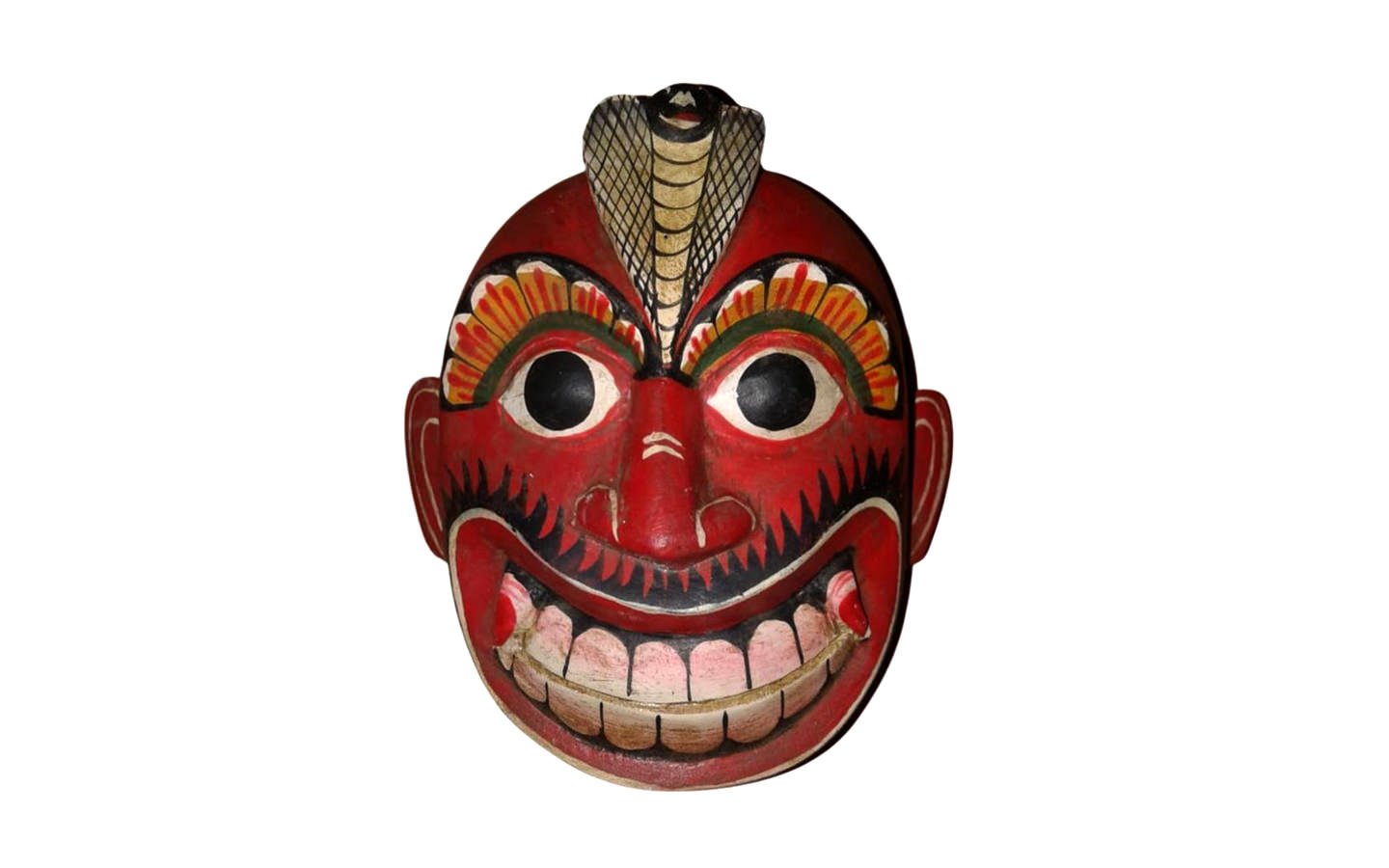
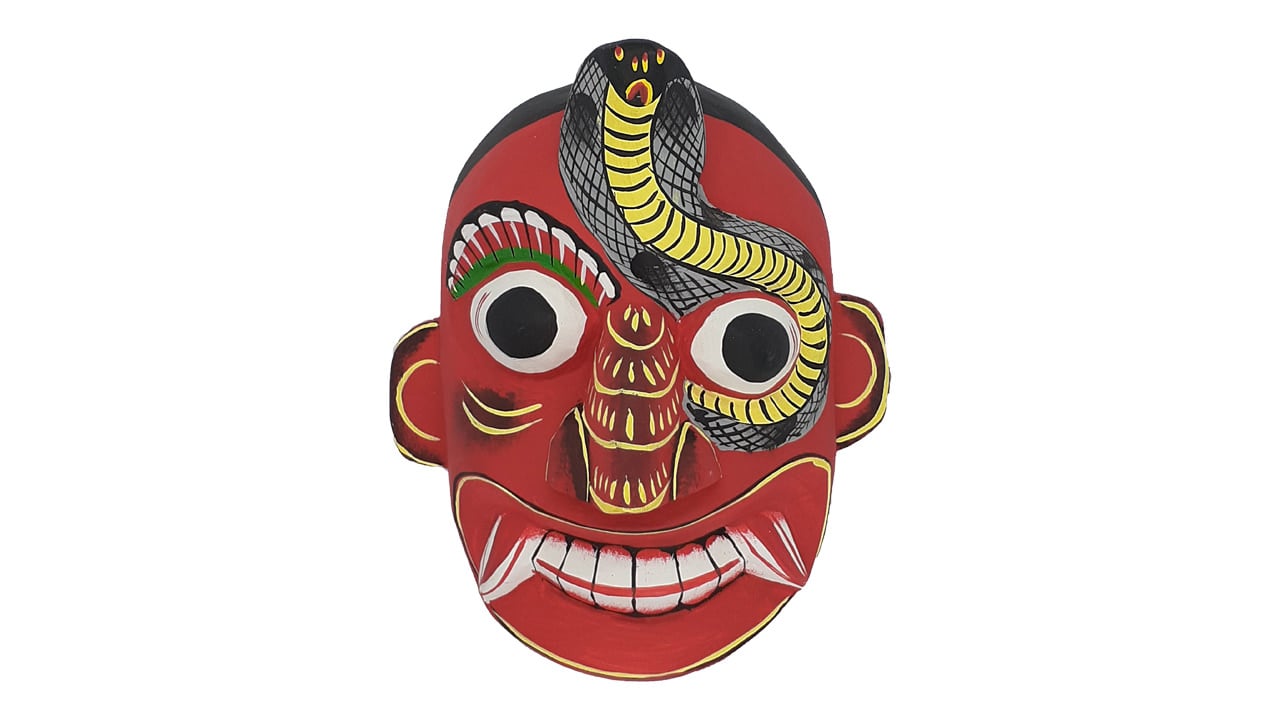

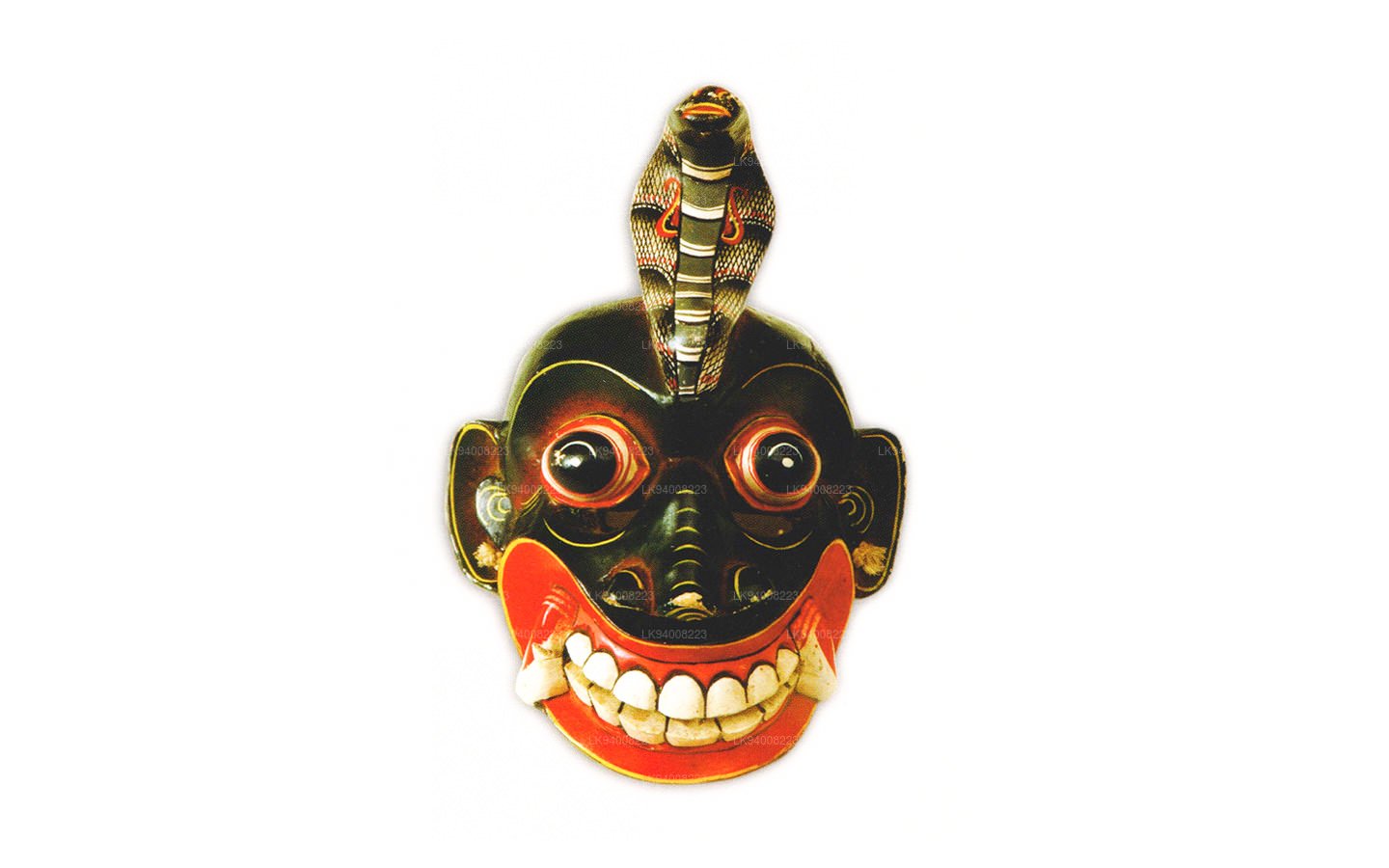


Naga Sanniya is one of the eighteen masks used in Sri Lanka's ancient healing ritual known as Sanni Yakuma — a ceremonial performance designed to diagnose and expel the demons believed to cause specific illnesses. Each mask in the set corresponds to a different malady, and Naga Sanniya is specifically associated with afflictions linked to serpents: disturbing dreams about snakes, skin conditions, and disorders traditionally attributed to the wrath or influence of naga (serpent) spirits.
What is the Sanni Yakuma ritual?
Sanni Yakuma is a traditional Sinhalese healing ceremony performed by a specialist ritualist known as an adura or yakadura. The ceremony unfolds through the night and draws on a corpus of ancient chant, dance, and dramatic enactment. At its heart is the appearance of eighteen Sanni demons — each embodied by an elaborately carved and painted mask — who are summoned, appeased, and ultimately expelled so that the patient may recover.
The ritual blends Ayurvedic theory with pre-Buddhist animist belief. Practitioners understand disease as having both physical and supernatural dimensions, and the performance is designed to address both simultaneously. Drumming, torchlight, and the dramatic entrance of masked figures create an atmosphere of controlled catharsis for the patient and assembled community alike.
What does the Naga Sanniya mask look like?
The Naga Sanniya mask is among the most visually distinctive in the Sanni set. Cobras — often depicted in their characteristic spread-hood posture — arch across the face and crown of the mask, signalling the serpentine power the demon wields. The colouring typically features bold reds, blacks, and whites, with protruding eyes and bared teeth that are common to the broader Sanni mask tradition.
Masks are carved from the lightweight wood of the kaduru tree (Strychnos nux-vomica), which Sri Lankan mask-makers have favoured for generations because of its workability and availability in the coastal lowlands. The finest masks are produced in the villages around Ambalangoda on the southwestern coast, a town recognised as the heartland of Sri Lankan mask carving.
How is Naga Sanniya connected to snake symbolism in Sri Lanka?
In Sinhalese religious culture, the naga — a divine serpent — occupies a complex position. Nagas appear as protectors of the Buddha in scripture, as guardians of water sources and fertility, and as potentially dangerous supernatural forces when angered or disrespected. Dreams involving snakes have long been interpreted in Sinhalese folk tradition as significant omens, sometimes benevolent and sometimes threatening depending on context.
When such dreams recurred alongside physical illness, the Sanni Yakuma tradition attributed the cause to a naga demon. Summoning Naga Sanniya through the mask and performance was therefore a diagnostic and therapeutic act: naming the cause, engaging it ritually, and then driving it away. The Esala Perahera Festival in Kandy similarly honours the deep relationship between serpent imagery and sacred ritual in Sri Lankan Buddhist culture, albeit in a very different ceremonial register.
Where can visitors see Sanni masks and performances in Sri Lanka?
Ambalangoda, roughly midway along the southwestern coast between Colombo and Galle, is the best starting point for anyone interested in Sri Lankan mask culture. The town has several mask museums — the Ariyapala Mask Museum is the most established — where the full set of eighteen Sanni masks is displayed alongside those used in Kolam and Raksha dance traditions. Carvers at work can often be observed on the premises.
Live Sanni Yakuma performances are less frequently staged for public audiences; they are primarily conducted at the request of a patient's family. Cultural centres in Kandy occasionally include condensed versions of healing rituals in their evening performance programmes, and these can give visitors a sense of the music, costume, and movement involved, even if the full overnight ceremony is rarely accessible to outsiders.
How does the Naga Sanniya mask differ from other Sanni masks?
The eighteen Sanni demons each govern a distinct category of disease. Where Maru Sanniya is linked to near-death states, Kana Sanniya to blindness, and Gedi Sanniya to tumours or swellings, Naga Sanniya's domain is specifically snake-related harm — whether that manifests as nightmare, psychological disturbance, or physical illness understood to have a serpentine supernatural origin. The iconographic logic is direct: the mask's serpent imagery identifies the demon for the audience as clearly as a medical label identifies a condition.
This specificity is one of the features that makes the Sanni mask set remarkable as a cultural artefact. It constitutes, in effect, a pre-modern taxonomy of illness expressed in symbolic visual form — a record of the diseases that most concerned communities in Sri Lanka's lowland coastal regions centuries ago.
What is the cultural and heritage significance of Sanni masks today?
Sri Lankan masks, including the Sanni series, are recognised as an important component of the island's intangible cultural heritage. They appear in national museum collections, are exported as fine craft, and have attracted scholarly attention from anthropologists and medical historians interested in traditional healing systems. The tradition of mask carving in Ambalangoda has been passed down through generations of specialist families and continues to be practised, though economic pressures and the decline of full ceremonial performances have altered the context in which masks are made and used.
For visitors, the Naga Sanniya mask offers a window into a dimension of Sri Lankan culture that sits well outside the mainstream temple-and-beach itinerary — a reminder that the island's heritage includes sophisticated systems of symbolic thought, community medicine, and ritual performance that remain only partially documented.