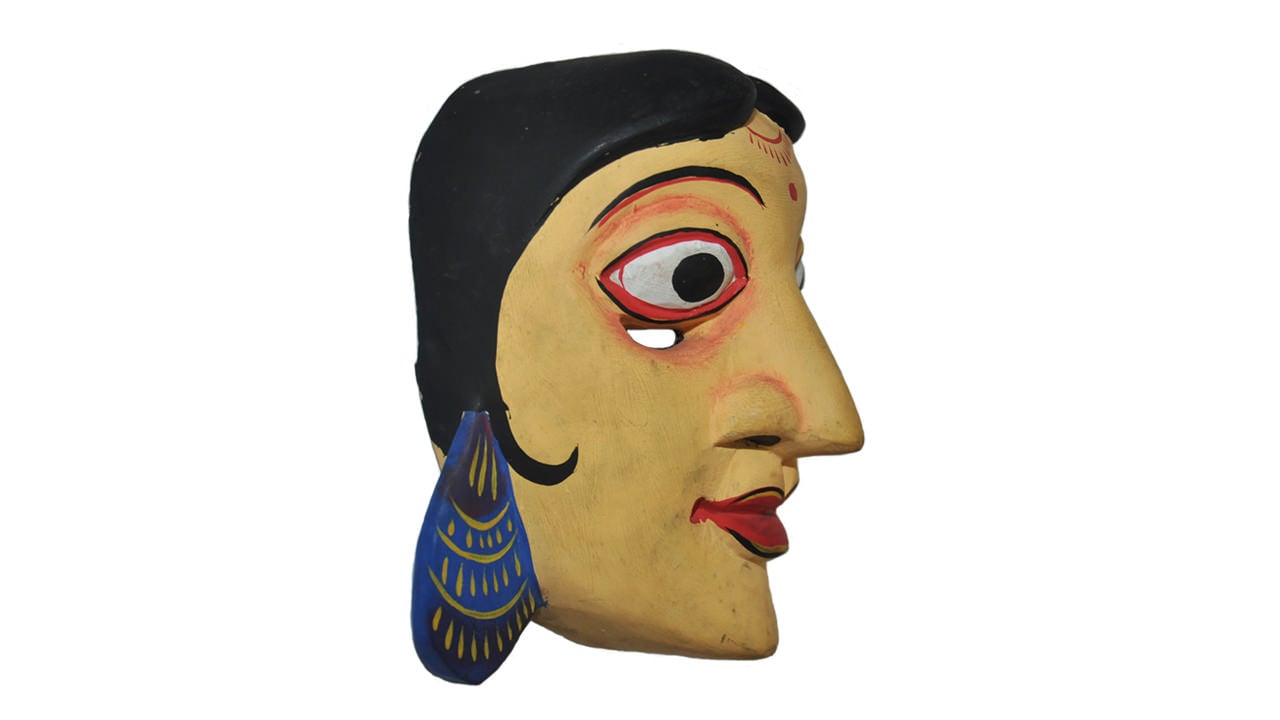

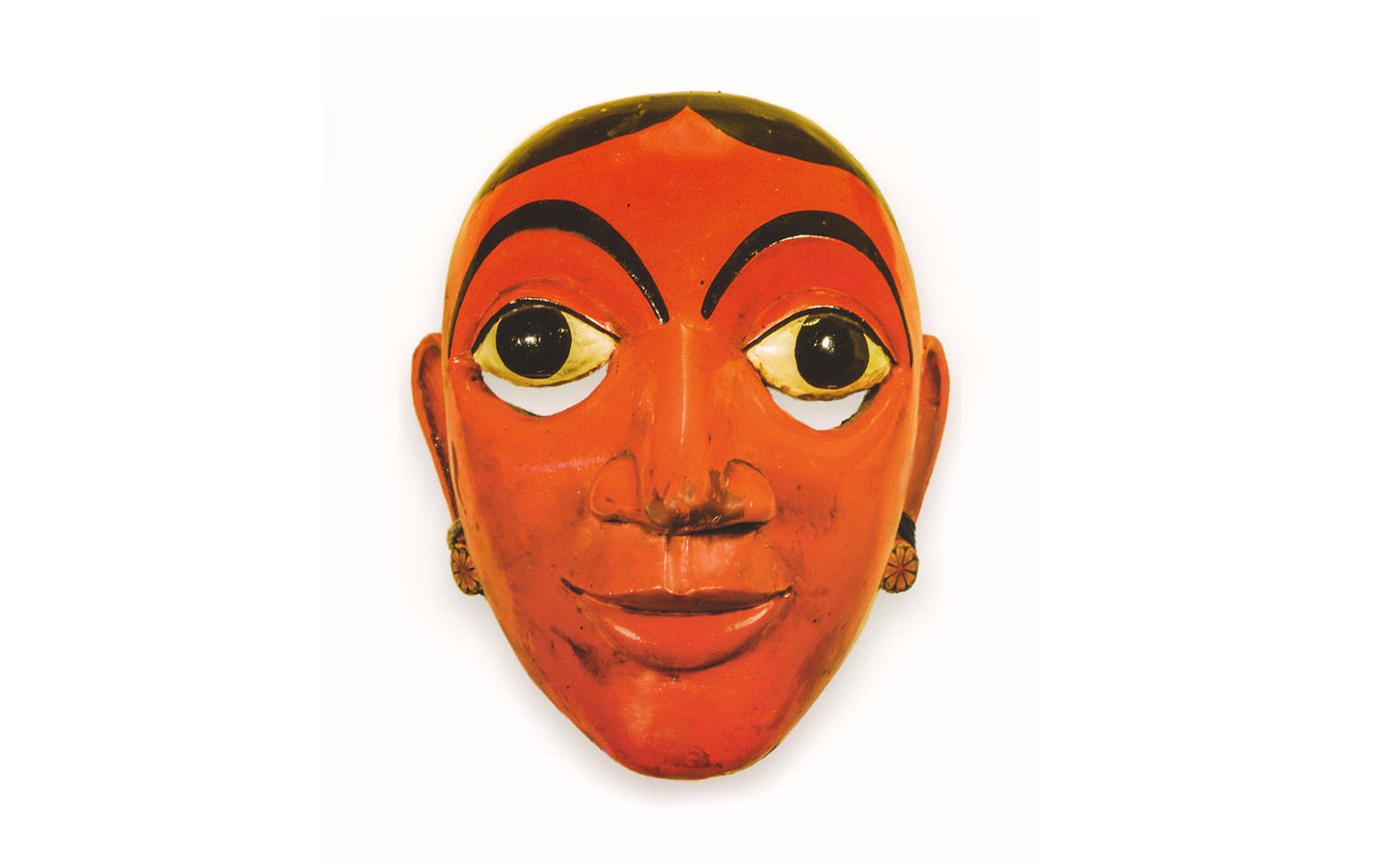
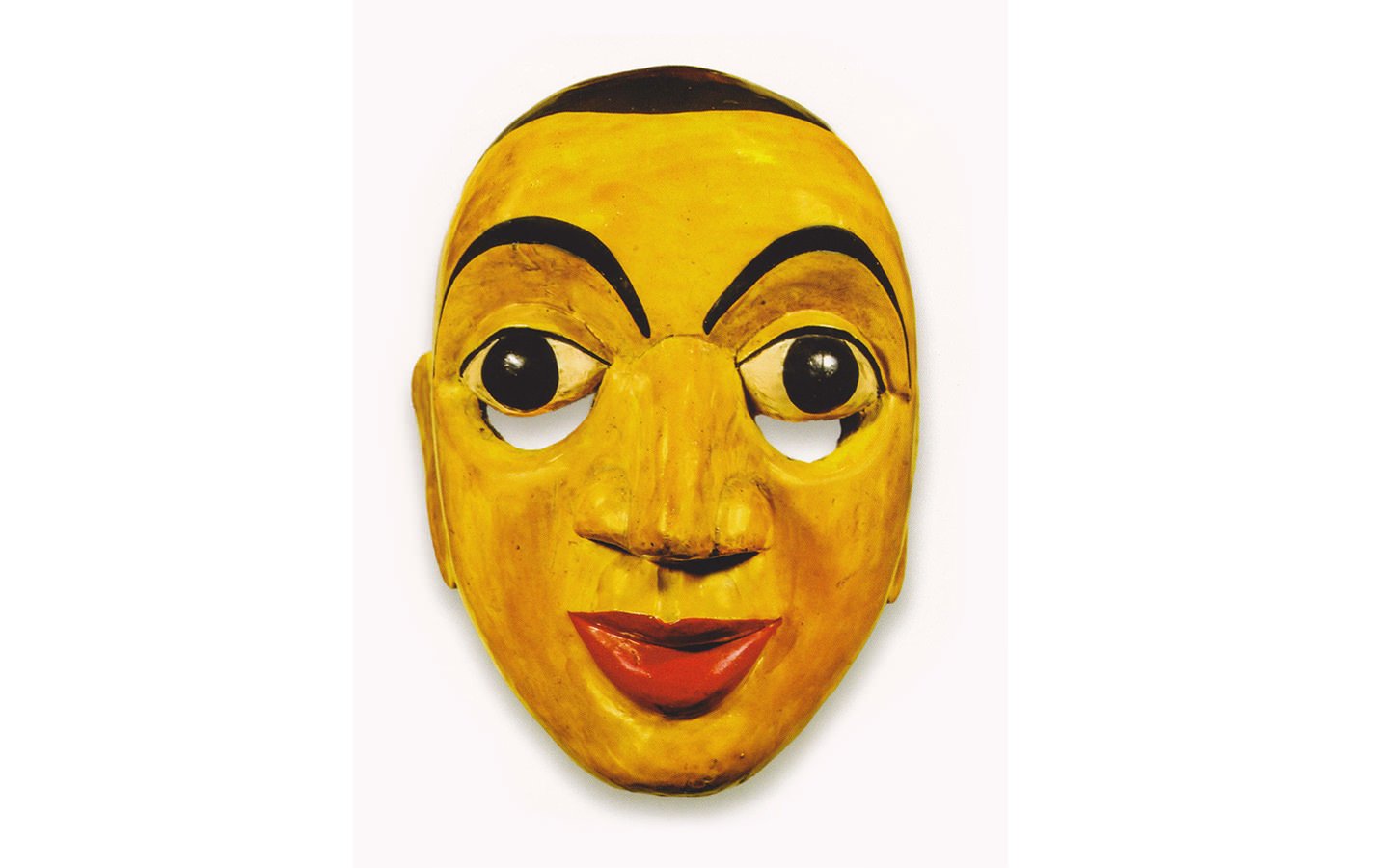


Within Sri Lanka's rich tradition of Kolam dance-drama, few characters are as layered and theatrically compelling as Lenchina. She is the wife of Jasaya, one of the comic male figures who anchor the Kolam narrative, and her mask is among the most distinctive in the entire repertoire. Lenchina occupies a unique position: she is simultaneously an older woman and a figure of allure, a duality that gives her mask its unusual visual character and makes her scenes among the most memorable in a Kolam performance.
What is Kolam and where does it come from?
Kolam is a traditional Sri Lankan masked dance-drama performed primarily in the Southern Province, with a history believed to stretch back several centuries. Unlike purely devotional forms of dance, Kolam blends ritual purpose with comedy, social commentary, and storytelling. Performers wear carved wooden masks representing a wide cast of characters — royalty, demons, animals, and ordinary villagers — and enact scenes drawn from folk tales and everyday life.
The form is closely associated with the coastal communities of the south. Performances traditionally take place at night, often over multiple sessions, and serve both to entertain and to reinforce community values. The Esala Perahera Festival in Kandy is the most internationally recognised example of Sri Lanka's living performance traditions, but Kolam represents an equally significant, if more localised, strand of that cultural heritage.
Who is the Lenchina character in Kolam?
Lenchina enters the Kolam narrative as Jasaya's wife. In the dramatic logic of the form, she is described as a woman who, despite her age, carries an appearance and bearing capable of drawing the attention of younger men. Traditional verse associated with her character speaks of a wondrous appearance that comes to the assembly and delights those who witness it.
This characterisation is not simply about vanity or humour, though it certainly produces both on stage. Lenchina embodies a particular tension that runs through much of Kolam: the coexistence of opposites. She is old and youthful, knowing and playful, ordinary and extraordinary. Her scenes with Jasaya typically carry comic weight, but they also gesture toward deeper ideas about desire, time, and the nature of appearances.
What makes the Lenchina mask distinctive?
The mask itself is the most immediate expression of Lenchina's dual nature. Unlike masks that depict a single fixed state — the fierce grimace of a demon, the serene composure of a royal figure — the Lenchina mask is deliberately designed to carry two readings at once. Viewed one way, it presents the features of an aged woman. Viewed another, or in the movement and lighting of performance, it suggests youth and attractiveness.
This visual ambiguity is achieved through careful attention to proportion, colouring, and surface modelling by the craftspeople who carve and paint Kolam masks. The pigments chosen for Lenchina are selected specifically to reinforce both aspects of her character rather than resolving the tension between them. The result is a mask with what traditional descriptions call a double attraction — an object that rewards close looking and resists simple categorisation.
Kolam masks are typically carved from the wood of the Kaduru tree (Strychnos nux-vomica), which is lightweight and easy to work. The carving process is considered a specialist craft, passed down through families in mask-making communities in the Ambalangoda area of the Southern Province, which remains the primary centre for this tradition today.
How is the Lenchina mask used in performance?
In a Kolam performance, the actor wearing the Lenchina mask uses movement, timing, and interaction with Jasaya to bring the character's contradictions to life. Because the mask itself is fixed, the performer's body — posture, gesture, pace — carries the full burden of characterisation. Experienced Kolam actors develop considerable skill in making a static carved face appear to shift in mood and expression through the angle of the head and the quality of movement.
The scenes involving Lenchina and Jasaya are typically among the most crowd-pleasing in the Kolam sequence, drawing laughter through a combination of physical comedy and the inherent absurdity of the situation the characters find themselves in. However, the best performances also leave audiences with something more considered — a sense that the comedy is pointing at something true about human experience.
Where can visitors see Kolam performances in Sri Lanka?
Authentic Kolam performances are most likely to be encountered in the Southern Province, particularly around Ambalangoda, which is home to several mask-carving workshops and cultural institutions dedicated to preserving the tradition. The Ariyapala Mask Museum in Ambalangoda holds significant collections of Kolam masks, including character types from across the full dramatic repertoire.
Visitors staying in the south can sometimes arrange to attend or witness demonstrations through guesthouses and cultural organisations in the area. Performances tied to village ceremonies and festival seasons offer the most immersive context. Beyond the south, cultural museums in Colombo and Kandy hold examples of Kolam masks, and the Kandy City Tour can be a useful starting point for understanding the breadth of Sri Lanka's performing arts traditions before travelling south to see Kolam in its home region.
What is the cultural significance of characters like Lenchina?
Characters like Lenchina matter because they carry social and psychological content that straightforward narrative cannot easily convey. The duality built into her mask — age and youth, wisdom and desire, comic and serious — reflects the Kolam tradition's interest in the full complexity of human experience rather than simple moral binaries.
In a broader sense, Kolam characters function as a kind of community mirror. By laughing at Jasaya and Lenchina, audiences are also laughing at recognisable human tendencies: vanity, desire, the wish to appear younger or more attractive than one is. The mask makes this safe by placing it at one remove — it is the character, not any individual, who embodies the trait.
Sri Lanka's intangible cultural heritage is substantial, and Kolam sits alongside traditions like mask carving, drumming, and devil dancing as a form that deserves sustained attention and support. Organisations working to document and transmit these practices play an important role in ensuring that characters like Lenchina continue to take the stage for future generations.